
Pulp Fiction, 1865 · page 16 of 399
The Argosy — page 16: what you’re looking at
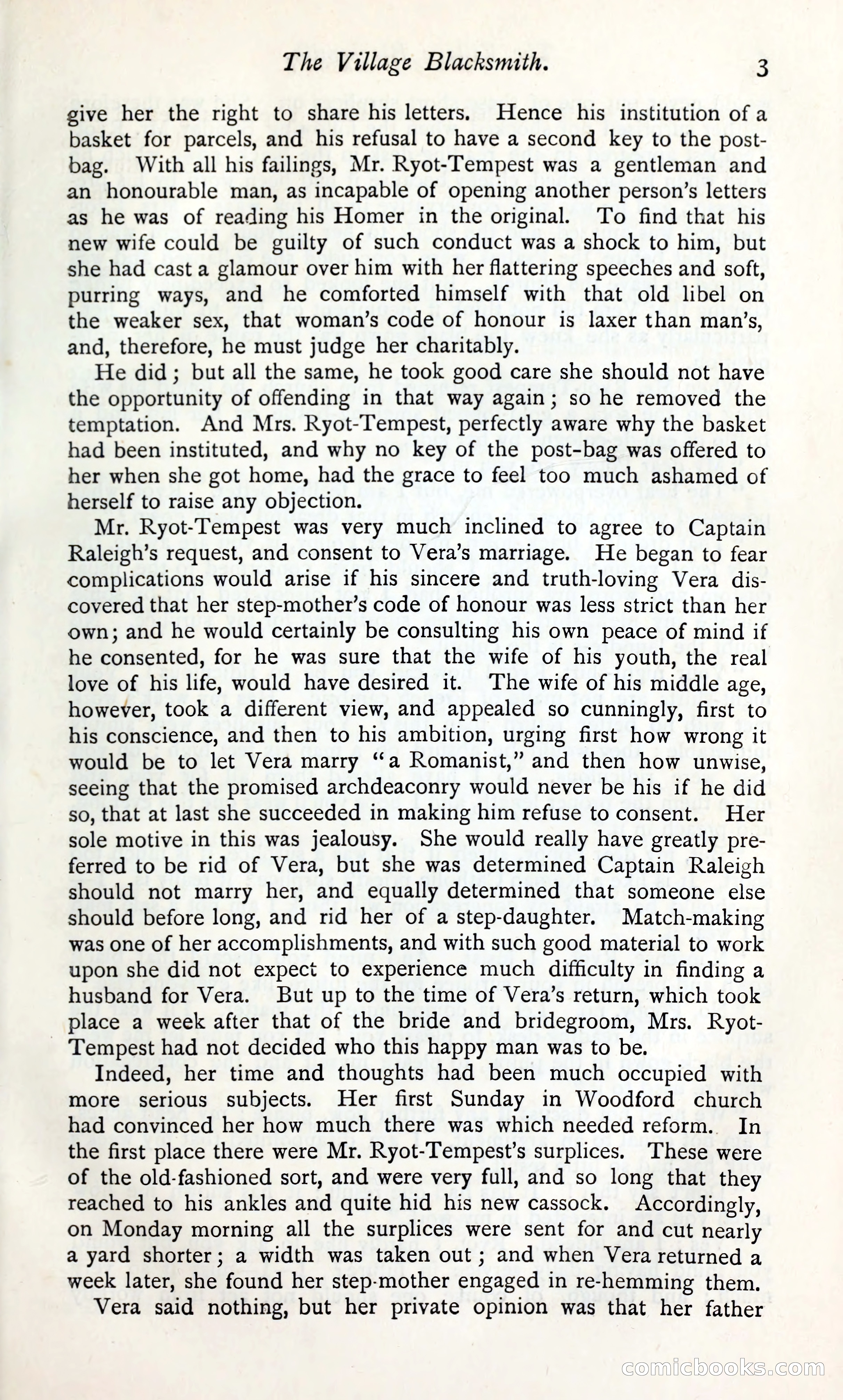
A restored page from Pulp Fiction, 1865. Page through the whole issue in the reader above.
📄 Transcribed text from this page (OCR, searchable)
Machine-transcribed from the original scan — historical spelling and the odd misread are preserved.
The Village Blacksmith. 3 give her the right to share his letters. Hence his institution of a basket for parcels, and his refusal to have a second key to the post- bag. With all his failings, Mr. Ryot-Tempest was a gentleman and an honourable man, as incapable of opening another person’s letters as he was of reading his Homer in the original. To find that his new wife could be guilty of such conduct was a shock to him, but she had cast a glamour over him with her flattering speeches and soft, purring ways, and he comforted himself with that old libel on the weaker sex, that woman’s code of honour is laxer than man’s, and, therefore, he must judge her charitably. He did; but all the same, he took good care she should not have the opportunity of offending in that way again; so he removed the temptation. And Mrs. Ryot-Tempest, perfectly aware why the basket had been instituted, and why no key of the post-bag was offered to her when she got home, had the grace to feel too much ashamed of herself to raise any objection. Mr. Ryot-Tempest was very much inclined to agree to Captain Raleigh’s request, and consent to Vera’s marriage. He began to fear complications would arise if his sincere and truth-loving Vera dis- covered that her step-mother’s code of honour was less strict than her own; and he would certainly be consulting his own peace of mind if he consented, for he was sure that the wife of his youth, the real love of his life, would have desired it. The wife of his middle age, however, took a different view, and appealed so cunningly, first to his conscience, and then to his ambition, urging first how wrong it would be to let Vera marry ‘6a Romanist,” and then how unwise, seeing that the promised archdeaconry would never be his if he did so, that at last she succeeded in making him refuse to consent. Her sole motive in this was jealousy. She would really have greatly pre- ferred to be rid of Vera, but she was determined Captain Raleigh should not marry her, and equally determined that someone else should before long, and rid her of a step-daughter. Match-making was one of her accomplishments, and with such good material to work upon she did not expect to experience much difficulty in finding a husband for Vera. But up to the time of Vera’s return, which took place a week after that of the bride and bridegroom, Mrs. Ryot- - Tempest had not decided who this happy man was to be. Indeed, her time and thoughts had been much occupied with more serious subjects. Her first Sunday in Woodford church had convinced her how much there was which needed reform. In the first place there were Mr. Ryot-Tempest’s surplices. ‘These were of the old-fashioned sort, and were very full, and so long that they reached to his ankles and quite hid his new cassock. Accordingly, on Monday morning all the surplices were sent for and cut nearly a yard shorter; a width was taken out ; and when Vera returned a week later, she found her step-mother engaged in re-hemming them. Vera said nothing, but her private opinion was that her father ConnicooolkKs An