
Pulp Fiction, 1865 · page 150 of 399
The Argosy — page 150: what you’re looking at
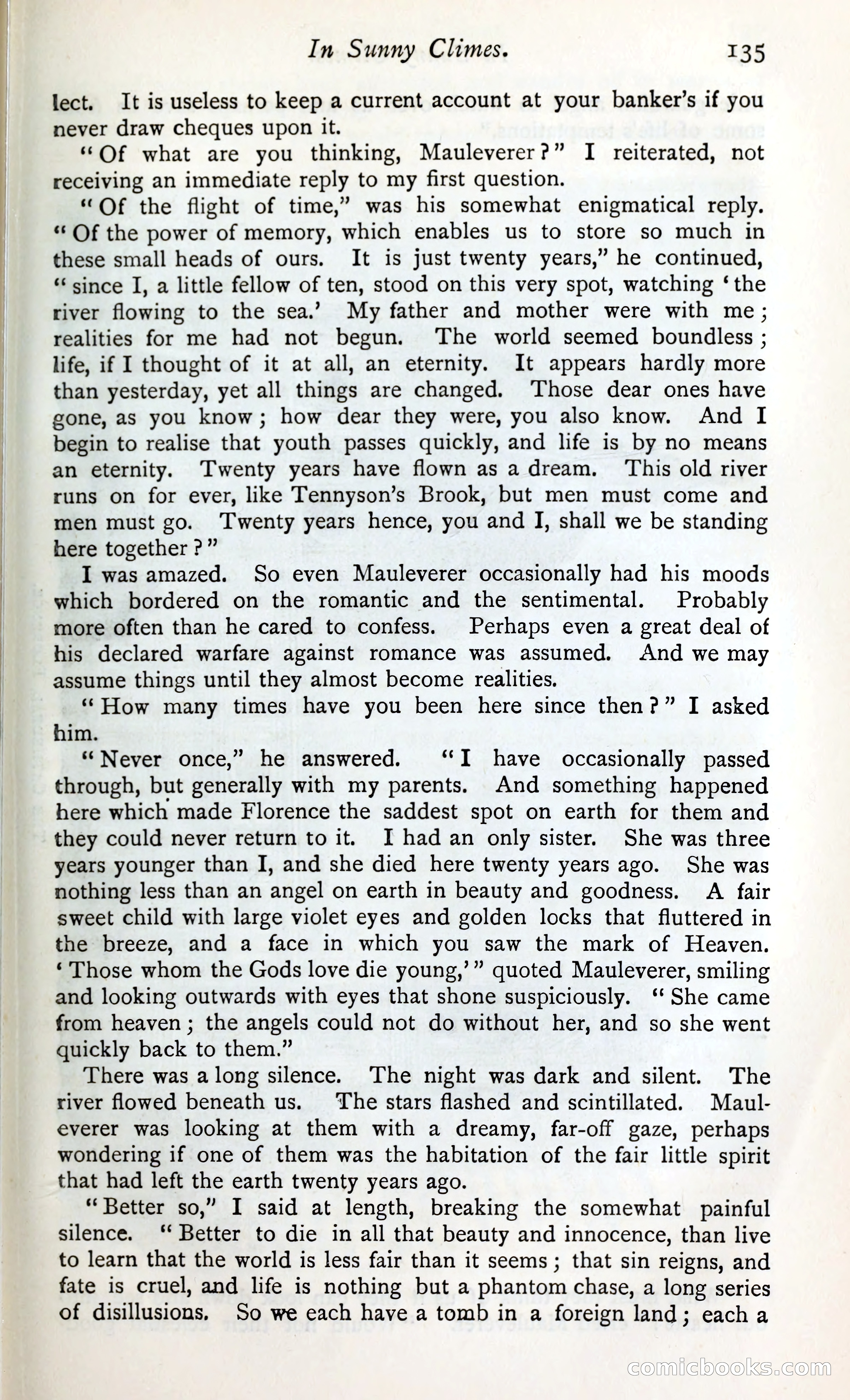
A restored page from Pulp Fiction, 1865. Page through the whole issue in the reader above.
📄 Transcribed text from this page (OCR, searchable)
Machine-transcribed from the original scan — historical spelling and the odd misread are preserved.
In Sunny Climes. 135 lect. It is useless to keep a current account at your banker’s if you never draw cheques upon it. ‘Of what are you thinking, Mauleverer?” I reiterated, not receiving an immediate reply to my first question. “Of the flight of time,” was his somewhat enigmatical reply. *‘ Of the power of memory, which enables us to store so much in these small heads of ours. It is just twenty years,” he continued, ‘since I, a little fellow of ten, stood on this very spot, watching ‘the river flowing to the sea.’ My father and mother were with me; realities for me had not begun. The world seemed boundless ; life, if I thought of it at all, an eternity. It appears hardly more than yesterday, yet all things are changed. Those dear ones have gone, as you know; how dear they were, you also know. And I begin to realise that youth passes quickly, and life is by no means an eternity. ‘Twenty years have flown as a dream. This old river runs on for ever, like Tennyson’s Brook, but men must come and men must go. ‘Twenty years hence, you and I, shall we be standing here together ?” I was amazed. So even Mauleverer occasionally had his moods which bordered on the romantic and the sentimental. Probably more often than he cared to confess. Perhaps even a great deal of his declared warfare against romance was assumed. And we may assume things until they almost become realities. ‘How many times have you been here since then?” I asked him. “Never once,” he answered. ‘“I have occasionally passed through, but generally with my parents. And something happened here which made Florence the saddest spot on earth for them and they could never return to it. I had an only sister. She was three years younger than I, and she died here twenty years ago. She was nothing less than an angel on earth in beauty and goodness. A fair sweet child with large violet eyes and golden locks that fluttered in the breeze, and a face in which you saw the mark of Heaven. ‘Those whom the Gods love die young,’” quoted Mauleverer, smiling and looking outwards with eyes that shone suspiciously. ‘She came from heaven ; the angels could not do without her, and so she went quickly back to them.” There was along silence. The night was dark and silent. The river flowed beneath us. ‘The stars flashed and scintillated. Maul- everer was looking at them with a dreamy, far-off gaze, perhaps wondering if one of them was the habitation of the fair little spirit that had left the earth twenty years ago. ‘Better so,” I said at length, breaking the somewhat painful silence. ‘‘ Better to die in all that beauty and innocence, than live to learn that the world is less fair than it seems; that sin reigns, and fate is cruel, and life is nothing but a phantom chase, a long series of disillusions, So we each have a tomb in a foreign land; eacha conmicaookKks (SO)