
Pulp Fiction, 1865 · page 145 of 399
The Argosy — page 145: what you’re looking at
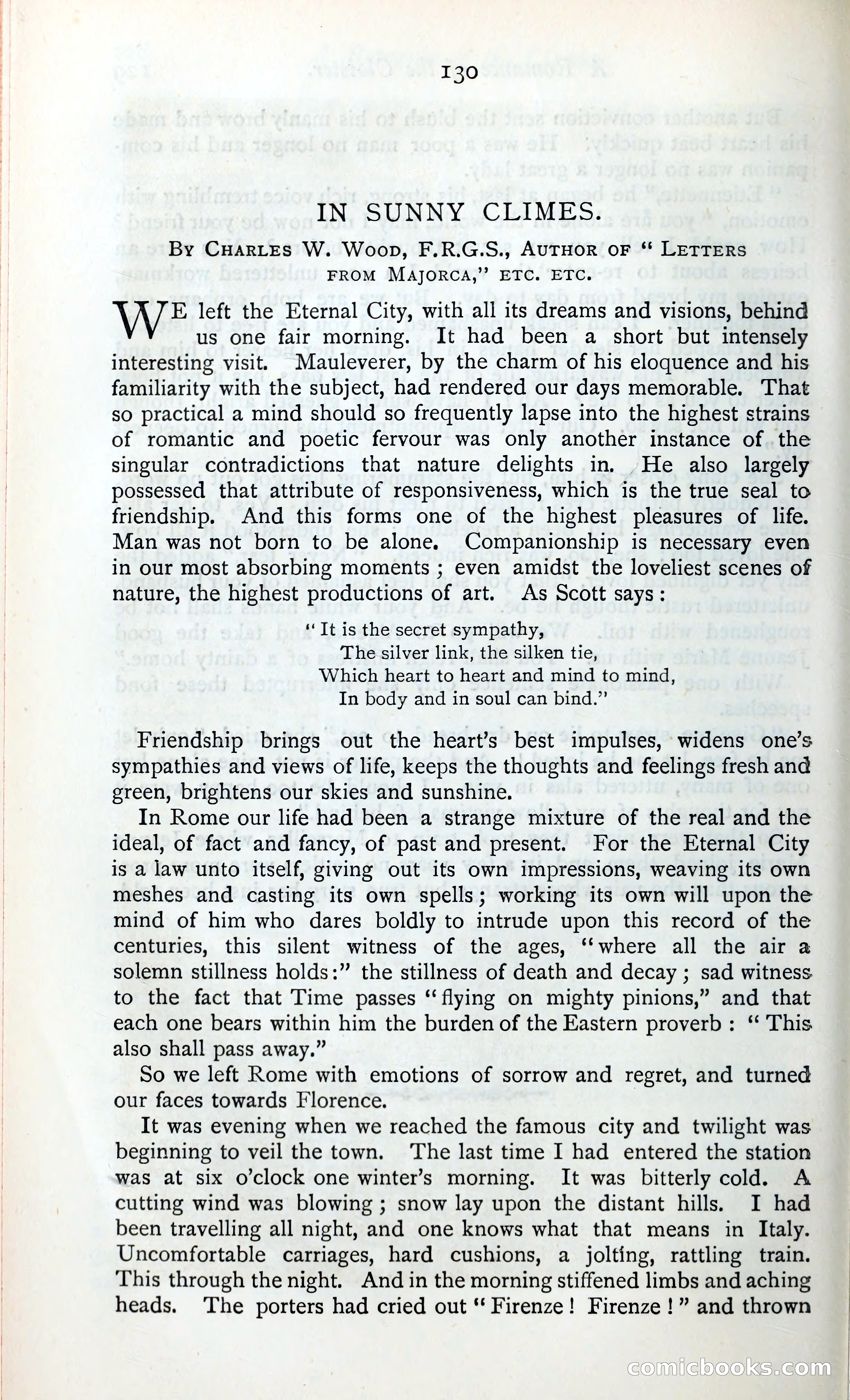
A restored page from Pulp Fiction, 1865. Page through the whole issue in the reader above.
📄 Transcribed text from this page (OCR, searchable)
Machine-transcribed from the original scan — historical spelling and the odd misread are preserved.
130 IN SUNNY CLIMES. By CHARLES W. Woop, F.R.G.S., AUTHOR OF ‘' LETTERS FROM MAJORCA,’ ETC. ETC. E left the Eternal City, with all its dreams and visions, behind us one fair morning. It had been a short but intensely interesting visit. Mauleverer, by the charm of his eloquence and his familiarity with the subject, had rendered our days memorable. That so practical a mind should so frequently lapse into the highest strains of romantic and poetic fervour was only another instance of the singular contradictions that nature delights in. He also largely possessed that attribute of responsiveness, which is the true seal to friendship. And this forms one of the highest pleasures of life. Man was not born to be alone. Companionship is necessary even in our most absorbing moments ; even amidst the loveliest scenes of nature, the highest productions of art. As Scott says: ‘Tt is the secret sympathy, The silver link, the silken tie, Which heart to heart and mind to mind, In body and in soul can bind.”’’ Friendship brings out the heart’s best impulses, widens one’s sympathies and views of life, keeps the thoughts and feelings fresh and green, brightens our skies and sunshine. In Rome our life had been a strange mixture of the real and the ideal, of fact and fancy, of past and present. For the Eternal City is a law unto itself, giving out its own impressions, weaving its own meshes and casting its own spells; working its own will upon the mind of him who dares boldly to intrude upon this record of the centuries, this silent witness of the ages, ‘‘where all the air a solemn stillness holds:” the stillness of death and decay ; sad witness to the fact that Time passes ‘flying on mighty pinions,” and that each one bears within him the burden of the Eastern proverb: ‘ This also shall pass away.” So we left Rome with emotions of sorrow and regret, and turned our faces towards Florence. It was evening when we reached the famous city and twilight was beginning to veil the town. ‘The last time I had entered the station was at six o’clock one winter’s morning. It was bitterly cold. A cutting wind was blowing ; snow lay upon the distant hills. I had been travelling all night, and one knows what that means in Italy. Uncomfortable carriages, hard cushions, a jolting, rattling train. This through the night. And in the morning stiffened limbs and aching heads. ‘The porters had cried out “ Firenze! Firenze!” and thrown CORNICE OO KSnCOM