
Pulp Fiction, 1865 · page 125 of 399
The Argosy — page 125: what you’re looking at
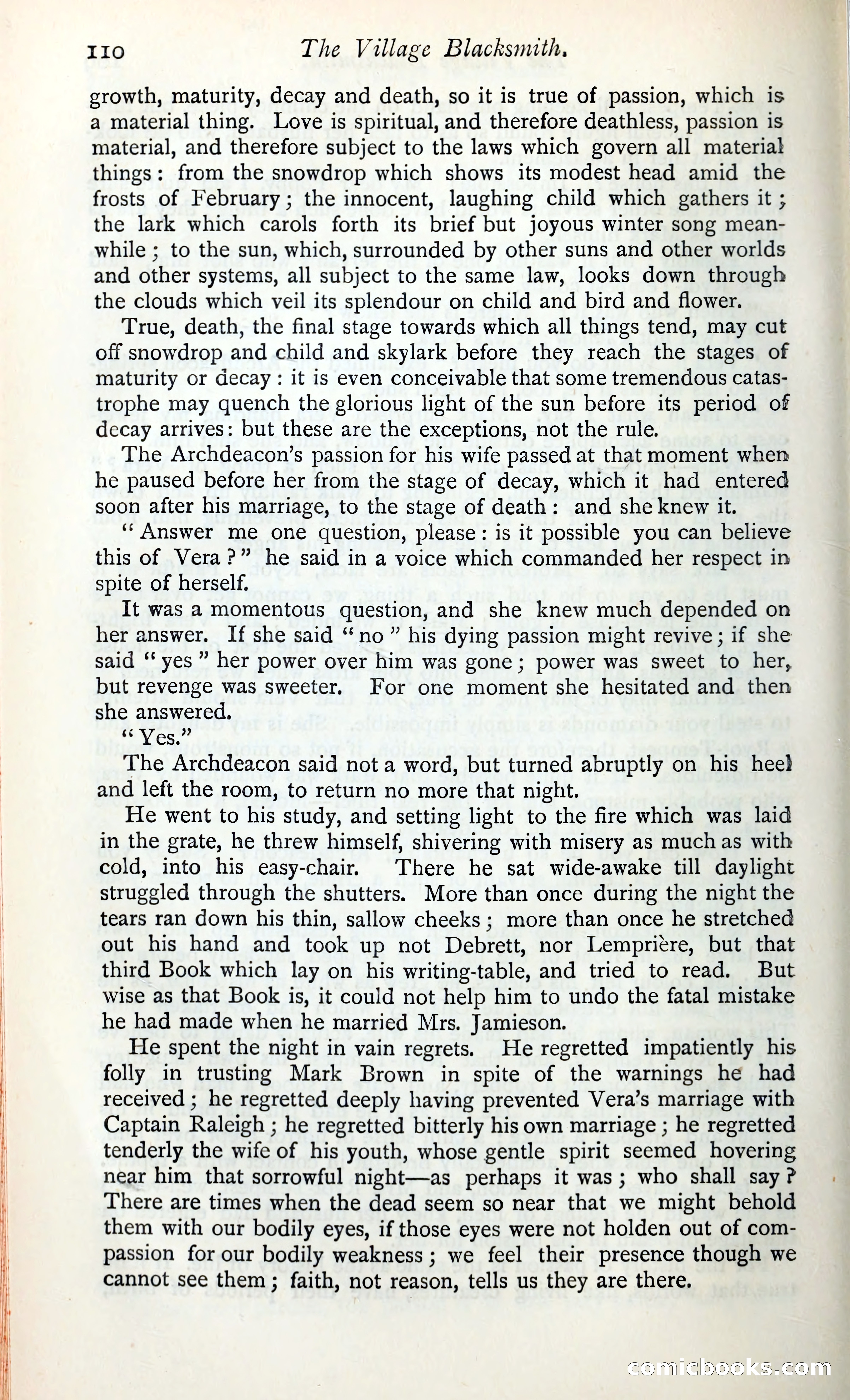
A restored page from Pulp Fiction, 1865. Page through the whole issue in the reader above.
📄 Transcribed text from this page (OCR, searchable)
Machine-transcribed from the original scan — historical spelling and the odd misread are preserved.
110 The Village Blacksmith, growth, maturity, decay and death, so it is true of passion, which is a material thing. Love is spiritual, and therefore deathless, passion is material, and therefore subject to the laws which govern all material things: from the snowdrop which shows its modest head amid the frosts of February ; the innocent, laughing child which gathers it ; the lark which carols forth its brief but joyous winter song mean- while ; to the sun, which, surrounded by other suns and other worlds and other systems, all subject to the same law, looks down through the clouds which veil its splendour on child and bird and flower. True, death, the final stage towards which all things tend, may cut off snowdrop and child and skylark before they reach the stages of maturity or decay: it is even conceivable that some tremendous catas- trophe may quench the glorious light of the sun before its period of decay arrives: but these are the exceptions, not the rule. The Archdeacon’s passion for his wife passed at that moment when he paused before her from the stage of decay, which it had entered soon after his marriage, to the stage of death: and she knew it. ‘Answer me one question, please: is it possible you can believe this of Vera?” he said in a voice which commanded her respect in spite of herself. It was a momentous question, and she knew much depended on her answer. If she said “no” his dying passion might revive; if she said “‘ yes ” her power over him was gone; power was sweet to her, but revenge was sweeter. For one moment she hesitated and then she answered. Ce Yes.” The Archdeacon said not a word, but turned abruptly on his heel and left the room, to return no more that night. He went to his study, and setting light to the fire which was laid in the grate, he threw himself, shivering with misery as muchas with cold, into his easy-chair. There he sat wide-awake till daylight struggled through the shutters. More than once during the night the tears ran down his thin, sallow cheeks; more than once he stretched out his hand and took up not Debrett, nor Lempritre, but that third Book which lay on his writing-table, and tried to read. But wise as that Book is, it could not help him to undo the fatal mistake he had made when he married Mrs. Jamieson. He spent the night in vain regrets. He regretted impatiently his folly in trusting Mark Brown in spite of the warnings he had received ; he regretted deeply having prevented Vera’s marriage with Captain Raleigh ; he regretted bitterly his own marriage ; he regretted tenderly the wife of his youth, whose gentle spirit seemed hovering near him that sorrowful night—as perhaps it was; who shall say P There are times when the dead seem so near that we might behold them with our bodily eyes, if those eyes were not holden out of com- passion for our bodily weakness; we feel their presence though we cannot see them; faith, not reason, tells us they are there. Eomichbooks.co