
Pulp Fiction, 1865 · page 114 of 399
The Argosy — page 114: what you’re looking at
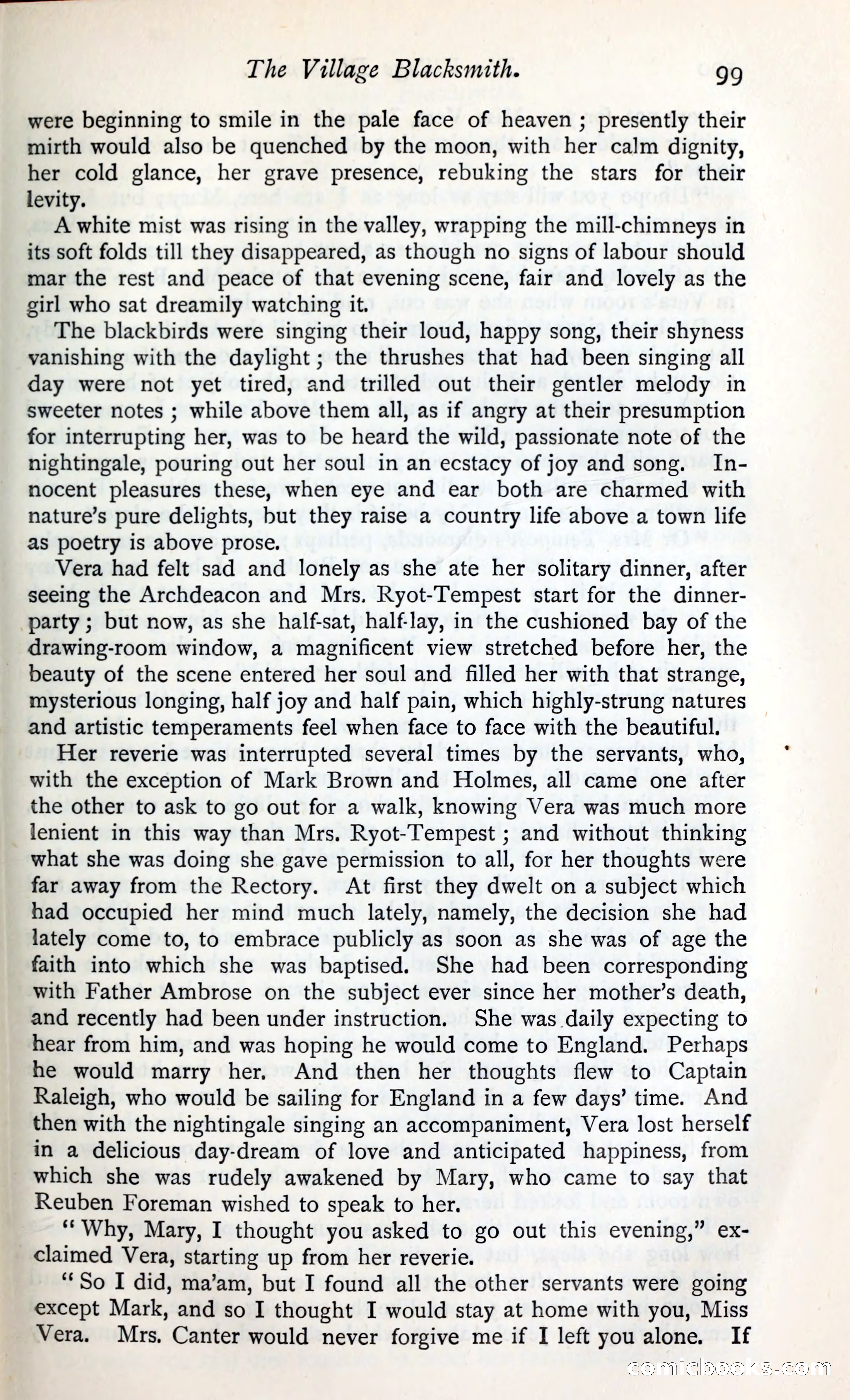
A restored page from Pulp Fiction, 1865. Page through the whole issue in the reader above.
📄 Transcribed text from this page (OCR, searchable)
Machine-transcribed from the original scan — historical spelling and the odd misread are preserved.
The Village Blacksmith. 99 were beginning to smile in the pale face of heaven ; presently their mirth would also be quenched by the moon, with her calm dignity, her cold glance, her grave presence, rebuking the stars for their levity. A white mist was rising in the valley, wrapping the mill-chimneys in its soft folds till they disappeared, as though no signs of labour should mar the rest and peace of that evening scene, fair and lovely as the girl who sat dreamily watching it. The blackbirds were singing their loud, happy song, their shyness vanishing with the daylight; the thrushes that had been singing all day were not yet tired, and trilled out their gentler melody in sweeter notes ; while above them all, as if angry at their presumption for interrupting her, was to be heard the wild, passionate note of the nightingale, pouring out her soul in an ecstacy of joy and song. In- nocent pleasures these, when eye and ear both are charmed with nature’s pure delights, but they raise a country life above a town life as poetry is above prose. Vera had felt sad and lonely as she ate her solitary dinner, after seeing the Archdeacon and Mrs. Ryot-Tempest start for the dinner- party ; but now, as she half-sat, half-lay, in the cushioned bay of the drawing-room window, a magnificent view stretched before her, the _ beauty of the scene entered her soul and filled her with that strange, mysterious longing, half joy and half pain, which highly-strung natures and artistic temperaments feel when face to face with the beautiful. Her reverie was interrupted several times by the servants, who, with the exception of Mark Brown and Holmes, all came one after the other to ask to go out for a walk, knowing Vera was much more lenient in this way than Mrs. Ryot-Tempest ; and without thinking what she was doing she gave permission to all, for her thoughts were far away from the Rectory. At first they dwelt on a subject which had occupied her mind much lately, namely, the decision she had lately come to, to embrace publicly as soon as she was of age the faith into which she was baptised. She had been corresponding with Father Ambrose on the subject ever since her mother’s death, and recently had been under instruction. She was daily expecting to hear from him, and was hoping he would come to England. Perhaps he would marry her. And then her thoughts flew to Captain Raleigh, who would be sailing for England in a few days’ time. And then with the nightingale singing an accompaniment, Vera lost herself in a delicious day-dream of love and anticipated happiness, from which she was rudely awakened by Mary, who came to say that Reuben Foreman wished to speak to her. “Why, Mary, I thought you asked to go out this evening,” ex- claimed Vera, starting up from her reverie. ‘So I did, ma’am, but I found all the other servants were going except Mark, and so I thought I would stay at home with you, Miss Vera. Mrs. Canter would never forgive me if I left you alone. If CORNICLOO (CO) im