
Pulp Fiction, 1865 · page 89 of 400
The Argosy — page 89: what you’re looking at
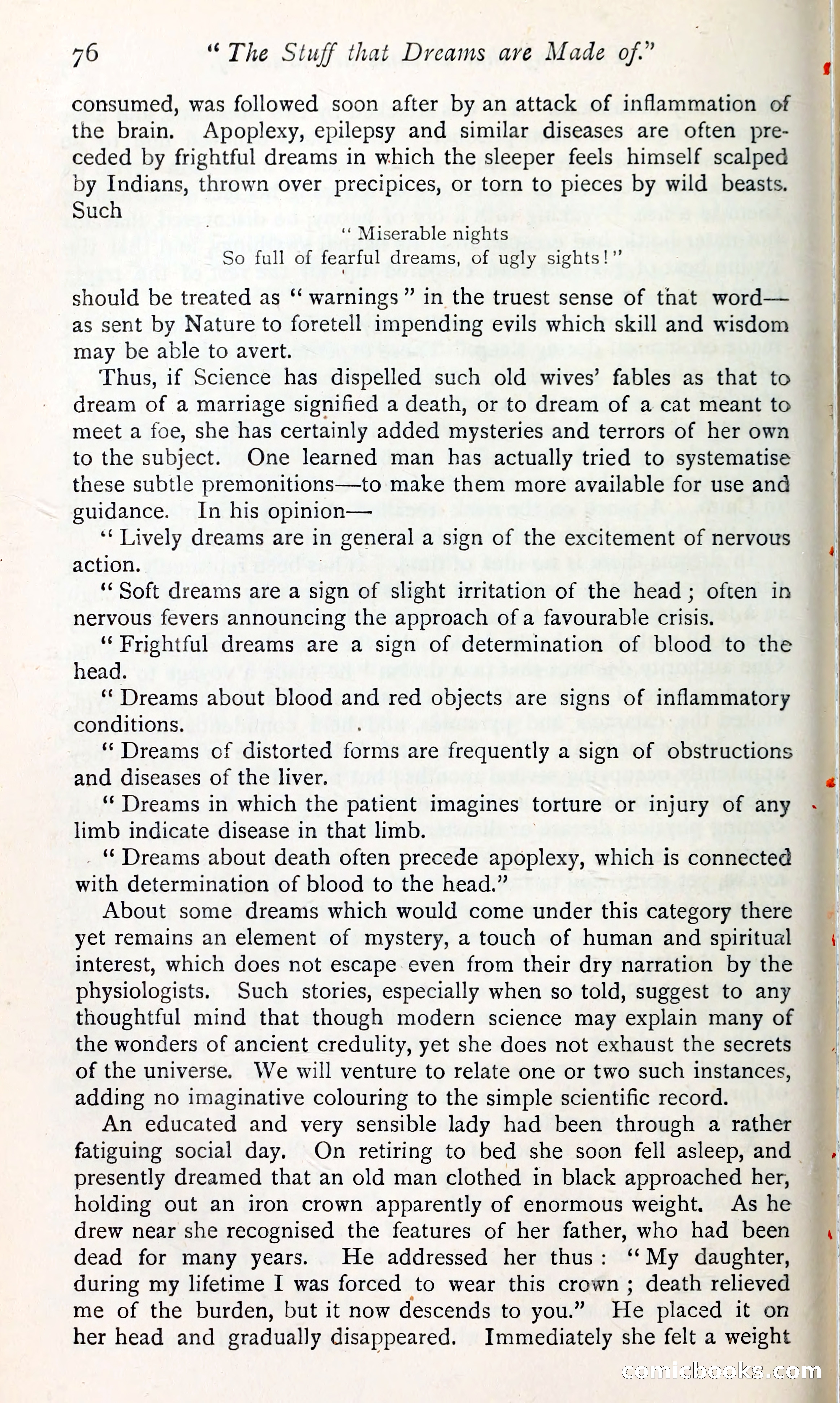
A restored page from Pulp Fiction, 1865. Page through the whole issue in the reader above.
📄 Transcribed text from this page (OCR, searchable)
Machine-transcribed from the original scan — historical spelling and the odd misread are preserved.
76 “The Stuff that Dreams are Made of.” consumed, was followed soon after by an attack of inflammation of the brain. Apoplexy, epilepsy and similar diseases are often pre- ceded by frightful dreams in which the sleeper feels himself scalped by Indians, thrown over precipices, or torn to pieces by wild beasts. Such ‘“ Miserable nights So full of fearful dreams, of ugly sights!” should be treated as ‘‘ warnings ” in the truest sense of that word— as sent by Nature to foretell impending evils which skill and wisdom may be able to avert. Thus, if Science has dispelled such old wives’ fables as that to dream of a marriage signified a death, or to dream of a cat meant to meet a foe, she has certainly added mysteries and terrors of her own to the subject. One learned man has actually tried to systematise these subtle premonitions—to make them more available for use and guidance. In his opinion— ‘‘ Lively dreams are in general a sign of the excitement of nervous action. ‘Soft dreams are a eu of slight irritation of the head; often in nervous fevers announcing the approach of a favourable crisis. ‘“‘ Frightful dreams are a sign of determination of blood to the head. ‘Dreams about blood and red objects are signs of inflammatory conditions. ‘ Dreams of distorted canis are frequently a sign of obstructions and diseases of the liver. ‘Dreams in which the patient imagines torture or injury of any limb indicate disease in that limb. _ “ Dreams about death often precede apoplexy, which is connected with determination of blood to the head.” : About some dreams which would come under this category there yet remains an element of mystery, a touch of human and spiritual interest, which does not escape even from their dry narration by the physiologists. Such stories, especially when so told, suggest to any thoughtful mind that though modern science may explain many of the wonders of ancient credulity, yet she does not exhaust the secrets of the universe. We will venture to relate one or two such instances, adding no imaginative colouring to the simple scientific record. An educated and very sensible lady had been through a rather fatiguing social day. On retiring to bed she soon fell asleep, and presently dreamed that an old man clothed in black approached her, holding out an iron crown apparently of enormous weight. As he drew near she recognised the features of her father, who had been dead for many years. He addressed her thus: ‘‘My daughter, during my lifetime I was forced to wear this crown; death relieved me of the burden, but it now descends to you.” He placed it on her head and gradually disappeared. Immediately she felt a weight ECORPMNICMOOKS, (EC) pe ay