
Pulp Fiction, 1865 · page 256 of 400
The Argosy — page 256: what you’re looking at
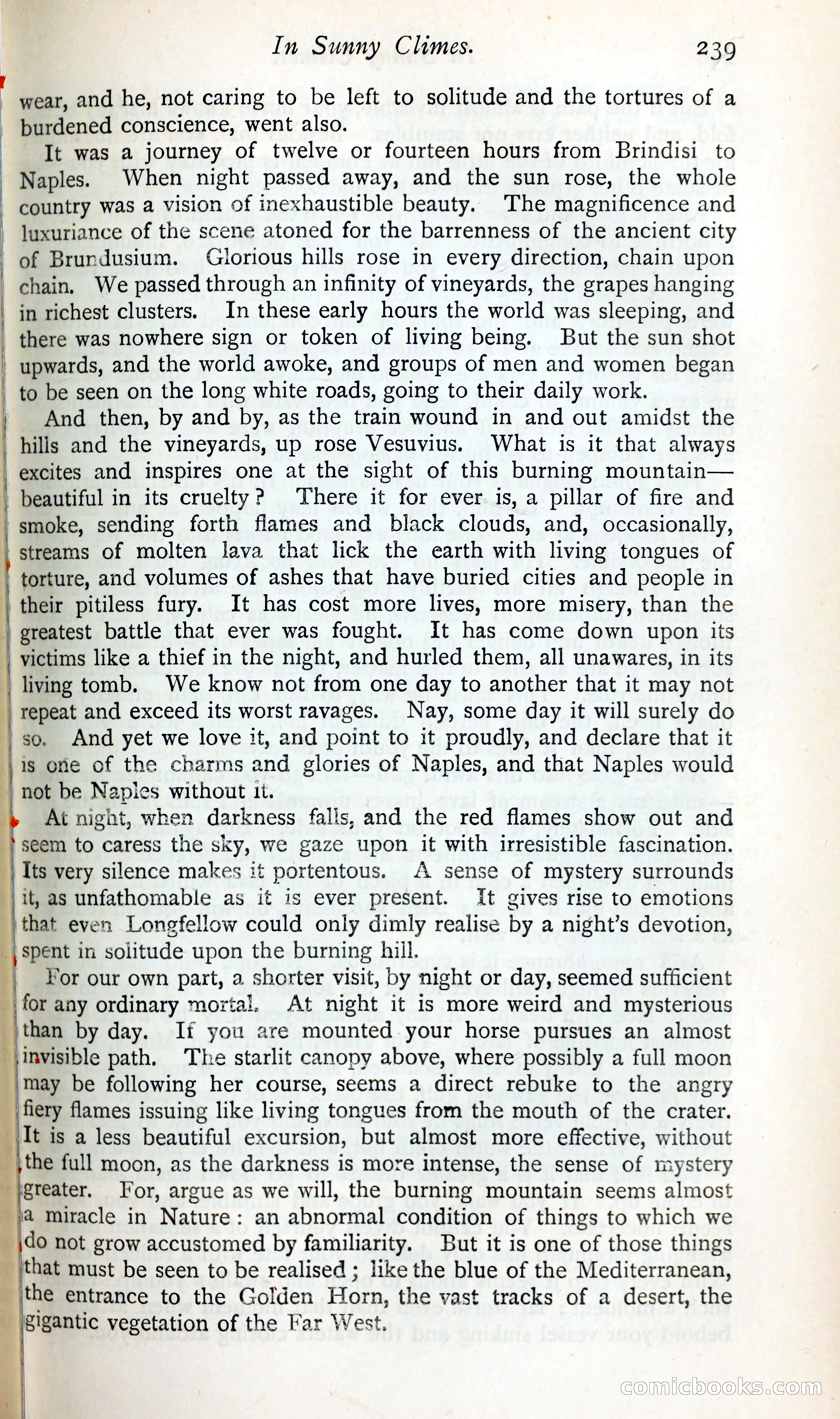
A restored page from Pulp Fiction, 1865. Page through the whole issue in the reader above.
📄 Transcribed text from this page (OCR, searchable)
Machine-transcribed from the original scan — historical spelling and the odd misread are preserved.
In Sunny Clumes. 239 wear, and he, not caring to be left to solitude and the tortures of a burdened conscience, went also. It was a journey of twelve or fourteen hours from Brindisi to Naples. When night passed away, and the sun rose, the whole country was a vision of inexhaustible beauty. The magnificence and luxuriance of the scene atoned for the barrenness of the ancient city of Brundusium. lorious hills rose in every direction, chain upon chain. We passed through an infinity of vineyards, the grapes hanging in richest clusters. In these early hours the world was sleeping, and there was nowhere sign or token of living being. But the sun shot upwards, and the world awoke, and groups of men and women began to be seen on the long white roads, going to their daily work. And then, by and by, as the train wound in and out amidst the hills and the vineyards, up rose Vesuvius. What is it that always excites and inspires one at the sight of this burning mountain— beautiful in its cruelty? There it for ever is, a pillar of fire and smoke, sending forth flames and black clouds, and, occasionally, streams of molten lava that lick the earth with living tongues of torture, and volumes of ashes that have buried cities and people in their pitiless fury. It has cost more lives, more misery, than the greatest battle that ever was fought. It has come down upon its victims like a thief in the night, and hurled them, all unawares, in its living tomb. We know not from one day to another that it may not repeat and exceed its worst ravages. Nay, some day it will surely do so. And yet we love it, and point to it proudly, and declare that it /is ofie of the charms and glories of Naples, and that Naples would not be Naples without it. > At night, when darkness falls, and the red flames show out and ‘seem to caress the sky, we gaze upon it with irresistible fascination. ) Its very silence makes it portentous. A sense of mystery surrounds Jit, as unfathomable as it is ever present. It gives rise to emotions )that even Lonefellow could only dimly realise by a night’s devotion, | Spent in solitude upon the burning hill. _ For our own part, a shorter visit, by night or day, seemed sufficient for any ordinary mortal. At night it is more weird and mysterious ) than by day. If you are mounted your horse pursues an almost sinvisible path. The starlit canopy above, where possibly a full moon ‘may be following her course, seems a direct rebuke to the angry \fiery flames issuing like living tongues from the mouth of the crater. It is a less beautiful excursion, but almost more effective, without the full moon, as the darkness is more intense, the sense of mystery jereater. For, argue as we will, the burning mountain seems almost ja miracle in Nature: an abnormal condition of things to which we jdo not grow accustomed by familiarity. But it is one of those things ithat must be seen to be realised; like the blue of the Mediterranean, ithe entrance to the Golden Horn, the vast tracks of a desert, the ‘gigantic vegetation of the Far West. —_— —— ——— ae — —— Se COMIC OOO SS (SO) im