
Pulp Fiction, 1865 · page 219 of 400
The Argosy — page 219: what you’re looking at
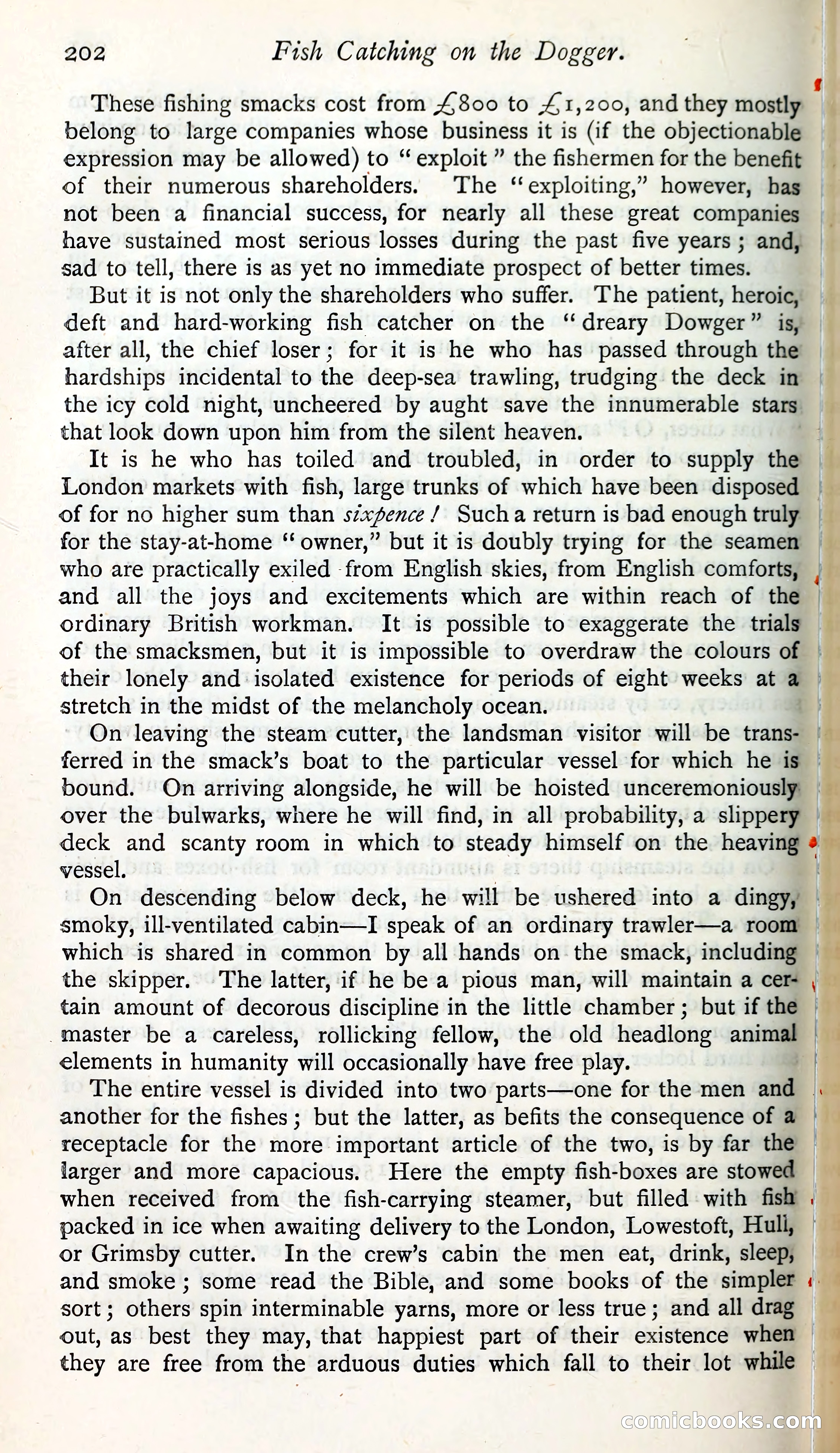
A restored page from Pulp Fiction, 1865. Page through the whole issue in the reader above.
📄 Transcribed text from this page (OCR, searchable)
Machine-transcribed from the original scan — historical spelling and the odd misread are preserved.
202 Fish Catching on the Dogger. These fishing smacks cost from 4800 to £1,200, and they mostly belong to large companies whose business it is (if the objectionable expression may be allowed) to “ exploit ” the fishermen for the benefit of their numerous shareholders. The “exploiting,” however, bas not been a financial success, for nearly all these great companies have sustained most serious losses during the past five years ; and, sad to tell, there is as yet no immediate prospect of better times. But it is not only the shareholders who suffer. The patient, heroic, deft and hard-working fish catcher on the ‘dreary Dowger” is, after all, the chief loser; for it is he who has passed through the hardships incidental to the deep-sea trawling, trudging the deck in the icy cold night, uncheered by aught save the innumerable stars ; that look down upon him from the silent heaven. It is he who has toiled and troubled, in order to supply the i London markets with fish, large trunks of which have been disposed | of for no higher sum than szxpence / Sucha return is bad enough truly | for the stay-at-home ‘‘ owner,” but it is doubly trying for the seamen who are practically exiled -from English skies, from English comforts, and all the joys and excitements which are within reach of the ordinary British workman. It is possible to exaggerate the trials of the smacksmen, but it is impossible to overdraw the colours of their lonely and isolated existence for periods of eight weeks at a }- stretch in the midst of the melancholy ocean. On leaving the steam cutter, the landsman visitor will be trans- | ferred in the smack’s boat to the particular vessel for which he is bound. On arriving alongside, he will be hoisted unceremoniously | over the bulwarks, where he will find, in all probability, a slippery deck and scanty room in which to steady himself on the heaving vessel, On descending below deck, he will be ushered into a dingy, smoky, ill-ventilated cabin—I speak of an ordinary trawler—a room which is shared in common by all hands on the smack, including © the skipper. The latter, if he be a pious man, will maintain a cer tain amount of decorous discipline in the little chamber; but if the -master be a careless, rollicking fellow, the old headlong animal elements in humanity will occasionally have free play. The entire vessel is divided into two parts—one for the men anil \@ another for the fishes; but the latter, as befits the consequence of a receptacle for the more: important article of the two, is by far the larger and more capacious. Here the empty fish-boxes are stowed when received from the fish-carrying steamer, but filled with fish packed in ice when awaiting delivery to the London, Lowestoft, Hull, or Grimsby cutter. In the crew’s cabin the men eat, drink, sleep, and smoke ; some read the Bible, and some books of the simpler sort; others spin interminable yarns, more or less true; and all drag — out, as best they may, that happiest part of their existence when — they are free from the arduous duties which fall to their lot while | Gomicdooks.co es > - & — ey