
Pulp Fiction, 1865 · page 82 of 400
The Argosy — page 82: what you’re looking at
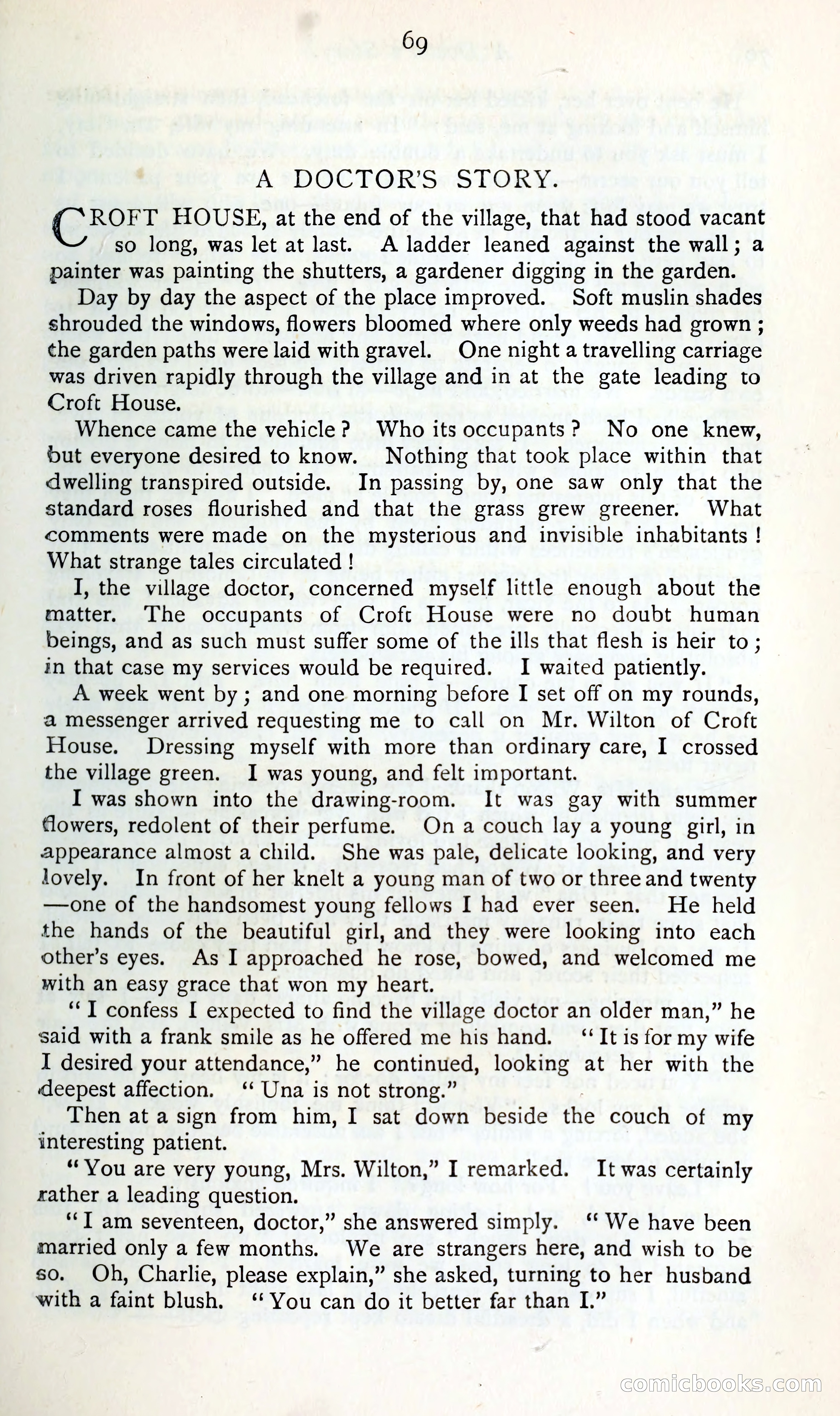
A restored page from Pulp Fiction, 1865. Page through the whole issue in the reader above.
📄 Transcribed text from this page (OCR, searchable)
Machine-transcribed from the original scan — historical spelling and the odd misread are preserved.
Og A DOCTOR'S STORY. ROFT HOUSE, at the end of the village, that had stood vacant so long, was let at last. A ladder leaned against the wall; a painter was painting the shutters, a gardener digging in the garden. Day by day the aspect of the place improved. Soft muslin shades shrouded the windows, flowers bloomed where only weeds had grown ; the garden paths were laid with gravel. One night a travelling carriage was driven rapidly through the village and in at the gate leading to Croft House. Whence came the vehicle? Who its occupants? No one knew, Dut everyone desired to know. Nothing that took place within that dwelling transpired outside. In passing by, one saw only that the standard roses flourished and that the grass grew greener. What comments were made on the mysterious and invisible inhabitants ! What strange tales circulated! I, the village doctor, concerned myself little enough about the matter. The occupants of Croft House were no doubt human beings, and as such must suffer some of the ills that flesh is heir to; in that case my services would be required. I waited patiently. A week went by; and one morning before I set off on my rounds, a messenger arrived requesting me to call on Mr. Wilton of Croft House. Dressing myself with more than ordinary care, I crossed the village green. I was young, and felt important. I was shown into the drawing-room. It was gay with summer flowers, redolent of their perfume. On a couch lay a young girl, in appearance almost a child. She was pale, delicate looking, and very lovely. In front of her knelt a young man of two or three and twenty —one of the handsomest young fellows I had ever seen. He held the hands of the beautiful girl, and they were looking into each other’s eyes. As I approached he rose, bowed, and welcomed me with an easy grace that won my heart. ‘“T confess I expected to find the village doctor an older man,” he said with a frank smile as he offered me his hand. ‘It is for my wife I desired your attendance,” he continued, looking at her with the ‘deepest affection. ‘‘ Una is not strong.” Then at a sign from him, I sat down beside the couch of my interesting patient. “You are very young, Mrs. Wilton,” I remarked. It was certainly rather a leading question. ‘““T am seventeen, doctor,” she answered simply. ‘‘ We have been married only a few months. We are strangers here, and wish to be so. Oh, Charlie, please explain,” she asked, turning to her husband with a faint blush. ‘You can do it better far than I.” @ COMA DOOKS (ere) im