
Pulp Fiction, 1865 · page 307 of 400
The Argosy — page 307: what you’re looking at
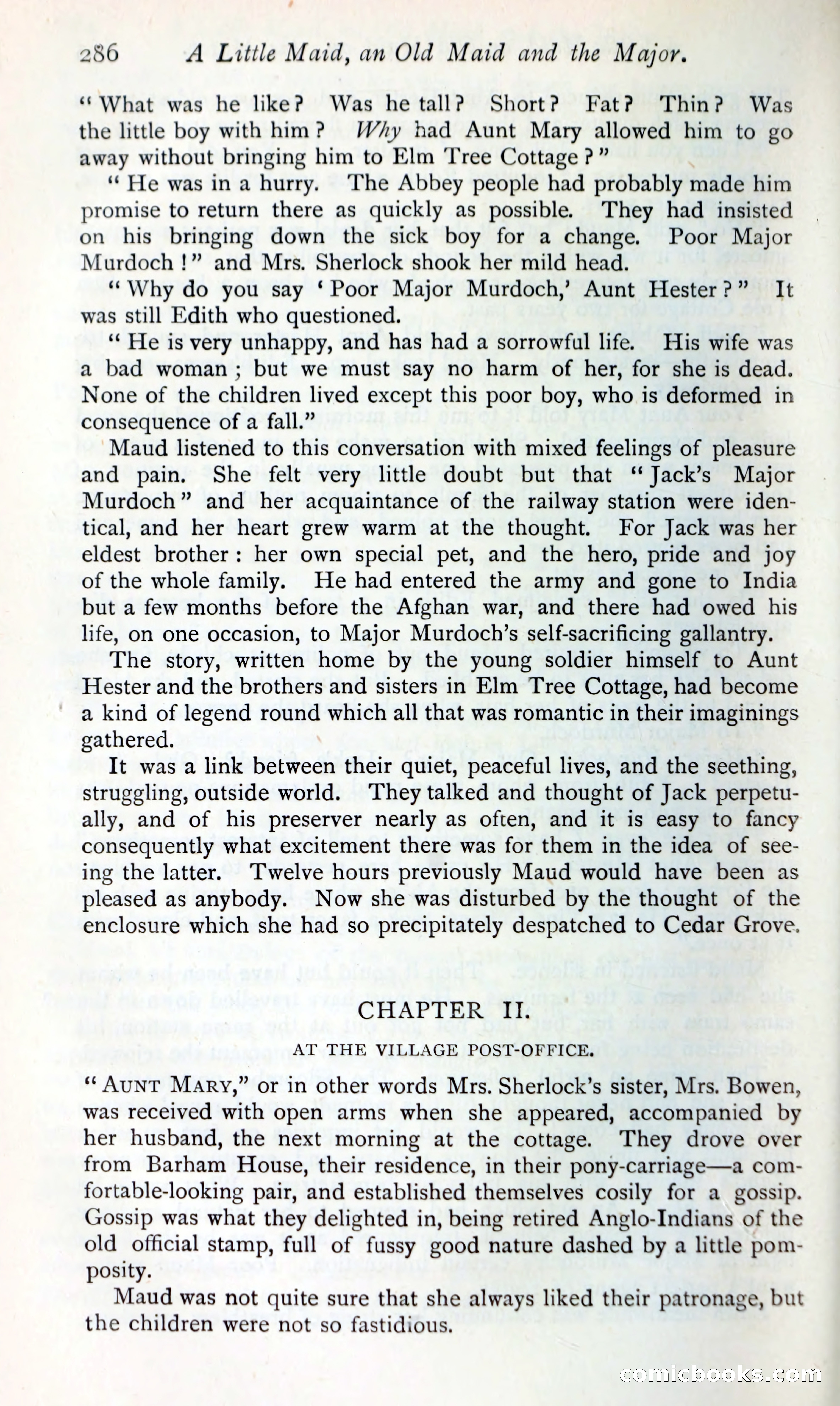
A restored page from Pulp Fiction, 1865. Page through the whole issue in the reader above.
📄 Transcribed text from this page (OCR, searchable)
Machine-transcribed from the original scan — historical spelling and the odd misread are preserved.
286 A Little Maid, an Old Maid and the Mapor. ‘What was he like? Was hetall? Short? Fat? Thine? Was the little boy with him? Way had Aunt Mary allowed him to go away without bringing him to Elm Tree Cottage ?” ‘fe was ina hurry. ‘The Abbey people had probably made him promise to return there as quickly as possible. They had insisted on his bringing down the sick boy for a change. Poor Major Murdoch!” and Mrs. Sherlock shook her mild head. ‘Why do you say ‘Poor Major Murdoch,’ Aunt Hester?” It was still Edith who questioned. ‘He is very unhappy, and has had a sorrowful life. His wife was a bad woman; but we must say no harm of her, for she is dead. None of the children lived except this poor boy, who is deformed in consequence of a fall.” Maud listened to this conversation with mixed feelings of pleasure and pain. She felt very little doubt but that ‘‘ Jack’s Major Murdoch” and her acquaintance of the railway station were iden- tical, and her heart grew warm at the thought. For Jack was her eldest brother: her own special pet, and the hero, pride and joy of the whole family. He had entered the army and gone to India but a few months before the Afghan war, and there had owed his life, on one occasion, to Major Murdoch’s self-sacrificing gallantry. The story, written home by the young soldier himself to Aunt Hester and the brothers and sisters in Elm Tree Cottage, had become a kind of legend round which all that was romantic in their imaginings gathered. It was a link between their quiet, peaceful lives, and the seething, struggling, outside world. They talked and thought of Jack perpetu- ally, and of his preserver nearly as often, and it is easy to fancy consequently what excitement there was for them in the idea of see- ing the latter. Twelve hours previously Maud would have been as pleased as anybody. Now she was disturbed by the thought of the enclosure which she had so precipitately despatched to Cedar Grove. CHAPTER II. AT THE VILLAGE POST-OFFICE. ‘* AUNT Mary,” or in other words Mrs. Sherlock’s sister, Mrs. Bowen, was received with open arms when she appeared, accompanied by her husband, the next morning at the cottage. They drove over from Barham House, their residence, in their pony-carriage—a com- fortable-looking pair, and established themselves cosily for a gossip. Gossip was what they delighted in, being retired Anglo-Indians of the old official stamp, full of fussy good nature dashed by a little pom- posity. Maud was not quite sure that she always liked their patronage, but the children were not so fastidious. ECORNIELOOKS EO m