
Pulp Fiction, 1865 · page 270 of 400
The Argosy — page 270: what you’re looking at
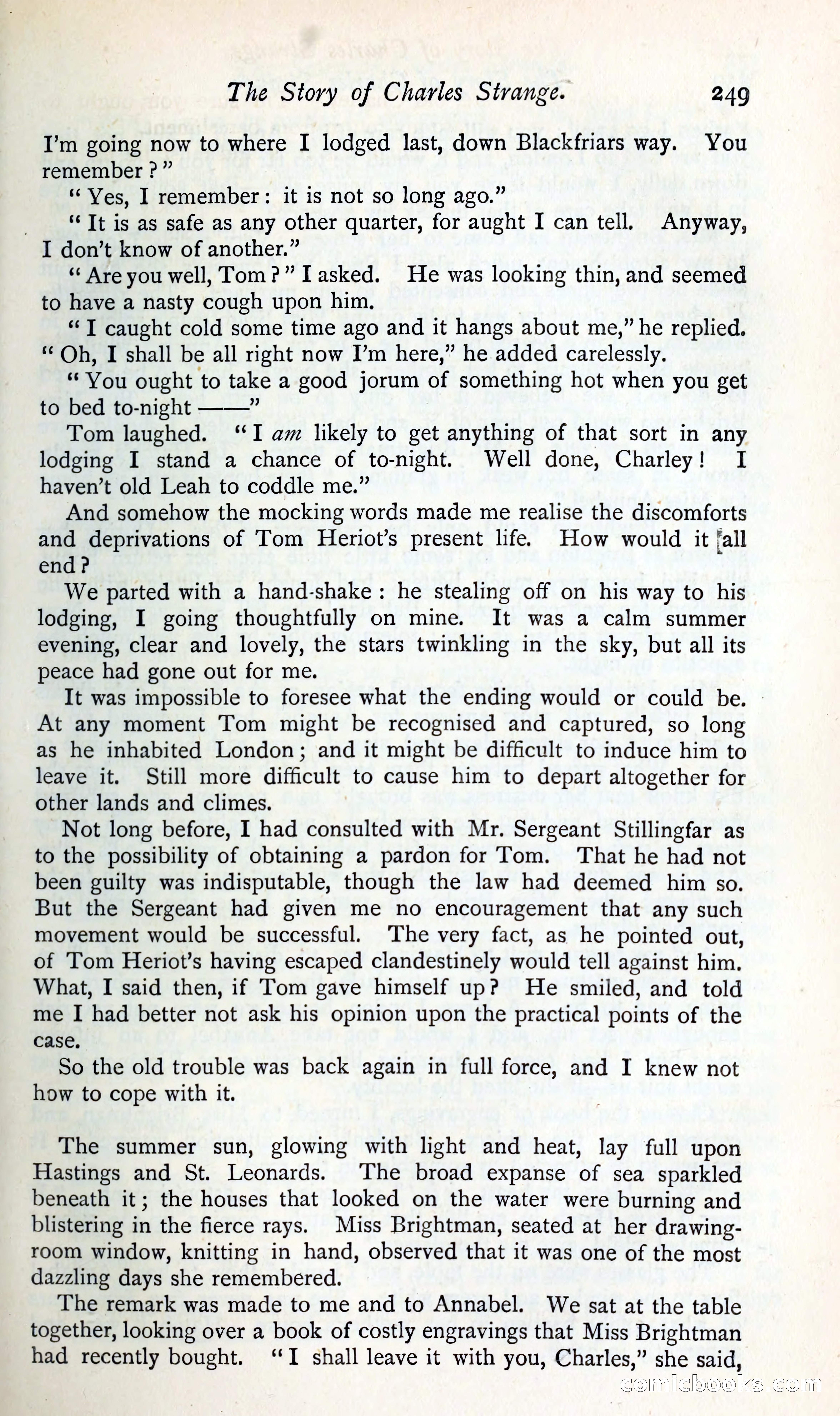
A restored page from Pulp Fiction, 1865. Page through the whole issue in the reader above.
📄 Transcribed text from this page (OCR, searchable)
Machine-transcribed from the original scan — historical spelling and the odd misread are preserved.
The Story of Charles Strange. 249 I’m going now to where I lodged last, down Blackfriars way. You remember ?” ‘© Ves, I remember: it is not so long ago.” ‘Tt is as safe as any other quarter, for aught I can tell, Anyway, I don’t know of another.” “ Are you well, Tom?” Iasked. He was looking thin, and seemed to have a nasty cough upon him. “T caught cold some time ago and it hangs about me,” he replied. Oh, I shall be all right now I’m here,” he added carelessly. “Vou ought to take a good jorum of something hot when you get to bed to-night ——” Tom laughed. ‘I am likely to get anything of that sort in any lodging I stand a chance of to-night. Well done, Charley! I haven’t old Leah to coddle me.” And somehow the mocking words made me realise the discomforts and deprivations of Tom Heriot’s present life. How would it fall end? We parted with a hand-shake: he stealing off on his way to his lodging, I going thoughtfully on mine. It was a calm summer evening, clear and lovely, the stars twinkling in the sky, but all its peace had gone out for me. It was impossible to foresee what the ending would or could be. » At any moment Tom might be recognised and captured, so long as he inhabited London; and it might be difficult to induce him to leave it. Still more difficult to cause him to depart altogether for other lands and climes. Not long before, I had consulted with Mr. Sergeant Stillingfar as to the possibility of obtaining a pardon for Tom. That he had not been guilty was indisputable, though the law had deemed him so. But the Sergeant had given me no encouragement that any such movement would be successful. The very fact, as he pointed out, of Tom Heriot’s having escaped clandestinely would tell against him. What, I said then, if Tom gave himself up? He smiled, and told me I had better not ask his opinion upon the practical points of the case. So the old trouble was back again in full force, and I knew not how to cope with it. The summer sun, glowing with light and heat, lay full upon Hastings and St. Leonards. The broad expanse of sea sparkled beneath it; the houses that looked on the water were burning and blistering in the fierce rays. Miss Brightman, seated at her drawing- room window, knitting in hand, observed that it was one of the most dazzling days she remembered. The remark was made to me and to Annabel. We sat at the table together, looking over a book of costly engravings that Miss Brightman had recently bought. ‘I shall leave it with you, Charles,” she said, COMICOOO© SS (SO)