
Pulp Fiction, 1865 · page 110 of 400
The Argosy — page 110: what you’re looking at
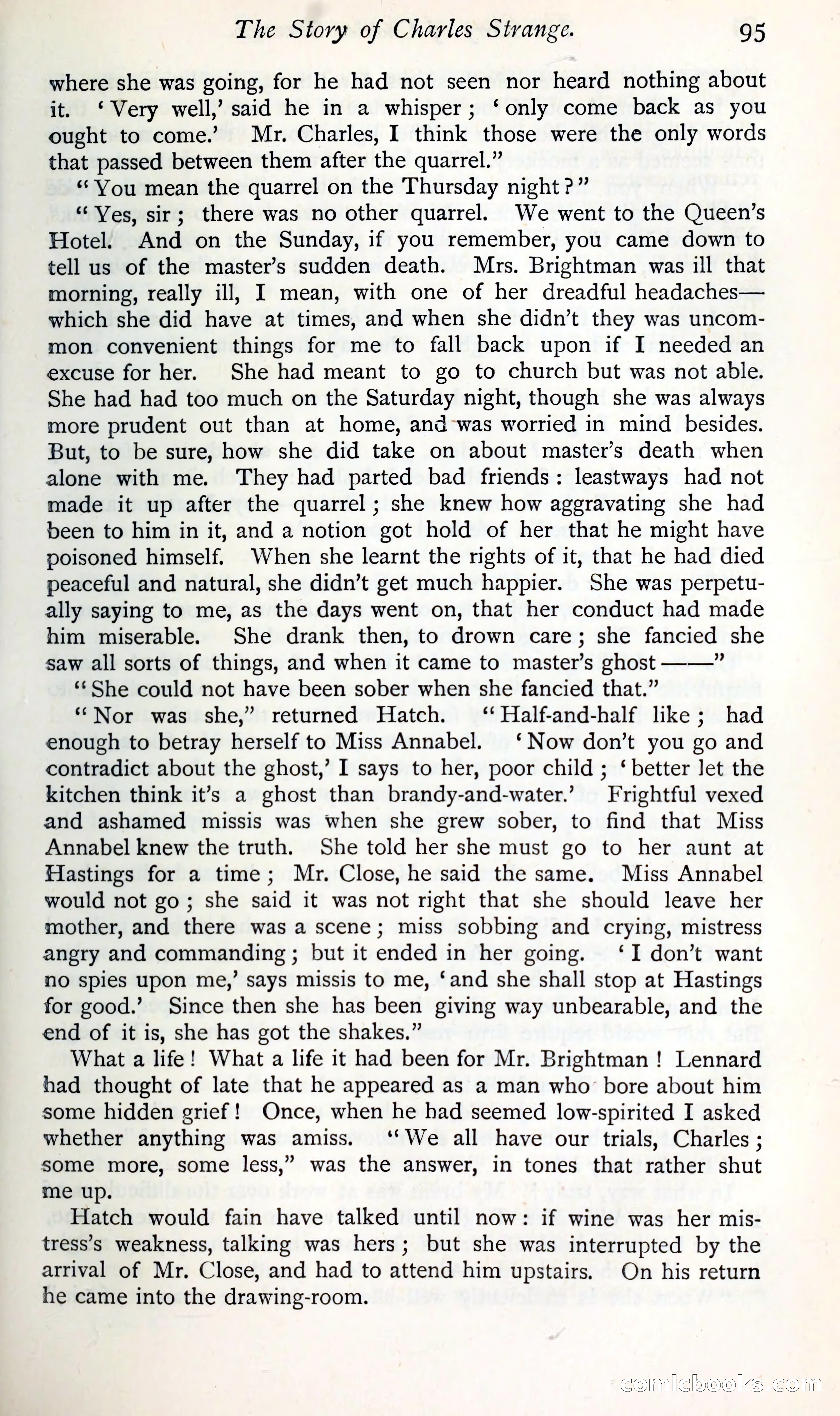
A restored page from Pulp Fiction, 1865. Page through the whole issue in the reader above.
📄 Transcribed text from this page (OCR, searchable)
Machine-transcribed from the original scan — historical spelling and the odd misread are preserved.
The Story of Charles Strange. 95 where she was going, for he had not seen nor heard nothing about it. ‘Very well,’ said he in a whisper; ‘only come back as you ought to come.’ Mr. Charles, I think those were the only words that passed between them after the quarrel.” ‘* Vou mean the quarrel on the Thursday night ?” “Ves, sir; there was no other quarrel. We went to the Queen’s Hotel. And on the Sunday, if you remember, you came down to tell us of the master’s sudden death. Mrs. Brightman was ill that morning, really ill, I mean, with one of her dreadful headaches— which she did have at times, and when she didn’t they was uncom- mon convenient things for me to fall back upon if I needed an excuse for her. She had meant to go to church but was not able. She had had too much on the Saturday night, though she was always more prudent out than at home, and-was worried in mind besides. But, to be sure, how she did take on about master’s death when alone with me. ‘They had parted bad friends: leastways had not made it up after the quarrel; she knew how aggravating she had been to him in it, and a notion got hold of her that he might have poisoned himself. When she learnt the rights of it, that he had died peaceful and natural, she didn’t get much happier. She was perpetu- ally saying to me, as the days went on, that her conduct had made him miserable. She drank then, to drown care; she fancied she saw all sorts of things, and when it came to master’s ghost ——” ‘¢ She could not have been sober when she fancied that.” ‘Nor was she,” returned Hatch. ‘“ Half-and-half like; had enough to betray herself to Miss Annabel. ‘Now don’t you go and contradict about the ghost,’ I says to her, poor child ; ‘ better let the kitchen think it’s a ghost than brandy-and-water.’ Frightful vexed and ashamed missis was when she grew sober, to find that Miss Annabel knew the truth. She told her she must go to her aunt at Hastings for a time; Mr. Close, he said the same. Miss Annabel would not go; she said it was not right that she should leave her mother, and there was a scene; miss sobbing and crying, mistress angry and commanding; but it ended in her going. ‘I don’t want no spies upon me,’ says missis to me, ‘and she shall stop at Hastings for good.’ Since then she has been giving way unbearable, and the end of it is, she has got the shakes,” What a life! What a life it had been for Mr. Brightman ! Lennard had thought of late that he appeared as a man who bore about him some hidden grief! Once, when he had seemed low-spirited I asked whether anything was amiss. ‘‘We all have our trials, Charles ; some more, some less,” was the answer, in tones that rather shut me up. Hatch would fain have talked until now: if wine was her mis- tress’s weakness, talking was hers; but she was interrupted by the arrival of Mr. Close, and had to attend him upstairs. On his return he came into the drawing-room. conniclooolkks (CO)