
Pulp Fiction, 1865 · page 44 of 400
The Argosy — page 44: what you’re looking at
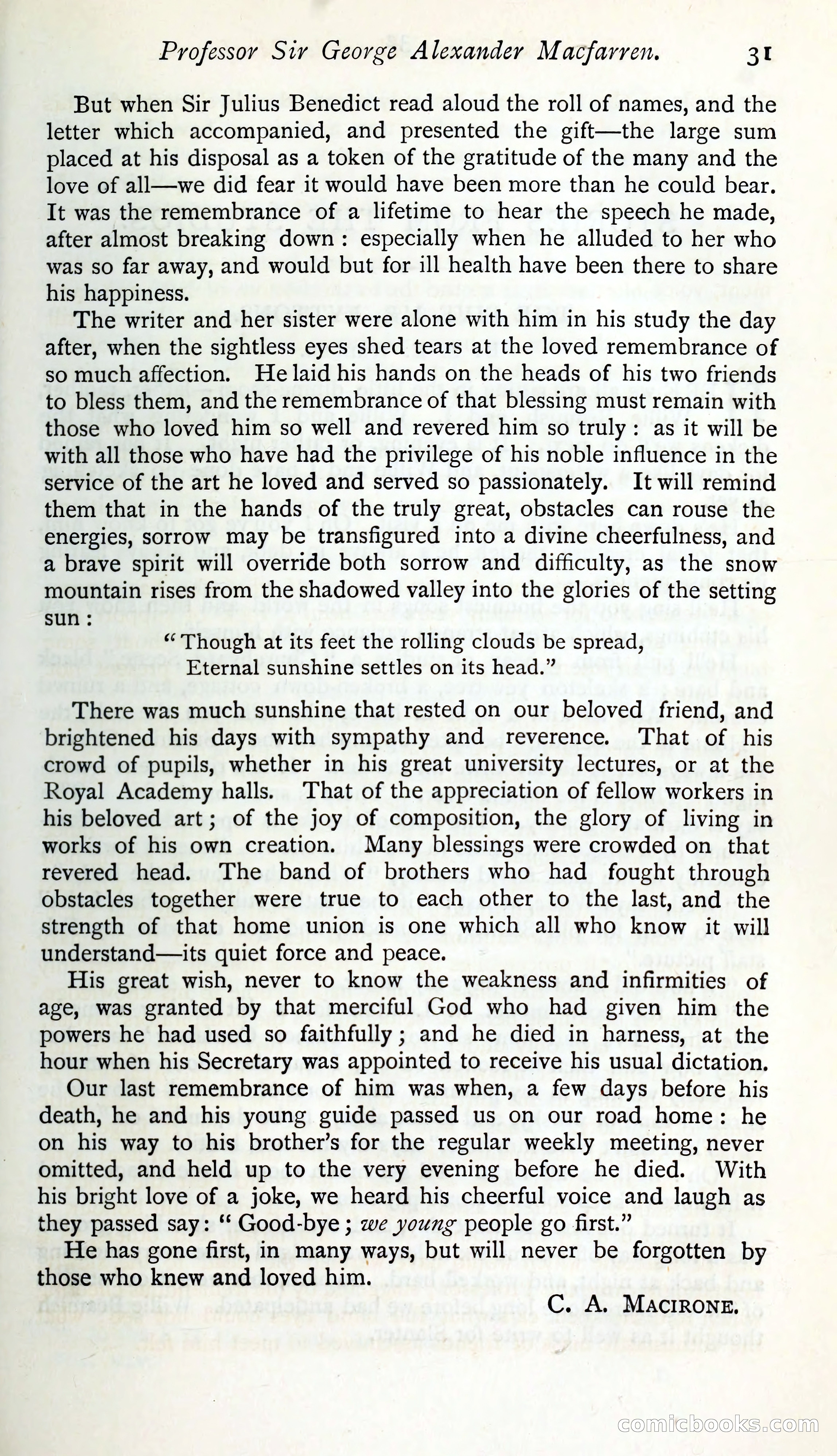
A restored page from Pulp Fiction, 1865. Page through the whole issue in the reader above.
📄 Transcribed text from this page (OCR, searchable)
Machine-transcribed from the original scan — historical spelling and the odd misread are preserved.
Professor Sir George Alexander Macfarren. 31 But when Sir Julius Benedict read aloud the roll of names, and the letter which accompanied, and presented the gift—the large sum placed at his disposal as a token of the gratitude of the many and the love of all—we did fear it would have been more than he could bear. It was the remembrance of a lifetime to hear the speech he made, after almost breaking down: especially when he alluded to her who was so far away, and would but for ill health have been there to share his happiness. The writer and her sister were alone with him in his study the day after, when the sightless eyes shed tears at the loved remembrance of so much affection. He laid his hands on the heads of his two friends to bless them, and the remembrance of that blessing must remain with those who loved him so well and revered him so truly: as it will be with all those who have had the privilege of his noble influence in the service of the art he loved and served so passionately. It will remind them that in the hands of the truly great, obstacles can rouse the energies, sorrow may be transfigured into a divine cheerfulness, and a brave spirit will override both sorrow and difficulty, as the snow mountain rises from the shadowed valley into the glories of the setting sun : “ Though at its feet the rolling clouds be spread, Eternal sunshine settles on its head.” There was much sunshine that rested on our beloved friend, and brightened his days with sympathy and reverence. That of his crowd of pupils, whether in his great university lectures, or at the Royal Academy halls. That of the appreciation of fellow workers in his beloved art; of the joy of composition, the glory of living in works of his own creation. Many blessings were crowded on that revered head. The band of brothers who had fought through obstacles together were true to each other to the last, and the strength of that home union is one which all who know it will understand—its quiet force and peace. His great wish, never to know the weakness and infirmities of age, was granted by that merciful God who had given him the powers he had used so faithfully ; and he died in harness, at the hour when his Secretary was appointed to receive his usual dictation. Our last remembrance of him was when, a few days before his death, he and his young guide passed us on our road home: he on his way to his brother’s for the regular weekly meeting, never omitted, and held up to the very evening before he died. With his bright love of a joke, we heard his cheerful voice and laugh as they passed say: ‘ Good-bye ; we young people go first.” He has gone first, in many ways, but will never be forgotten by those who knew and loved him. C. A. MACIRONE, CoOmMmicooolks (S(O) im