
Pulp Fiction, 1865 · page 332 of 400
The Argosy — page 332: what you’re looking at
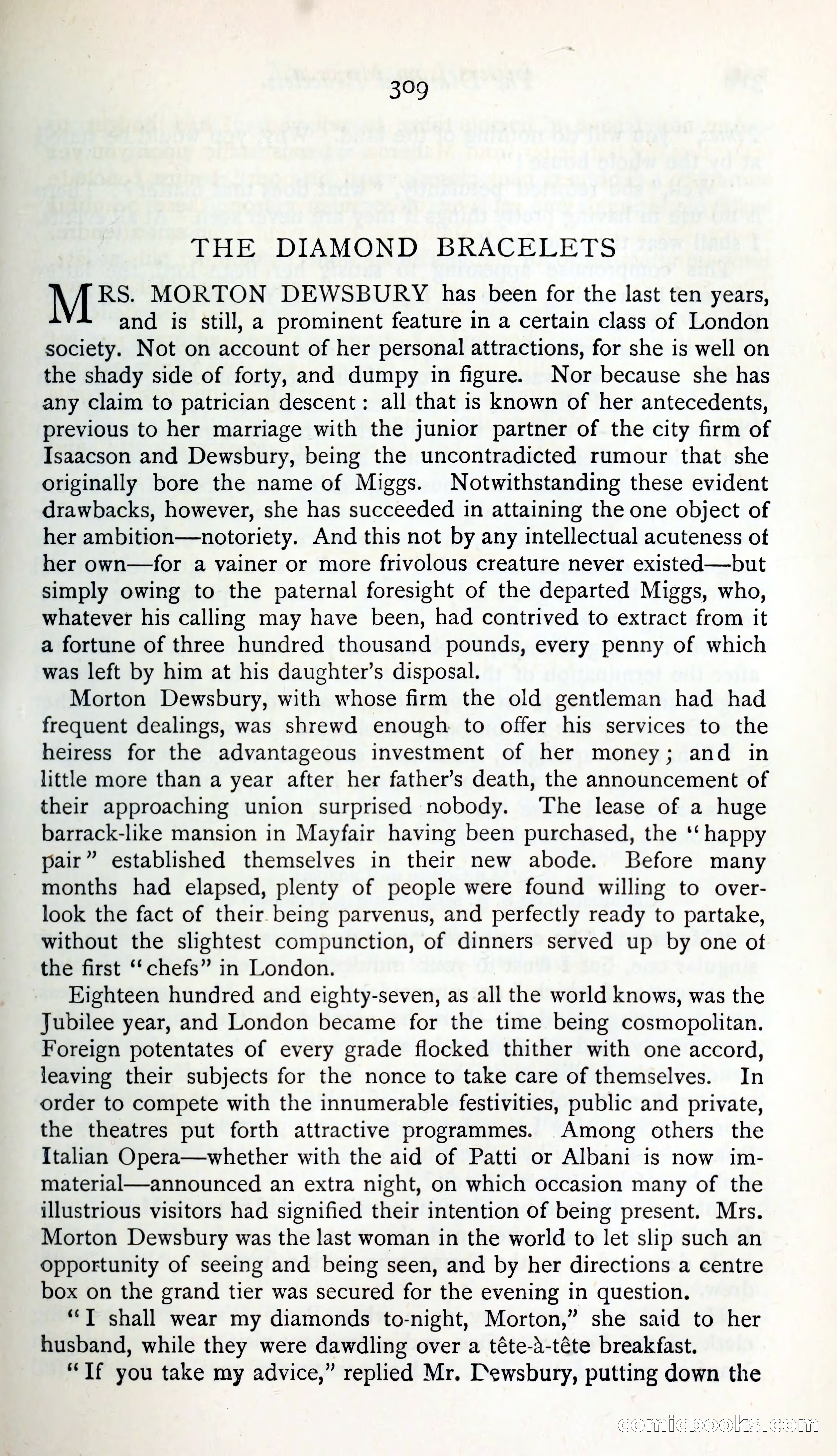
A restored page from Pulp Fiction, 1865. Page through the whole issue in the reader above.
📄 Transcribed text from this page (OCR, searchable)
Machine-transcribed from the original scan — historical spelling and the odd misread are preserved.
399 THE DIAMOND BRACELETS M85: MORTON DEWSBURY has been for the last ten years, and is still, a prominent feature in a certain class of London society. Not on account of her personal attractions, for she is well on the shady side of forty, and dumpy in figure. Nor because she has any claim to patrician descent: all that is known of her antecedents, previous to her marriage with the junior partner of the city firm of Isaacson and Dewsbury, being the uncontradicted rumour that she originally bore the name of Miggs. Notwithstanding these evident drawbacks, however, she has succeeded in attaining the one object of her ambition—notoriety. And this not by any intellectual acuteness of her own—for a vainer or more frivolous creature never existed—but simply owing to the paternal foresight of the departed Miggs, who, whatever his calling may have been, had contrived to extract from it a fortune of three hundred thousand pounds, every penny of which was left by him at his daughter’s disposal. Morton Dewsbury, with whose firm the old gentleman had had frequent dealings, was shrewd enough to offer his services to the heiress for the advantageous investment of her money; and in little more than a year after her father’s death, the announcement of their approaching union surprised nobody. The lease of a huge barrack-like mansion in Mayfair having been purchased, the ‘‘ happy pair” established themselves in their new abode. Before many months had elapsed, plenty of people were found willing to over- look the fact of their being parvenus, and perfectly ready to partake, without the slightest compunction, of dinners served up by one of the first ‘‘ chefs” in London. Eighteen hundred and eighty-seven, as all the world knows, was the Jubilee year, and London became for the time being cosmopolitan. Foreign potentates of every grade flocked thither with one accord, leaving their subjects for the nonce to take care of themselves. In order to compete with the innumerable festivities, public and private, the theatres put forth attractive programmes. Among others the Italian Opera—whether with the aid of Patti or Albani is now im- material—announced an extra night, on which occasion many of the illustrious visitors had signified their intention of being present. Mrs. Morton Dewsbury was the last woman in the world to let slip such an Opportunity of seeing and being seen, and by her directions a centre box on the grand tier was secured for the evening in question. “IT shall wear my diamonds to-night, Morton,” she said to her husband, while they were dawdling over a téte-a-téte breakfast. “Tf you take my advice,” replied Mr. Lewsbury, putting down the comicooolks (CO)