
Pulp Fiction, 1865 · page 300 of 400
The Argosy — page 300: what you’re looking at
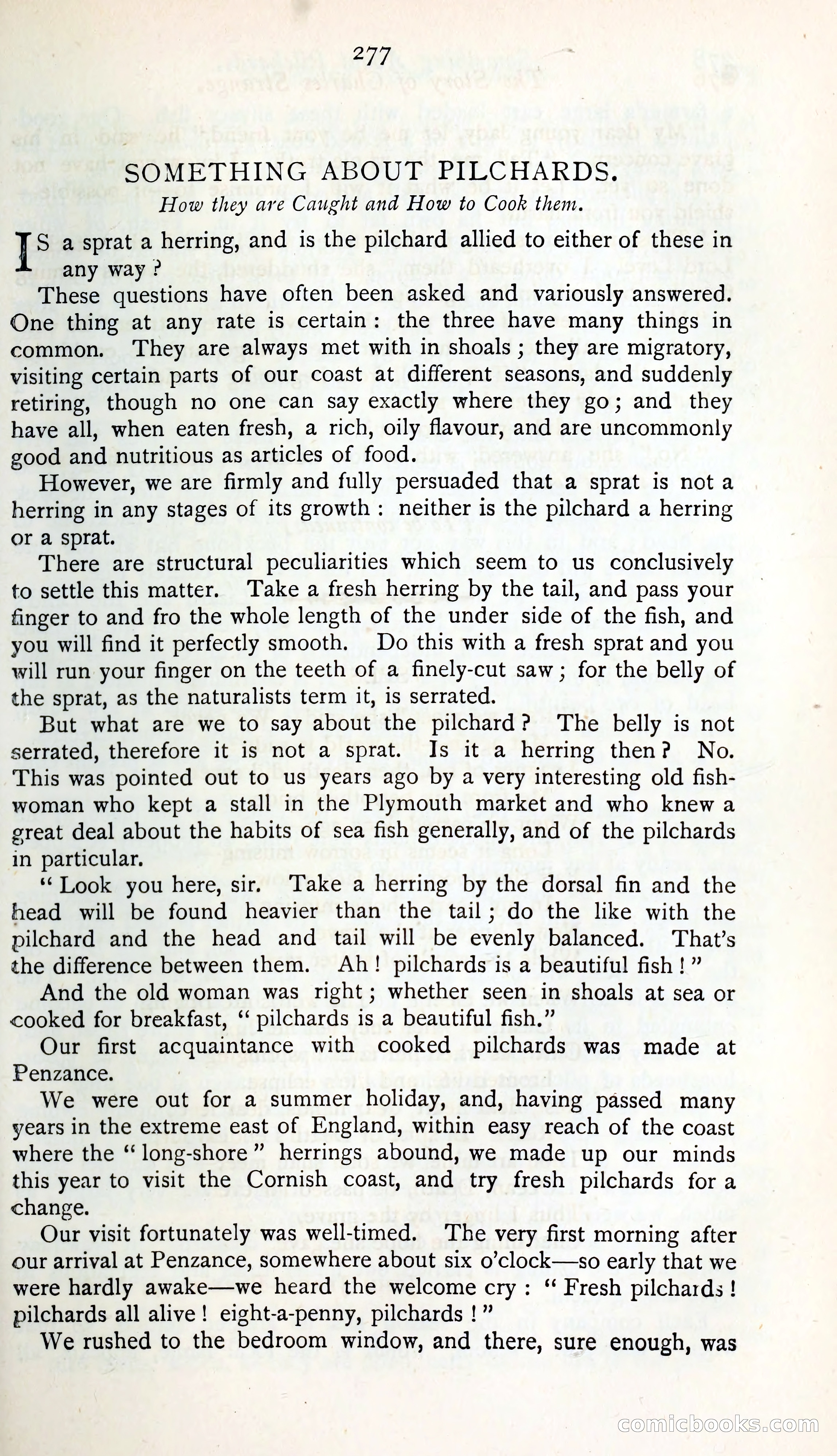
A restored page from Pulp Fiction, 1865. Page through the whole issue in the reader above.
📄 Transcribed text from this page (OCR, searchable)
Machine-transcribed from the original scan — historical spelling and the odd misread are preserved.
277 SOMETHING ABOUT PILCHARDS. How they are Caught and How to Cook them. a sprat a herring, and is the pilchard allied to either of these in any way? These questions have often been asked and variously answered. One thing at any rate is certain: the three have many things in common. ‘They are always met with in shoals ; they are migratory, visiting certain parts of our coast at different seasons, and suddenly retiring, though no one can say exactly where they go; and they have all, when eaten fresh, a rich, oily flavour, and are uncommonly good and nutritious as articles of food. However, we are firmly and fully persuaded that a sprat is nota herring in any stages of its growth: neither is the pilchard a herring Or a sprat. There are structural peculiarities which seem to us conclusively to settle this matter. Take a fresh herring by the tail, and pass your finger to and fro the whole length of the under side of the fish, and you will find it perfectly smooth. Do this with a fresh sprat and you will run your finger on the teeth of a finely-cut saw; for the belly of the sprat, as the naturalists term it, is serrated. But what are we to say about the pilchard? The belly is not serrated, therefore it is not a sprat. Is it a herring then? No. This was pointed out to us years ago by a very interesting old fish- woman who kept a stall in the Plymouth market and who knew a great deal about the habits of sea fish generally, and of the pilchards in particular. ‘Look you here, sir. ‘Take a herring by the dorsal fin and the head will be found heavier than the tail; do the like with the pilchard and the head and tail will be evenly balanced. That’s the difference between them. Ah! pilchards is a beautiful fish!” And the old woman was right; whether seen in shoals at sea or cooked for breakfast, ‘‘ pilchards is a beautiful fish.” Our first acquaintance with cooked pilchards was made at Penzance. We were out for a summer holiday, and, having passed many years in the extreme east of England, within easy reach of the coast where the “long-shore” herrings abound, we made up our minds this year to visit the Cornish coast, and try fresh pilchards fora change. Our visit fortunately was well-timed. The very first morning after our arrival at Penzance, somewhere about six o’clock—so early that we were hardly awake—we heard the welcome cry: ‘“ Fresh pilchards! pilchards all alive! eight-a-penny, pilchards !” We rushed to the bedroom window, and there, sure enough, was COMICloO© S (CO)