
Pulp Fiction, 1865 · page 109 of 400
The Argosy — page 109: what you’re looking at
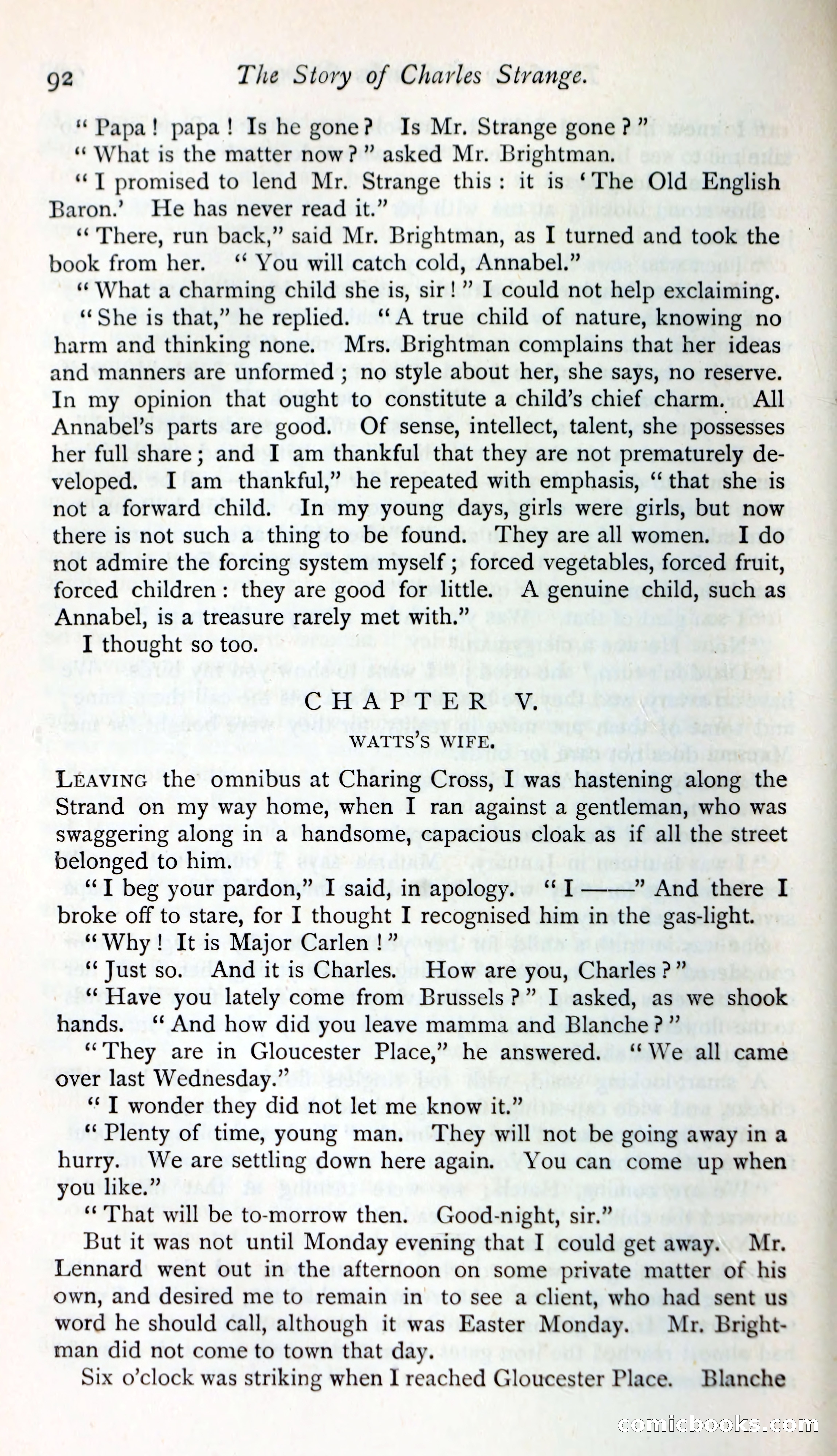
A restored page from Pulp Fiction, 1865. Page through the whole issue in the reader above.
📄 Transcribed text from this page (OCR, searchable)
Machine-transcribed from the original scan — historical spelling and the odd misread are preserved.
92 The Story of Charles Strange. ‘Papa! papa! Is he gone? Is Mr. Strange gone ?” ‘“ What is the matter now?” asked Mr. Brightman. ‘“T promised to lend Mr. Strange this: it is ‘The Old English Baron.’ He has never read it.” “There, run back,” said Mr. Brightman, as I turned and took the book from her. ‘* You will catch cold, Annabel.” ‘What a charming child she is, sir!” I could not help exclaiming. ‘She is that,” he replied. ‘A true child of nature, knowing no harm and thinking none. Mrs. Brightman complains that her ideas and manners are unformed ; no style about her, she says, no reserve. In my opinion that ought to constitute a child’s chief charm. All Annabel’s parts are good. Of sense, intellect, talent, she possesses her full share; and I am thankful that they are not prematurely de- veloped. I am thankful,” he repeated with emphasis, ‘‘ that she is not a forward child. In my young days, girls were girls, but now there is not such a thing to be found. ‘They are all women. I do not admire the forcing system myself ; forced vegetables, forced fruit, forced children: they are good for little. A genuine child, such as Annabel, is a treasure rarely met with.” I thought so too. CHA PTR? ov}: WATTS’S WIFE. LEAVING the omnibus at Charing Cross, I was hastening along the Strand on my way home, when I ran against a gentleman, who was swaggering along in a handsome, capacious cloak as if all the street belonged to him. “IT beg your pardon,” I said, in apology. ‘‘ I———” And there I broke off to stare, for I thought I recognised him in the gas-light. Why! It is Major Carlen !” “Just so. And it is Charles. How are you, Charles?” ‘‘ Have you lately come from Brussels?” I asked, as we shook hands. ‘‘ And how did you leave mamma and Blanche?” “They are in Gloucester Place,” he answered. ‘‘ We all came over last Wednesday.” ‘** T wonder they did not let me know it.” “Plenty of time, young man. They will not be going away ina hurry. We are settling down here again. You can come up when you like.” “That will be to-morrow then. Good-night, sir.” But it was not until Monday evening that I could get away. Mr. Lennard went out in the afternoon on some private matter of his own, and desired me to remain in to see a client, who had sent us word he should call, although it was Easter Monday. Mr, Bright- man did not come to town that day. 51x o’clock was striking when I reached Gloucester Place. Blanche CONMIELIOO_ KS. (E©) m