
Pulp Fiction, 1865 · page 302 of 400
The Argosy — page 302: what you’re looking at
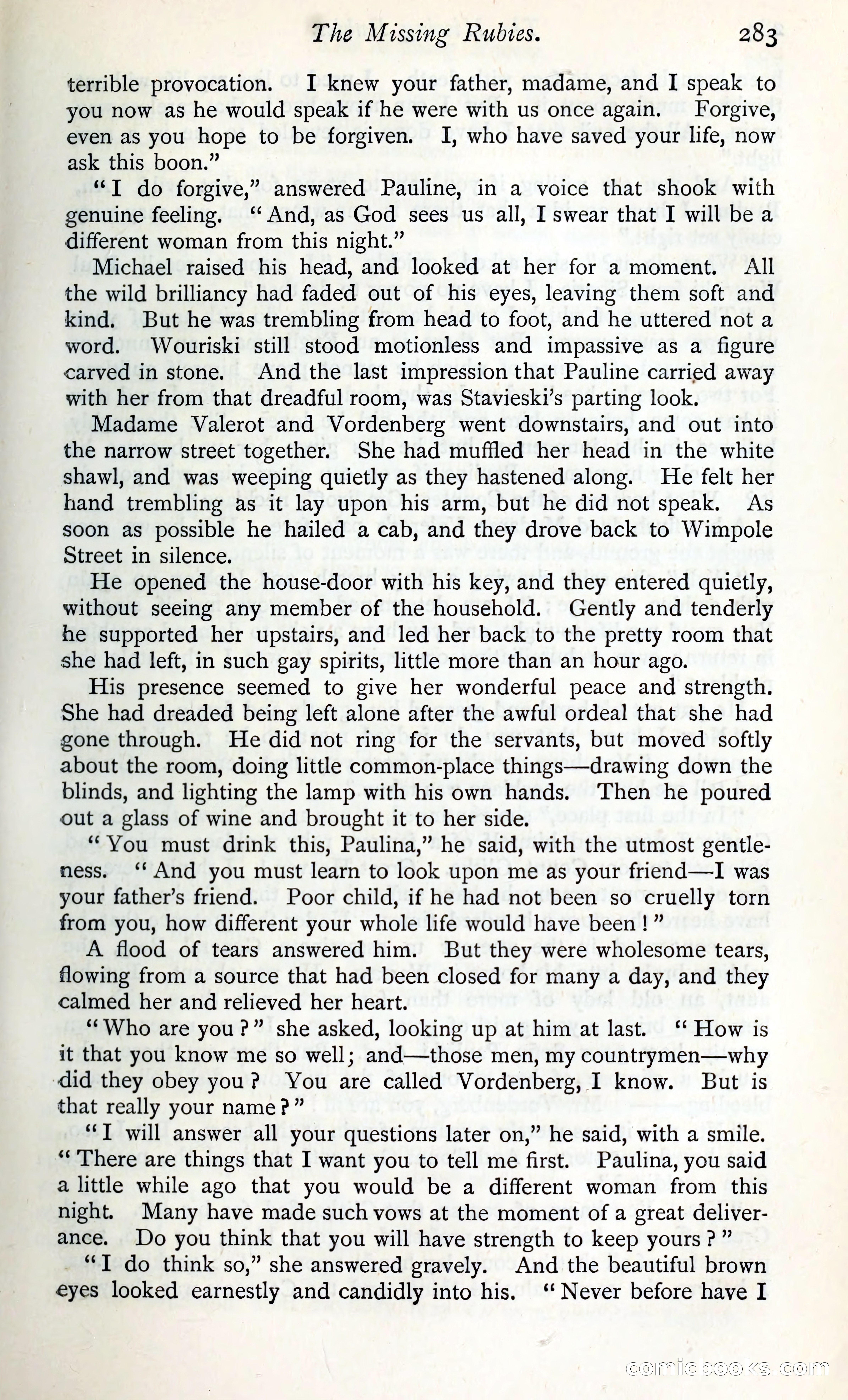
A restored page from Pulp Fiction, 1865. Page through the whole issue in the reader above.
📄 Transcribed text from this page (OCR, searchable)
Machine-transcribed from the original scan — historical spelling and the odd misread are preserved.
The Missing Rubtes. 283 terrible provocation. I knew your father, madame, and I speak to you now as he would speak if he were with us once again. _ Forgive, even as you hope to be forgiven. I, who have saved your life, now ask this boon.” “T do forgive,” answered Pauline, in a voice that shook with genuine feeling. ‘And, as God sees us all, I swear that I will be a different woman from this night.” Michael raised his head, and looked at her for a moment. All the wild brilliancy had faded out of his eyes, leaving them soft and kind. But he was trembling from head to foot, and he uttered not a word. Wouriski still stood motionless and impassive as a figure carved in stone. And the last impression that Pauline carried away with her from that dreadful room, was Stavieski’s parting look. Madame Valerot and Vordenberg went downstairs, and out into the narrow street together. She had muffled her head in the white shawl, and was weeping quietly as they hastened along. He felt her hand trembling as it lay upon his arm, but he did not speak. As soon as possible he hailed a cab, and they drove back to Wimpole Street in silence. ! He opened the house-door with his key, and they entered quietly, without seeing any member of the household. Gently and tenderly he supported her upstairs, and led her back to the pretty room that she had left, in such gay spirits, little more than an hour ago. His presence seemed to give her wonderful peace and strength. She had dreaded being left alone after the awful ordeal that she had gone through. He did not ring for the servants, but moved softly about the room, doing little common-place things—drawing down the blinds, and lighting the lamp with his own hands. Then he poured out a glass of wine and brought it to her side. “You must drink this, Paulina,” he said, with the utmost gentle- mess. ‘‘ And you must learn to look upon me as your friend—I was your father’s friend. Poor child, if he had not been so cruelly torn from you, how different your whole life would have been!” A. flood of tears answered him. But they were wholesome tears, flowing from a source that had been closed for many a day, and they calmed her and relieved her heart. “Who are you ?” she asked, looking up at him at last. ‘‘ How is it that you know me so well; and—those men, my countrymen—why ‘did they obey you? You are called Vordenberg, I know. But is that really your name?” ‘YT will answer all your questions later on,” he said, with a smile. “There are things that I want you to tell me first. Paulina, you said a little while ago that you would be a different woman from this night. Many have made such vows at the moment of a great deliver- ance. Do you think that you will have strength to keep yours ?” _ “JT do think so,” she answered gravely. And the beautiful brown eyes looked earnestly and candidly into his. ‘‘ Never before have I conniclooolkks () (SO) an