
Pulp Fiction, 1865 · page 286 of 400
The Argosy — page 286: what you’re looking at
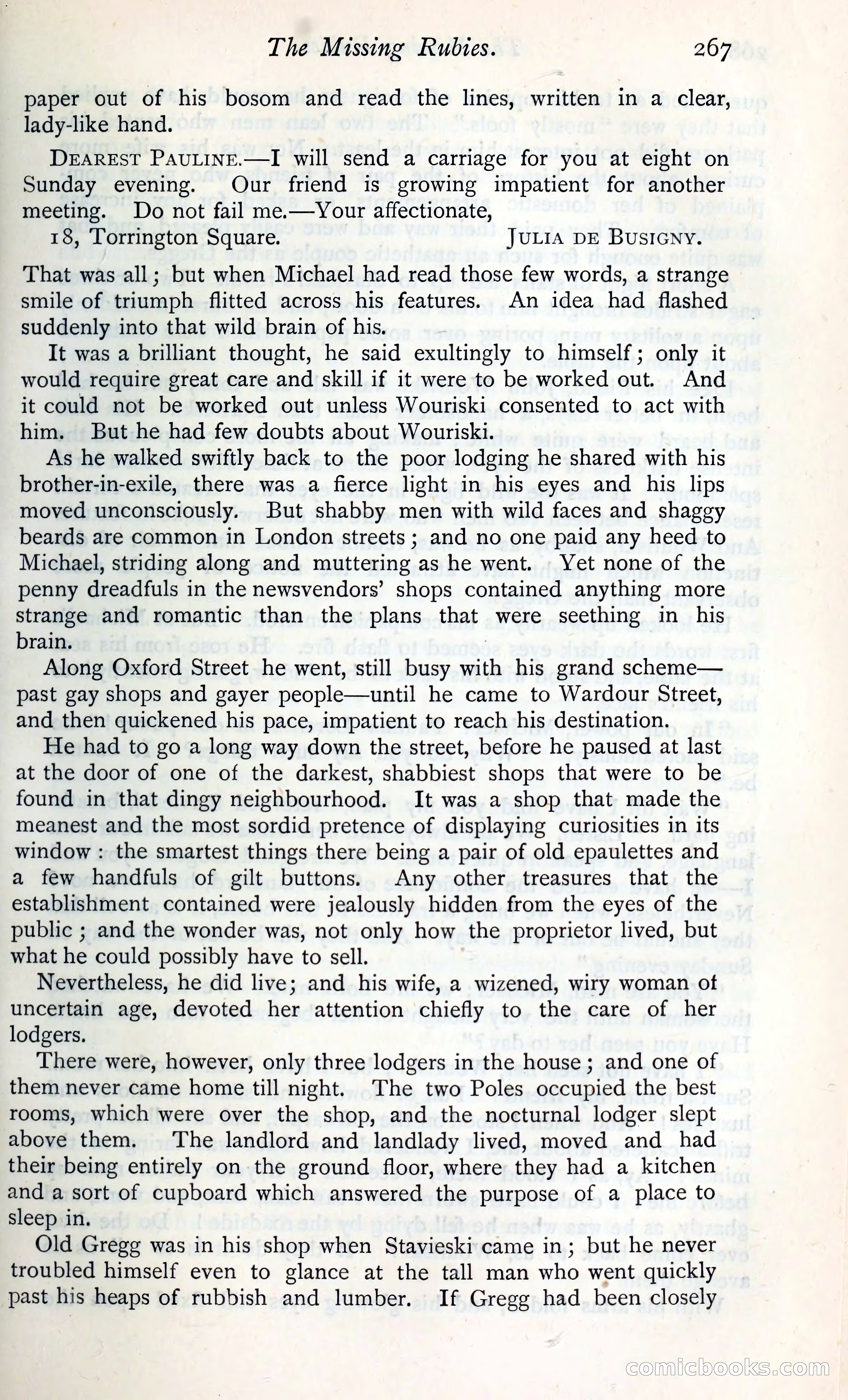
A restored page from Pulp Fiction, 1865. Page through the whole issue in the reader above.
📄 Transcribed text from this page (OCR, searchable)
Machine-transcribed from the original scan — historical spelling and the odd misread are preserved.
The Missing Rubies. 267 paper out of his bosom and read the lines, written in a clear, lady-like hand. DEAREST PAULINE.—I will send a carriage for you at eight on Sunday evening. Our friend is growing impatient for another meeting. Do not fail me.—Your affectionate, 18, Torrington Square. That was all; but when Michael had read those few words, a strange smile of triumph flitted across his features. An idea had flashed suddenly into that wild brain of his. It was a brilliant thought, he said exultingly to himself; only it would require great care and skill if it were to be worked out. And it could not be worked out unless Wouriski consented to act with him. But he had few doubts about Wouriski. As he walked swiftly back to the poor lodging he shared with his brother-in-exile, there was a fierce light in his eyes and his lips moved unconsciously. But shabby men with wild faces and shaggy beards are common in London streets ; and no one paid any heed to Michael, striding along and muttering as he went. Yet none of the penny dreadfuls in the newsvendors’ shops contained anything more strange and romantic than the plans that were seething in his brain. : Along Oxford Street he went, still busy with his grand scheme— past gay shops and gayer people—until he came to Wardour Street, and then quickened his pace, impatient to reach his destination. He had to go a long way down the street, before he paused at last at the door of one of the darkest, shabbiest shops that were to be found in that dingy neighbourhood. It was a shop that made the meanest and the most sordid pretence of displaying curiosities in its window : the smartest things there being a pair of old epaulettes and a few handfuls of gilt buttons. Any other treasures that the establishment contained were jealously hidden from the eyes of the public ; and the wonder was, not only how the proprietor lived, but what he could possibly have to sell. Nevertheless, he did live; and his wife, a wizened, wiry woman of uncertain age, devoted her attention chiefly to the care of her lodgers. There were, however, only three lodgers in the house; and one of them never came home till night. The two Poles occupied the best rooms, which were over the shop, and the nocturnal lodger slept above them. The landlord and landlady lived, moved and had their being entirely on the ground floor, where they had a kitchen and a sort of cupboard which answered the purpose of a place to sleep in. Old Gregg was in his shop when Stavieski came in; but he never troubled himself even to glance at the tall man who went quickly past his heaps of rubbish and lumber. If Gregg had been closely JULIA DE BUSIGNY. CORNICE LMO© SS (©)