
Pulp Fiction, 1865 · page 264 of 400
The Argosy — page 264: what you’re looking at
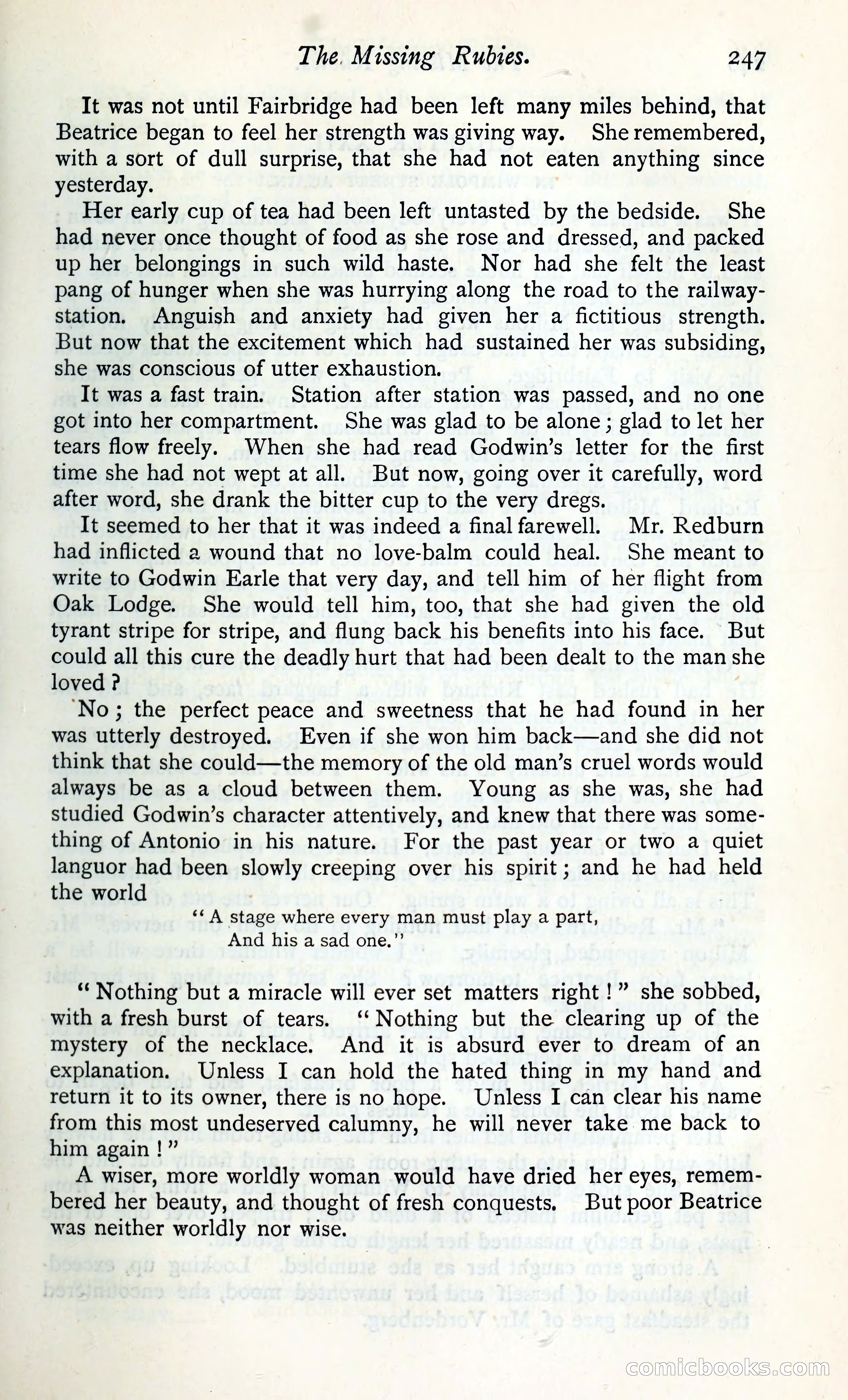
A restored page from Pulp Fiction, 1865. Page through the whole issue in the reader above.
📄 Transcribed text from this page (OCR, searchable)
Machine-transcribed from the original scan — historical spelling and the odd misread are preserved.
The. Missing Rubies. 247 It was not until Fairbridge had been left many miles behind, that Beatrice began to feel her strength was giving way. She remembered, with a sort of dull surprise, that she had not eaten anything since yesterday. Her early cup of tea had been left untasted by the bedside. She had never once thought of food as she rose and dressed, and packed up her belongings in such wild haste. Nor had she felt the least pang of hunger when she was hurrying along the road to the railway- station. Anguish and anxiety had given her a fictitious strength. But now that the excitement which had sustained her was subsiding, she was conscious of utter exhaustion. It was a fast train. Station after station was passed, and no one got into her compartment. She was glad to be alone; glad to let her tears flow freely. When she had read Godwin’s letter for the first time she had not wept at all. But now, going over it carefully, word after word, she drank the bitter cup to the very dregs. It seemed to her that it was indeed a final farewell. Mr. Redburn had inflicted a wound that no love-balm could heal. She meant to write to Godwin Earle that very day, and tell him of her flight from Oak Lodge. She would tell him, too, that she had given the old tyrant stripe for stripe, and flung back his benefits into his face. But could all this cure the deadly hurt that had been dealt to the man she loved P ‘No; the perfect peace and sweetness that he had found in her was utterly destroyed. Even if she won him back—and she did not think that she could—the memory of the old man’s cruel words would always be as a cloud between them. Young as she was, she had studied Godwin’s character attentively, and knew that there was some- thing of Antonio in his nature. For the past year or two a quiet languor had been slowly creeping over his spirit; and he had held the world ‘‘ A stage where every man must play a part, And his a sad one.”’ ‘Nothing but a miracle will ever set matters right!” she sobbed, with a fresh burst of tears. ‘‘ Nothing but the clearing up of the mystery of the necklace. And it is absurd ever to dream of an explanation. Unless I can hold the hated thing in my hand and return it to its owner, there is no hope. Unless I can clear his name from this most undeserved calumny, he will never take me back to him again !” A wiser, more worldly woman would have dried her eyes, remem- bered her beauty, and thought of fresh conquests. But poor Beatrice was neither worldly nor wise. COM () NOOKS (SO) an