
Pulp Fiction, 1865 · page 217 of 400
The Argosy — page 217: what you’re looking at
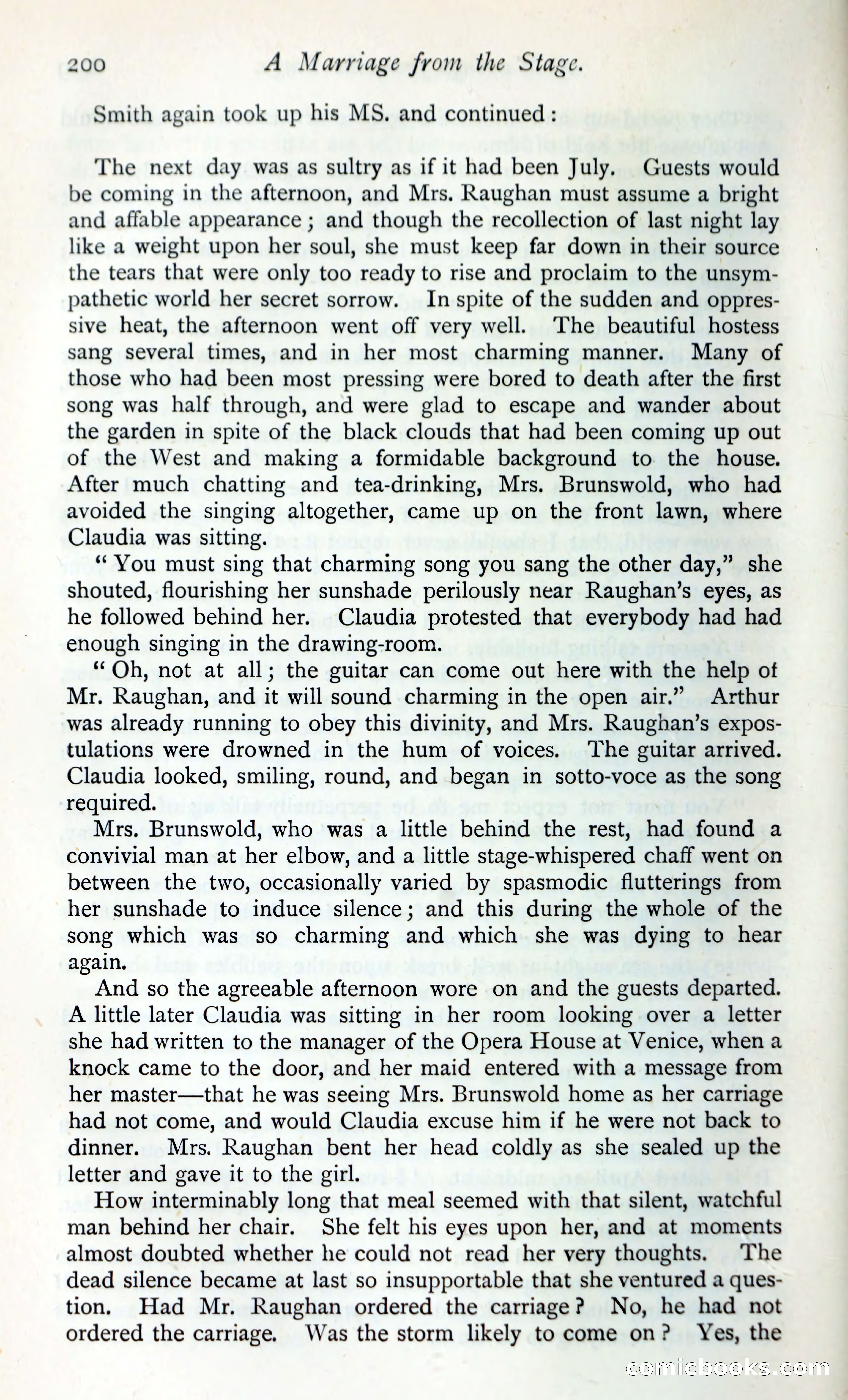
A restored page from Pulp Fiction, 1865. Page through the whole issue in the reader above.
📄 Transcribed text from this page (OCR, searchable)
Machine-transcribed from the original scan — historical spelling and the odd misread are preserved.
200 A Marriage from the Stage. Smith again took up his MS. and continued : The next day was as sultry as if it had been July. Guests would be coming in the afternoon, and Mrs. Raughan must assume a bright and affable appearance ; and though the recollection of last night lay like a weight upon her soul, she must keep far down in their source the tears that were only too ready to rise and proclaim to the unsym- pathetic world her secret sorrow. In spite of the sudden and oppres- sive heat, the afternoon went off very well. The beautiful hostess sang several times, and in her most charming manner. Many of those who had been most pressing were bored to death after the first song was half through, and were glad to escape and wander about the garden in spite of the black clouds that had been coming up out of the West and making a formidable background to the house. After much chatting and tea-drinking, Mrs. Brunswold, who had avoided the singing altogether, came up on the front lawn, where Claudia was sitting. “You must sing that charming song you sang the other day,” she shouted, flourishing her sunshade perilously near Raughan’s eyes, as he followed behind her. Claudia protested that everybody had had enough singing in the drawing-room. “Oh, not at all; the guitar can come out here with the help of Mr. Raughan, and it will sound charming in the open air.” Arthur was already running to obey this divinity, and Mrs. Raughan’s expos- tulations were drowned in the hum of voices. ‘The guitar arrived. Claudia looked, smiling, round, and began in sotto-voce as the song required. Mrs. Brunswold, who was a little behind the rest, had found a convivial man at her elbow, and a little stage-whispered chaff went on between the two, occasionally varied by spasmodic flutterings from her sunshade to induce silence; and this during the whole of the song which was so charming and which she was dying to hear again. And so the agreeable afternoon wore on and the guests departed. A little later Claudia was sitting in her room looking over a letter she had written to the manager of the Opera House at Venice, when a knock came to the door, and her maid entered with a message from her master—that he was seeing Mrs. Brunswold home as her carriage had not come, and would Claudia excuse him if he were not back to dinner. Mrs. Raughan bent her head coldly as she sealed up the letter and gave it to the girl. How interminably long that meal seemed with that silent, watchful man behind her chair. She felt his eyes upon her, and at moments almost doubted whether he could not read her very thoughts. The dead silence became at last so insupportable that she ventured a ques- tion. Had Mr. Raughan ordered the carriage? No, he had not ordered the carriage. Was the storm likely to come on? Yes, the EORNIELOOOKS Eo)