
Pulp Fiction, 1865 · page 172 of 400
The Argosy — page 172: what you’re looking at
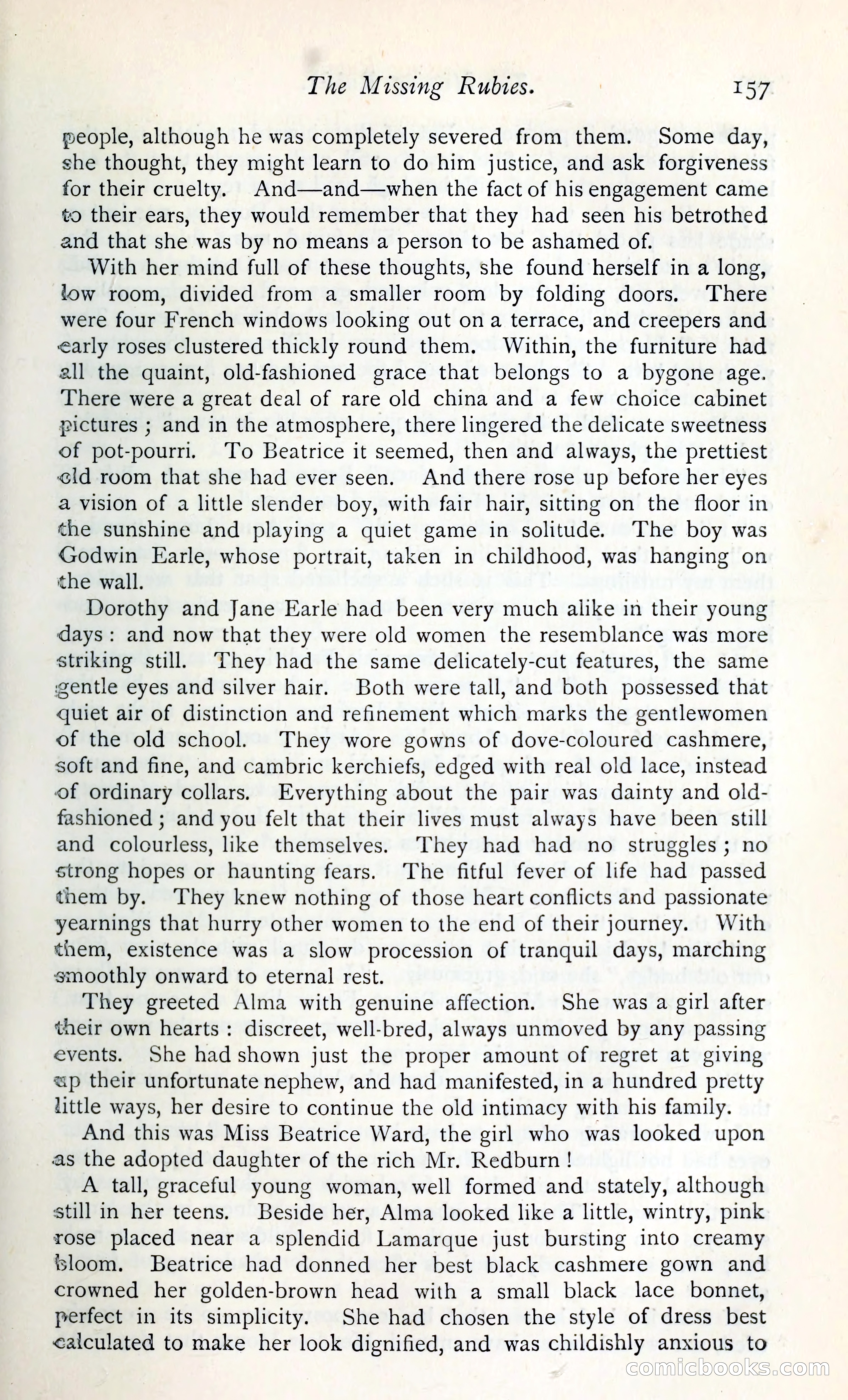
A restored page from Pulp Fiction, 1865. Page through the whole issue in the reader above.
📄 Transcribed text from this page (OCR, searchable)
Machine-transcribed from the original scan — historical spelling and the odd misread are preserved.
The Missing Rubtes. 157 people, although he was completely severed from them. Some day, she thought, they might learn to do him justice, and ask forgiveness for their cruelty. _And—and—when the fact of his engagement came to their ears, they would remember that they had seen his betrothed and that she was by no means a person to be ashamed of. With her mind full of these thoughts, she found herself in a long, tow room, divided from a smaller room by folding doors. ‘There were four French windows looking out on a terrace, and creepers and arly roses clustered thickly round them. Within, the furniture had all the quaint, old-fashioned grace that belongs to a bygone age. There were a great deal of rare old china and a few choice cabinet pictures ; and in the atmosphere, there lingered the delicate sweetness of pot-pourri. ‘To Beatrice it seemed, then and always, the prettiest Gid room that she had ever seen. And there rose up before her eyes a vision of a little slender boy, with fair hair, sitting on the floor in the sunshine and playing a quiet game in solitude. The boy was Godwin Earle, whose portrait, taken in childhood, was hanging on the wall. Dorothy and Jane Earle had been very much alike in their young days: and now that they were old women the resemblance was more striking still. They had the same delicately-cut features, the same gentle eyes and silver hair. Both were tall, and both possessed that quiet air of distinction and refinement which marks the gentlewomen of the old school. They wore gowns of dove-coloured cashmere, soft and fine, and cambric kerchiefs, edged with real old lace, instead of ordinary collars. Everything about the pair was dainty and old- fashioned ; and you felt that their lives must always have been still and colourless, like themselves. They had had no struggles; no strong hopes or haunting fears. The fitful fever of life had passed them by. ‘They knew nothing of those heart conflicts and passionate yearnings that hurry other women to the end of their journey. With them, existence was a slow procession of tranquil days, marching smoothly onward to eternal rest. They greeted Alma with genuine affection. She was a girl after their own hearts: discreet, well-bred, always unmoved by any passing events. She had shown just the proper amount of regret at giving up their unfortunate nephew, and had manifested, in a hundred pretty little ways, her desire to continue the old intimacy with his family. And this was Miss Beatrice Ward, the girl who was looked upon as the adopted daughter of the rich Mr. Redburn ! A tall, graceful young woman, well formed and stately, although still in her teens. Beside her, Alma looked like a little, wintry, pink rose placed near a splendid Lamarque just bursting into creamy bloom. Beatrice had donned her best black cashmere gown and crowned her golden-brown head with a small black lace bonnet, perfect in its simplicity. She had chosen the style of dress best €alculated to make her look dignified, and was childishly anxious to CcoMmicoookKks (c©) an