
Pulp Fiction, 1865 · page 55 of 400
The Argosy — page 55: what you’re looking at
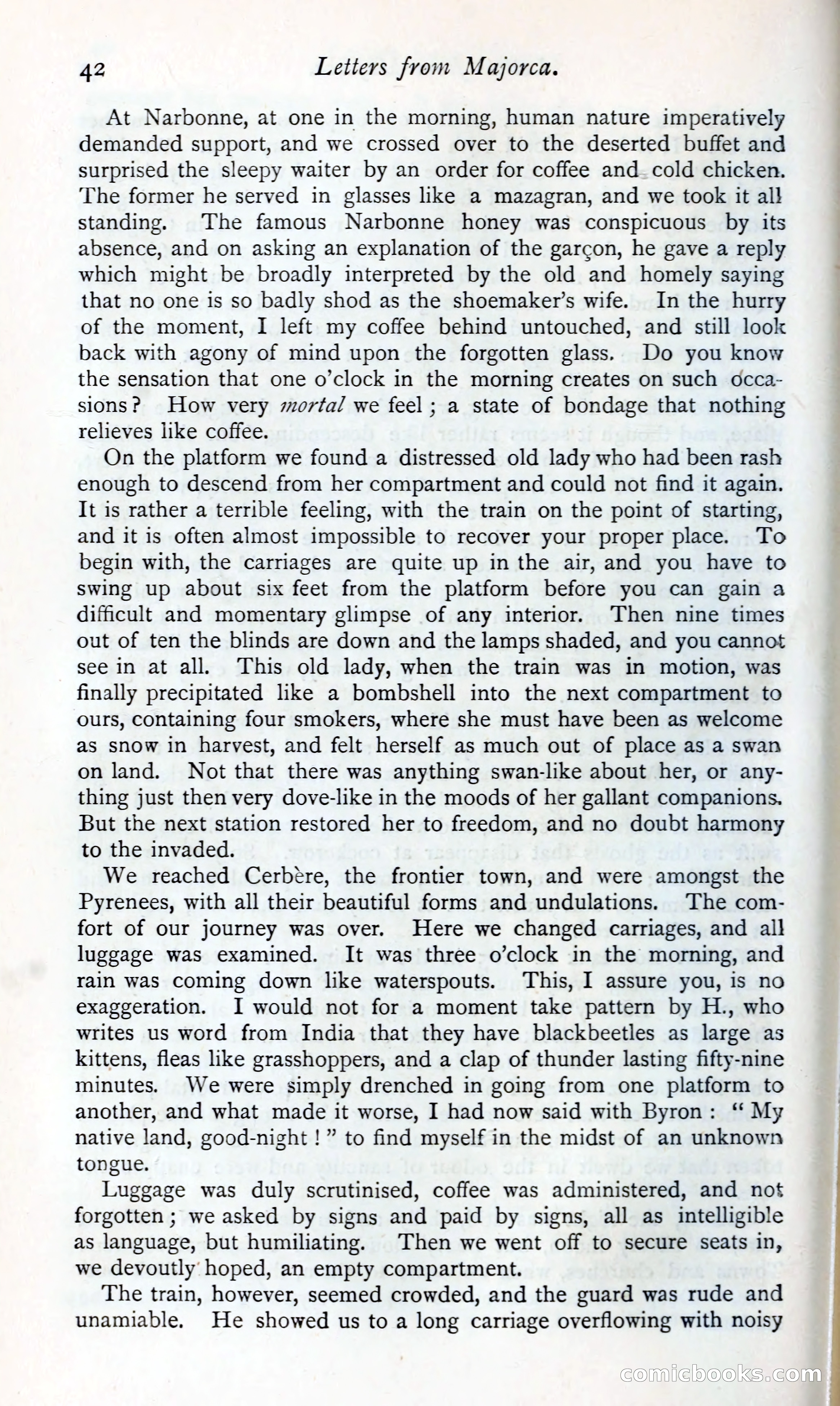
A restored page from Pulp Fiction, 1865. Page through the whole issue in the reader above.
📄 Transcribed text from this page (OCR, searchable)
Machine-transcribed from the original scan — historical spelling and the odd misread are preserved.
42 Letters from Majorca. At Narbonne, at one in the morning, human nature imperatively demanded support, and we crossed over to the deserted buffet and surprised the sleepy waiter by an order for coffee and_cold chicken. The former he served in glasses like a mazagran, and we took it all standing. The famous Narbonne honey was conspicuous by its absence, and on asking an explanation of the garcon, he gave a reply which might be broadly interpreted by the old and homely saying that no one is so badly shod as the shoemaker’s wife. In the hurry of the moment, I left my coffee behind untouched, and still look back with agony of mind upon the forgotten glass. Do you know the sensation that one o’clock in the morning creates on such occa- sions? How very mortal we feel; a state of bondage that nothing relieves like coffee. On the platform we found a distressed old lady who had been rash enough to descend from her compartment and could not find it again. It is rather a terrible feeling, with the train on the point of starting, and it is often almost impossible to recover your proper place. To begin with, the carriages are quite up in the air, and you have to swing up about six feet from the platform before you can gain a difficult and momentary glimpse of any interior. ‘Then nine times out of ten the blinds are down and the lamps shaded, and you cannot see in at all. This old lady, when the train was in motion, was finally precipitated lke a bombshell into the next compartment to ours, containing four smokers, where she must have been as welcome as snow in harvest, and felt herself as much out of place as a swan on land. Not that there was anything swan-like about her, or any- thing just then very dove-like in the moods of her gallant companions. But the next station restored her to freedom, and no doubt harmony to the invaded. We reached Cerbére, the frontier town, and were amongst the Pyrenees, with all their beautiful forms and undulations. The com- fort of our journey was over. Here we changed carriages, and all luggage was examined. It was three o’clock in the morning, and rain was coming down like waterspouts. This, I assure you, is no exaggeration. I would not for a moment take pattern by H., who writes us word from India that they have blackbeetles as large as kittens, fleas like grasshoppers, and a clap of thunder lasting fifty-nine minutes. We were simply drenched in going from one platform to another, and what made it worse, I had now said with Byron: ‘ My | native land, good-night !” to find myself in the midst of an unknown tongue. Luggage was duly scrutinised, coffee was administered, and not forgotten ; we asked by signs and paid by signs, all as intelligible as language, but humiliating. Then we went off to secure seats in, we devoutly hoped, an empty compartment. The train, however, seemed crowded, and the guard was rude and unamiable. He showed us to a long carriage overflowing with noisy COMMIEOOOKS.E@)