
Pulp Fiction, 1865 · page 51 of 400
The Argosy — page 51: what you’re looking at
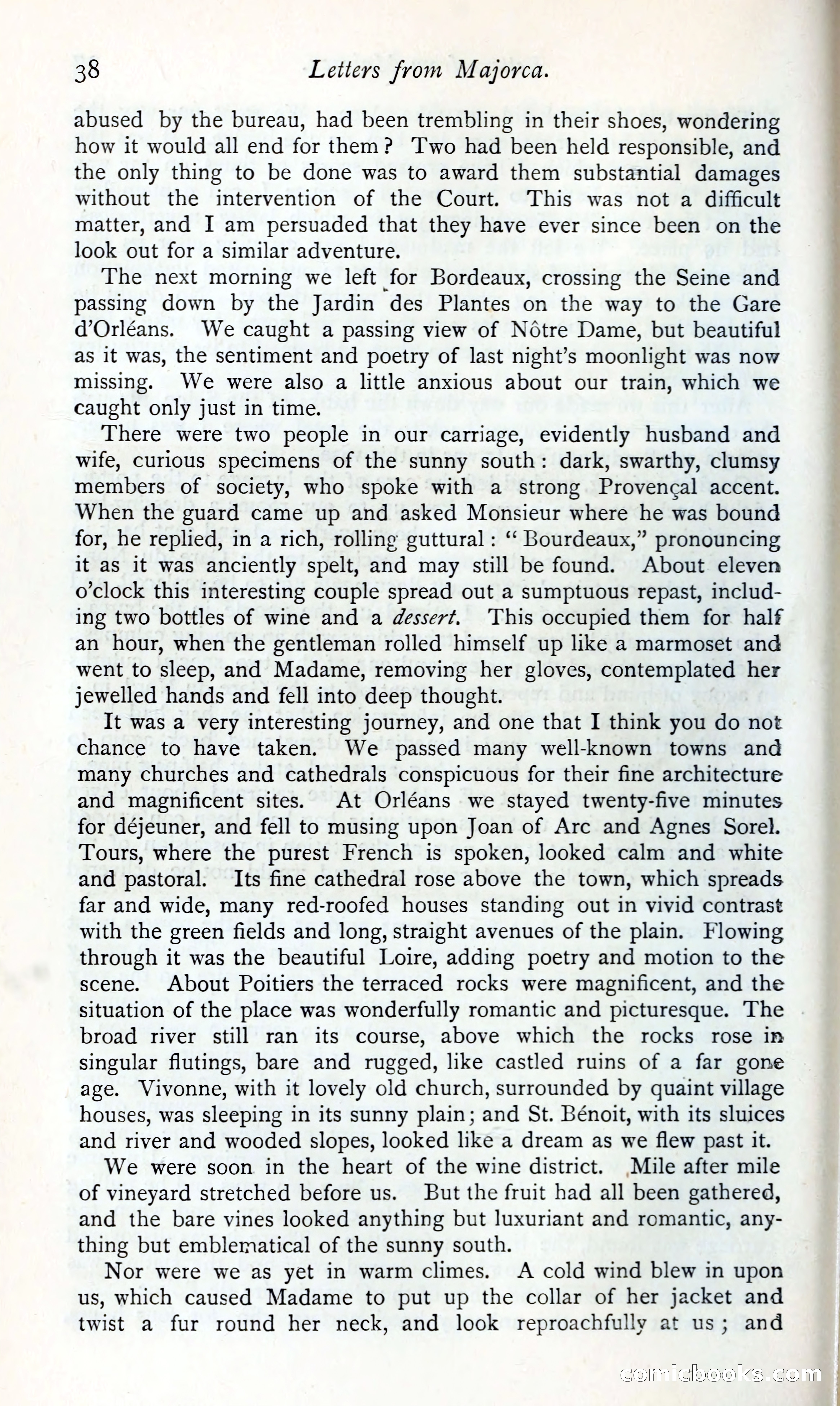
A restored page from Pulp Fiction, 1865. Page through the whole issue in the reader above.
📄 Transcribed text from this page (OCR, searchable)
Machine-transcribed from the original scan — historical spelling and the odd misread are preserved.
38 Letters from Majorca. abused by the bureau, had been trembling in their shoes, wondering how it would all end for them? Two had been held responsible, and the only thing to be done was to award them substantial damages without the intervention of the Court. This was not a difficult matter, and I am persuaded that they have ever since been on the look out for a similar adventure. The next morning we left for Bordeaux, crossing the Seine and passing down by the Jardin des Plantes on the way to the Gare | d’Orléans. We caught a passing view of Notre Dame, but beautiful | as it was, the sentiment and poetry of last night’s moonlight was now missing. We were also a little anxious about our train, which we caught only just in time. There were two people in our carriage, evidently husband and wife, curlous specimens of the sunny south: dark, swarthy, clumsy members of society, who spoke with a strong Provencal accent. When the guard came up and asked Monsieur where he was bound for, he replied, in a rich, rolling guttural : “‘ Bourdeaux,” pronouncing it as it was anciently spelt, and may still be found. About eleven o'clock this interesting couple spread out a sumptuous repast, includ- ing two bottles of wine and a dessert. This occupied them for half an hour, when the gentleman rolled himself up like a marmoset and went to sleep, and Madame, removing her gloves, contemplated her jewelled hands and fell into deep thought. It was a very interesting journey, and one that I think you do not chance to have taken. We passed many well-known towns and many churches and cathedrals conspicuous for their fine architecture and magnificent sites. At Orléans we stayed twenty-five minutes for déjeuner, and fell to musing upon Joan of Arc and Agnes Sorel. Tours, where the purest French is spoken, looked calm and white and pastoral. Its fine cathedral rose above the town, which spreads far and wide, many red-roofed houses standing out in vivid contrast with the green fields and long, straight avenues of the plain. Flowing through it was the beautiful Loire, adding poetry and motion to the scene. About Poitiers the terraced rocks were magnificent, and the situation of the place was wonderfully romantic and picturesque. The broad river still ran its course, above which the rocks rose in singular flutings, bare and rugged, like castled ruins of a far gone age. Vivonne, with it lovely old church, surrounded by quaint village houses, was sleeping in its sunny plain; and St. Bénoit, with its sluices and river and wooded slopes, looked like a dream as we flew past it. We were soon in the heart of the wine district. Mile after mile of vineyard stretched before us. But the fruit had all been gathered, and the bare vines looked anything but luxuriant and romantic, any- thing but emblematical of the sunny south. Nor were we as yet in warm climes. A cold wind blew in upon us, which caused Madame to put up the collar of her jacket and twist a fur round her neck, and look reproachfully at us; and COMICOOOXS. CO