
Pulp Fiction, 1865 · page 398 of 400
The Argosy — page 398: what you’re looking at
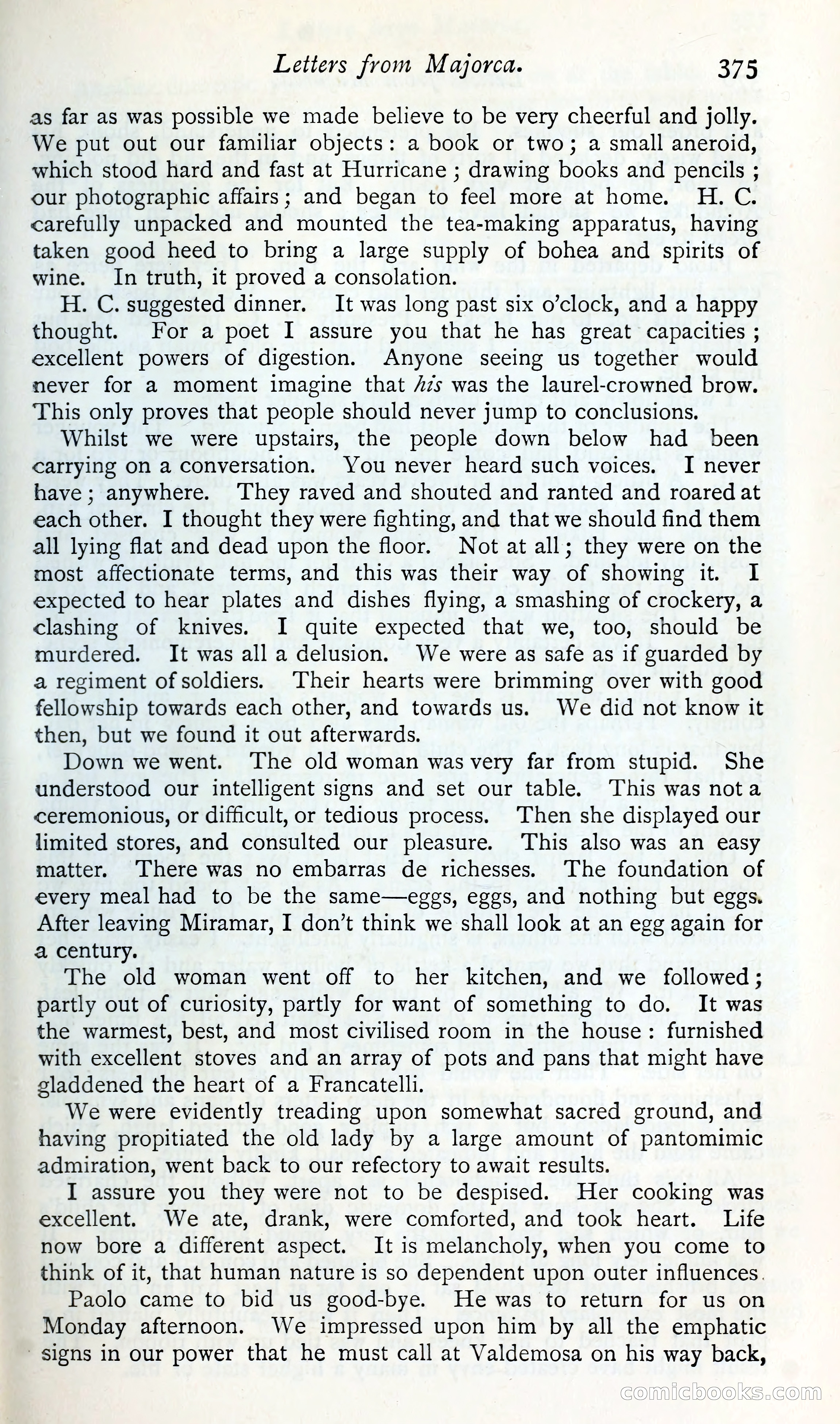
A restored page from Pulp Fiction, 1865. Page through the whole issue in the reader above.
📄 Transcribed text from this page (OCR, searchable)
Machine-transcribed from the original scan — historical spelling and the odd misread are preserved.
Letters from Majorca. 375 as far as was possible we made believe to be very cheerful and jolly. We put out our familiar objects: a book or two; a small aneroid, which stood hard and fast at Hurricane ; drawing books and pencils ; our photographic affairs; and began to feel more at home. H. C. carefully unpacked and mounted the tea-making apparatus, having taken good heed to bring a large supply of bohea and spirits of wine. In truth, it proved a consolation. H. C. suggested dinner. It was long past six o’clock, and a happy thought. For a poet I assure you that he has great capacities ; excellent powers of digestion. Anyone seeing us together would never for a moment imagine that /zs was the laurel-crowned brow. This only proves that people should never jump to conclusions. Whilst we were upstairs, the people down below had _ been carrying on a conversation. You never heard such voices. I never have; anywhere. ‘They raved and shouted and ranted and roared at each other. I thought they were fighting, and that we should find them all lying flat and dead upon the floor. Not at all; they were on the most affectionate terms, and this was their way of showing it. I expected to hear plates and dishes flying, a smashing of crockery, a clashing of knives. I quite expected that we, too, should be murdered. It was alla delusion. We were as safe as if guarded by a regiment of soldiers. Their hearts were brimming over with good fellowship towards each other, and towards us. We did not know it then, but we found it out afterwards. Down we went. The old woman was very far from stupid. She understood our intelligent signs and set our table. ‘This was nota ceremonious, or difficult, or tedious process. Then she displayed our limited stores, and consulted our pleasure. This also was an easy matter. ‘There was no embarras de richesses. ‘The foundation of every meal had to be the same—eggs, eggs, and nothing but eggs. After leaving Miramar, I don’t think we shall look at an egg again for a century. The old woman went off to her kitchen, and we followed; partly out of curiosity, partly for want of something to do. It was the warmest, best, and most civilised room in the house: furnished with excellent stoves and an array of pots and pans that might have sladdened the heart of a Francatelli. We were evidently treading upon somewhat sacred ground, and having propitiated the old lady by a large amount of pantomimic admiration, went back to our refectory to await results. I assure you they were not to be despised. Her cooking was excellent. We ate, drank, were comforted, and took heart. Life now bore a different aspect. It is melancholy, when you come to think of it, that human nature is so dependent upon outer influences. Paolo came to bid us good-bye. He was to return for us on Monday afternoon. We impressed upon him by all the emphatic signs in our power that he must call at Valdemosa on his way back, conmmicooolks co