
Pulp Fiction, 1865 · page 387 of 400
The Argosy — page 387: what you’re looking at
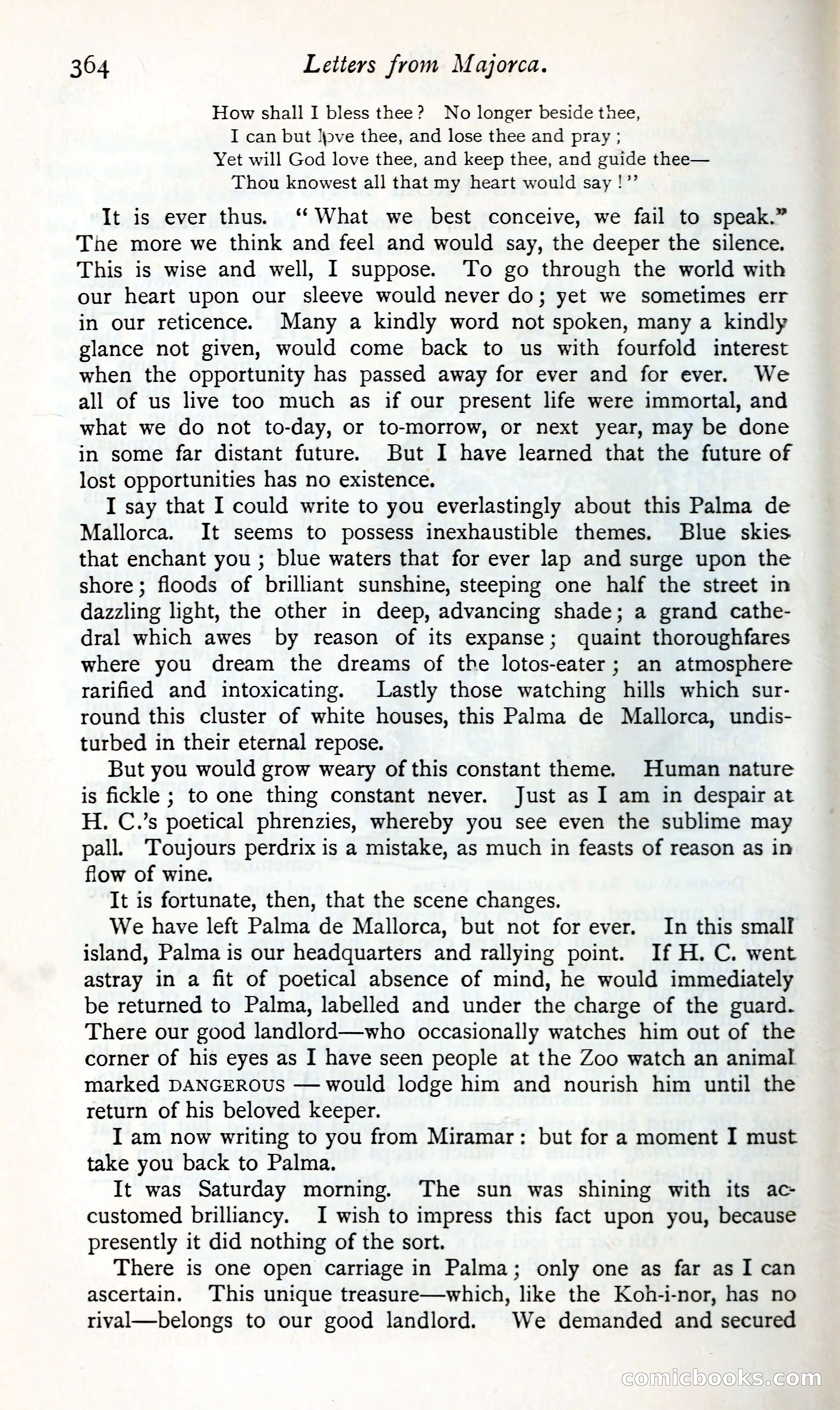
A restored page from Pulp Fiction, 1865. Page through the whole issue in the reader above.
📄 Transcribed text from this page (OCR, searchable)
Machine-transcribed from the original scan — historical spelling and the odd misread are preserved.
364 Letters from Majorca. How shall I bless thee? No longer beside thee, I can but pve thee, and lose thee and pray ; Yet will God love thee, and keep thee, and guide thee— Thou knowest all that my heart would say !”’ It is ever thus. ‘“‘ What we best conceive, we fail to speak.” The more we think and feel and would say, the deeper the silence. This is wise and well, I suppose. To go through the world with our heart upon our sleeve would never do; yet we sometimes err in our reticence. Many a kindly word not spoken, many a kindly glance not given, would come back to us with fourfold interest when the opportunity has passed away for ever and for ever. We all of us live too much as if our present life were immortal, and what we do not to-day, or to-morrow, or next year, may be done in some far distant future. But I have learned that the future of lost opportunities has no existence. I say that I could write to you everlastingly about this Palma de Mallorca. It seems to possess inexhaustible themes. Blue skies that enchant you ; blue waters that for ever lap and surge upon the shore; floods of brilliant sunshine, steeping one half the street in dazzling light, the other in deep, advancing shade; a grand cathe- dral which awes by reason of its expanse; quaint thoroughfares where you dream the dreams of the lotos-eater; an atmosphere rarified and intoxicating. Lastly those watching hills which sur- round this cluster of white houses, this Palma de Mallorca, undis- turbed in their eternal repose. But you would grow weary of this constant theme. Human nature is fickle ; to one thing constant never. Just as I am in despair at H. C.’s poetical phrenzies, whereby you see even the sublime may pall. Toujours perdrix is a mistake, as much in feasts of reason as in flow of wine. It is fortunate, then, that the scene changes. We have left Palma de Mallorca, but not for ever. In this small island, Palma is our headquarters and rallying point. If H. C. went astray in a fit of poetical absence of mind, he would immediately be returned to Palma, labelled and under the charge of the guard. There our good landlord—who occasionally watches him out of the corner of his eyes as I have seen people at the Zoo watch an animal marked DANGEROUS — would lodge him and nourish him until the return of his beloved keeper. I am now writing to you from Miramar: but for a moment I must take you back to Palma. It was Saturday morning. The sun was shining with its ac customed brilliancy. I wish to impress this fact upon you, because presently it did nothing of the sort. There is one open carriage in Palma; only one as far as I can ascertain. This unique treasure—which, like the Koh-i-nor, has no rival—belongs to our good landlord. We demanded and secured CONNICLOOKS. EO) m