
Pulp Fiction, 1865 · page 357 of 400
The Argosy — page 357: what you’re looking at
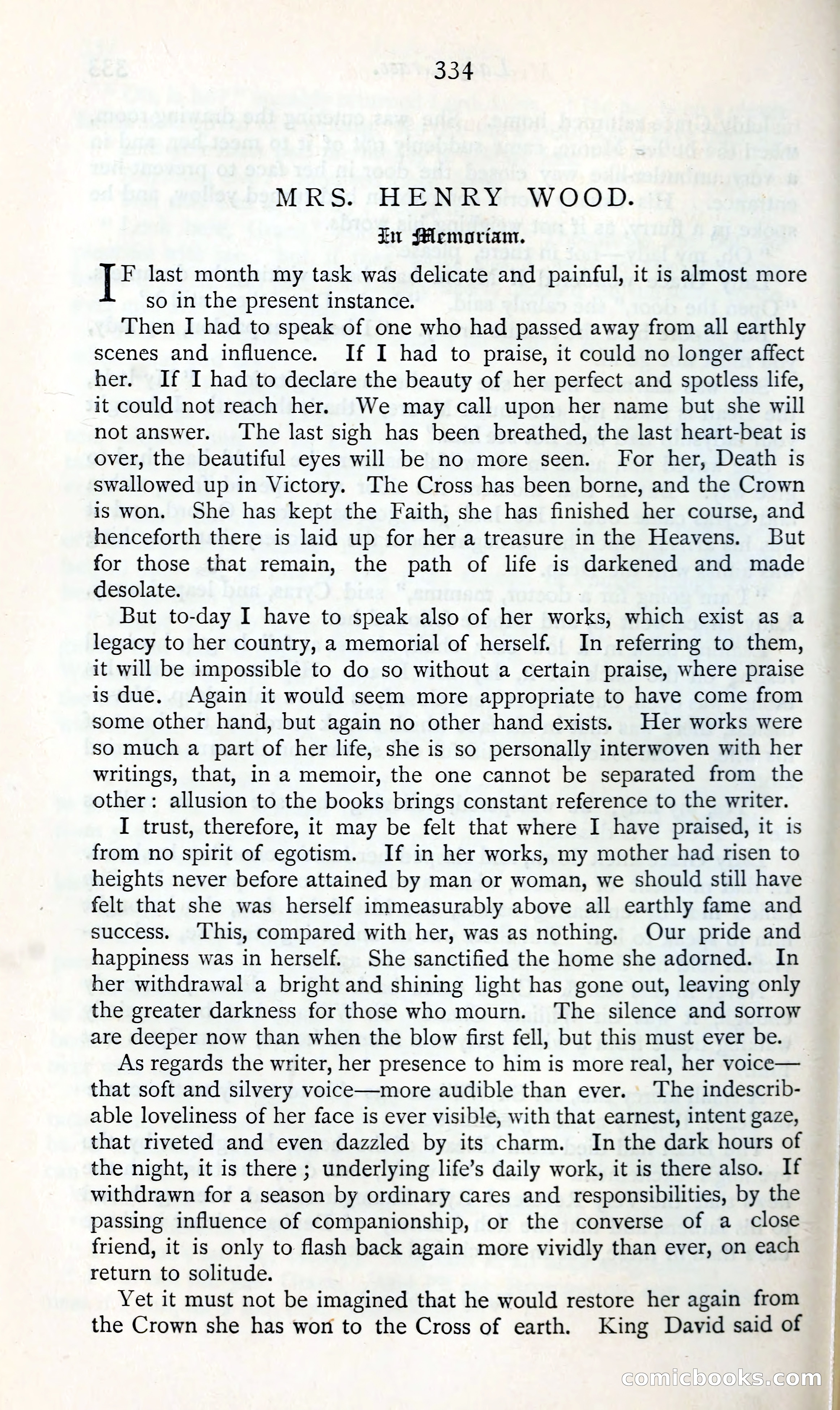
A restored page from Pulp Fiction, 1865. Page through the whole issue in the reader above.
📄 Transcribed text from this page (OCR, searchable)
Machine-transcribed from the original scan — historical spelling and the odd misread are preserved.
334 MRS. HENRY WOOD. ti fHemoriam. = last month my task was delicate and painful, it is almost more so in the present instance. Then I had to speak of one who had passed away from all earthly scenes and influence. If I had to praise, it could no longer affect her. If I had to declare the beauty of her perfect and spotless life, it could not reach her. We may call upon her name but she will not answer. The last sigh has been breathed, the last heart-beat is over, the beautiful eyes will be no more seen. For her, Death is swallowed up in Victory. The Cross has been borne, and the Crown is won. She has kept the Faith, she has finished her course, and henceforth there is laid up for her a treasure in the Heavens. But for those that remain, the path of life is darkened and made desolate. | But to-day I have to speak also of her works, which exist as a legacy to her country, a memorial of herself. In referring to them, it will be impossible to do so without a certain praise, where praise is due. Again it would seem more appropriate to have come from some other hand, but again no other hand exists. Her works were so much a part of her life, she is so personally interwoven with her writings, that, in a memoir, the one cannot be separated from the other: allusion to the books brings constant reference to the writer. I trust, therefore, it may be felt that where I have praised, it is from no spirit of egotism. If in her works, my mother had risen to heights never before attained by man or woman, we should still have felt that she was herself immeasurably above all earthly fame and success. ‘This, compared with her, was as nothing. Our pride and happiness was in herself. She sanctified the home she adorned. In her withdrawal a bright and shining light has gone out, leaving only the greater darkness for those who mourn. The silence and sorrow are deeper now than when the blow first fell, but this must ever be. As regards the writer, her presence to him is more real, her voice— that soft and silvery voice—more audible than ever. The indescrib- able loveliness of her face is ever visible, with that earnest, intent gaze, that riveted and even dazzled by its charm. In the dark hours of the night, it is there ; underlying life’s daily work, it is there also. If withdrawn for a season by ordinary cares and responsibilities, by the passing influence of companionship, or the converse of a close friend, it is only to flash back again more vividly than ever, on each return to solitude. Yet it must not be imagined that he would restore her again from the Crown she has won to the Cross of earth. King David said of ECONNICLIOOKS,(E0)