
Pulp Fiction, 1865 · page 34 of 400
The Argosy — page 34: what you’re looking at
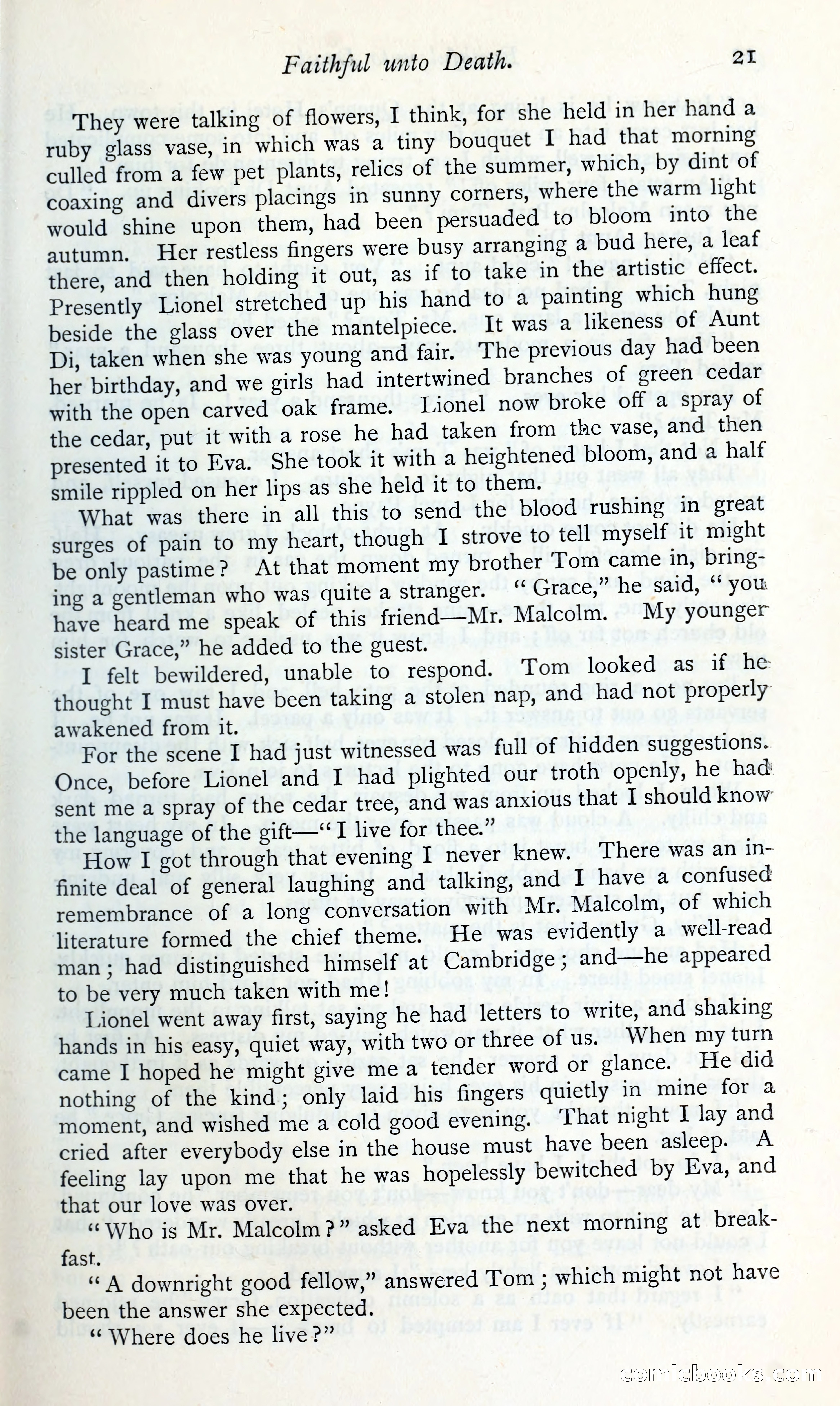
A restored page from Pulp Fiction, 1865. Page through the whole issue in the reader above.
📄 Transcribed text from this page (OCR, searchable)
Machine-transcribed from the original scan — historical spelling and the odd misread are preserved.
Faithful unto Death. 21 They were talking of flowers, I think, for she held in her hand a ruby glass vase, in which was a tiny bouquet I had that morning culled from a few pet plants, relics of the summer, which, by dint of coaxing and divers placings in sunny corners, where the warm light would shine upon them, had been persuaded to bloom into the autumn. Her restless fingers were busy arranging a bud here, a leaf there, and then holding it out, as if to take in the artistic effect. Presently Lionel stretched up his hand to a painting which hung beside the glass over the mantelpiece. It was a likeness of Aunt Di, taken when she was young and fair. ‘The previous day had been her birthday, and we girls had intertwined branches of green cedar with the open carved oak frame. Lionel now broke off a spray of the cedar, put it with a rose he had taken from the vase, and then presented it to Eva. She took it with a heightened bloom, and a halt smile rippled on her lips as she held it to them. What was there in all this to send the blood rushing in great surges of pain to my heart, though I strove to tell myself it might be only pastime? At that moment my brother Tom came in, bring- ing a gentleman who was quite a stranger. “Grace,” he said, “* you have heard me speak of this friend—Mr. Malcolm. My younger sister Grace,” he added to the guest. I felt bewildered, unable to respond. ‘Tom looked as if he thought I must have been taking a stolen nap, and had not properly awakened from it. For the scene I had just witnessed was full of hidden suggestions. Once, before Lionel and I had plighted our troth openly, he had sent me a spray of the cedar tree, and was anxious that I should know the language of the gift—‘‘I live for thee.” How I got through that evening I never knew. ‘There was an in- finite deal of general laughing and talking, and I have a confused remembrance of a long conversation with Mr. Malcolm, of which literature formed the chief theme. He was evidently a well-read man; had distinguished himself at Cambridge ; and—he appeared to be very much taken with me! Lionel went away first, saying he had letters to write, and shaking hands in his easy, quiet way, with two or three of us. When my turn came I hoped he might give me a tender word or glance. He did nothing of the kind; only laid his fingers quietly in mine for a moment, and wished me a cold good evening. That night I lay and cried after everybody else in the house must have been asleep. A feeling lay upon me that he was hopelessly bewitched by Eva, and that our love was over. ; “Who is Mr. Malcolm?” asked Eva the next morning at break- asf. “ A downright good fellow,” answered Tom ; which might not have been the answer she expected. ‘Where does he live?” COMmMICOOOKS.E© im