
Pulp Fiction, 1865 · page 336 of 400
The Argosy — page 336: what you’re looking at
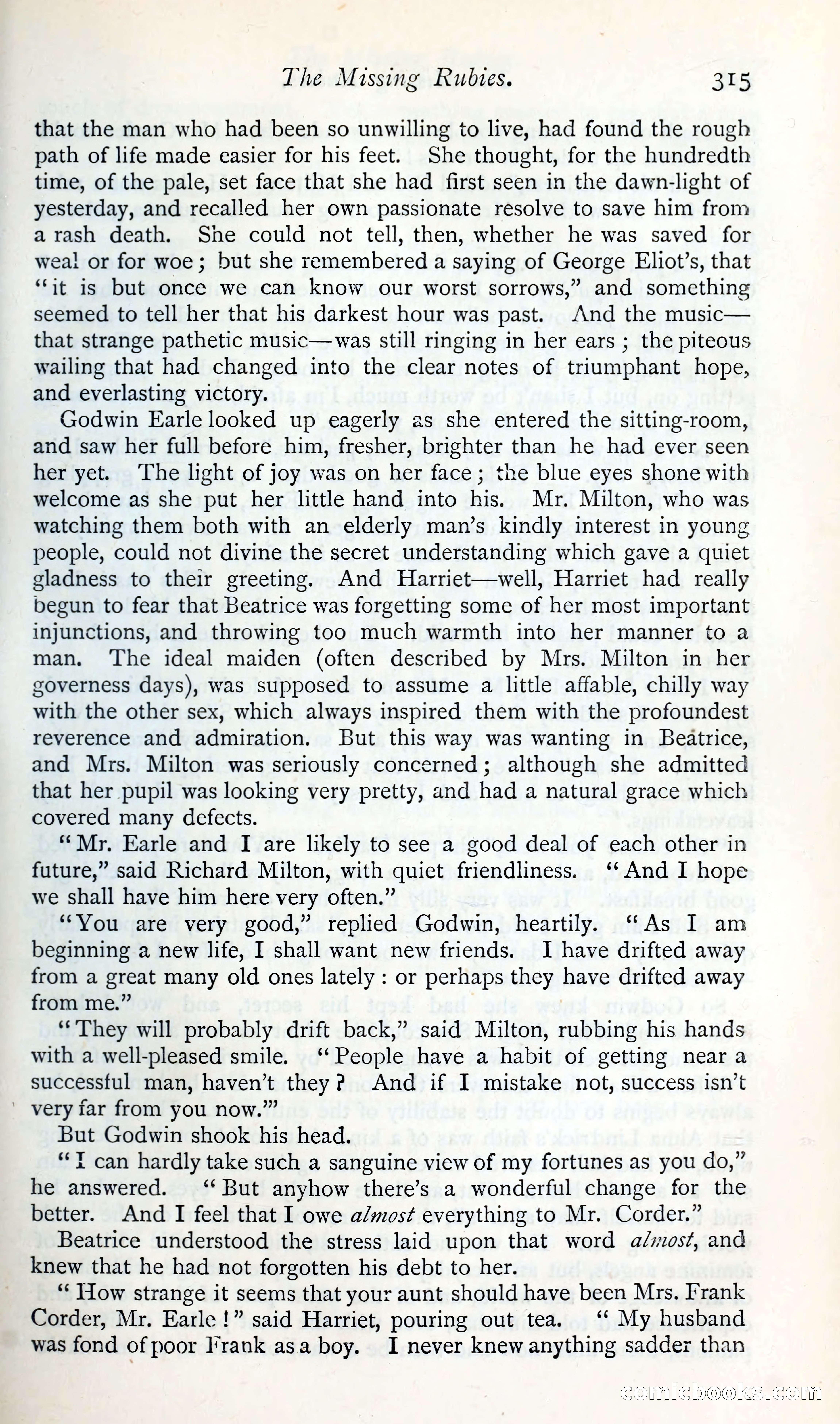
A restored page from Pulp Fiction, 1865. Page through the whole issue in the reader above.
📄 Transcribed text from this page (OCR, searchable)
Machine-transcribed from the original scan — historical spelling and the odd misread are preserved.
The Missing Rubies. 315 that the man who had been so unwilling to live, had found the rough path of life made easier for his feet. She thought, for the hundredth time, of the pale, set face that she had first seen in the dawn-light of yesterday, and recalled her own passionate resolve to save him from arash death. She could not tell, then, whether he was saved for wea! or for woe; but she remembered a saying of George Eliot’s, that “it is but once we can know our worst sorrows,” and something seemed to tell her that his darkest hour was past. And the music— that strange pathetic music—was still ringing in her ears ; the piteous wailing that had changed into the clear notes of triumphant hope, and everlasting victory. Godwin Earle looked up eagerly as she entered the sitting-room, and saw her full before him, fresher, brighter than he had ever seen her yet. ‘The light of joy was on her face; the blue eyes shone with welcome as she put her little hand into his. Mr. Milton, who was watching them both with an elderly man’s kindly interest in young people, could not divine the secret understanding which gave a quiet gladness to their greeting. And Harriet—well, Harriet had really begun to fear that Beatrice was forgetting some of her most important injunctions, and throwing too much warmth into her manner to a man. ‘The ideal maiden (often described by Mrs. Milton in her governess days), was supposed to assume a little affable, chilly way with the other sex, which always inspired them with the profoundest reverence and admiration. But this way was wanting in Beatrice, and Mrs. Milton was seriously concerned; although she admitted that her pupil was looking very pretty, and had a natural grace which covered many defects. “Mr. Earle and I are likely to see a good deal of each other in future,” said Richard Milton, with quiet friendliness. ‘‘ And I hope we shall have him here very often.” “You are very good,” replied Godwin, heartily. ‘As I am beginning a new life, I shall want new friends. I have drifted away from a great many old ones lately : or perhaps they have drifted away from me.” ‘They will probably drift back,” said Milton, rubbing his hands with a well-pleased smile. ‘‘ People have a habit of getting near a successful man, haven’t they? And if I mistake not, success isn’t ' very far from you now.” But Godwin shook his head. ‘‘¥ can hardly take such a sanguine view of my fortunes as you do,” he answered. ‘‘ But anyhow there’s a wonderful change for the better. And I feel that I owe a/most everything to Mr. Corder.” Beatrice understood the stress laid upon that word a/most, and knew that he had not forgotten his debt to her. ‘‘ Tow strange it seems that your aunt should have been Mrs, Frank Corder, Mr. Earle!” said Harriet, pouring out tea. ‘ My husband was fond of poor I'rank asa boy. I never knew anything sadder than conmiclooolks (SO)