
Pulp Fiction, 1865 · page 272 of 400
The Argosy — page 272: what you’re looking at
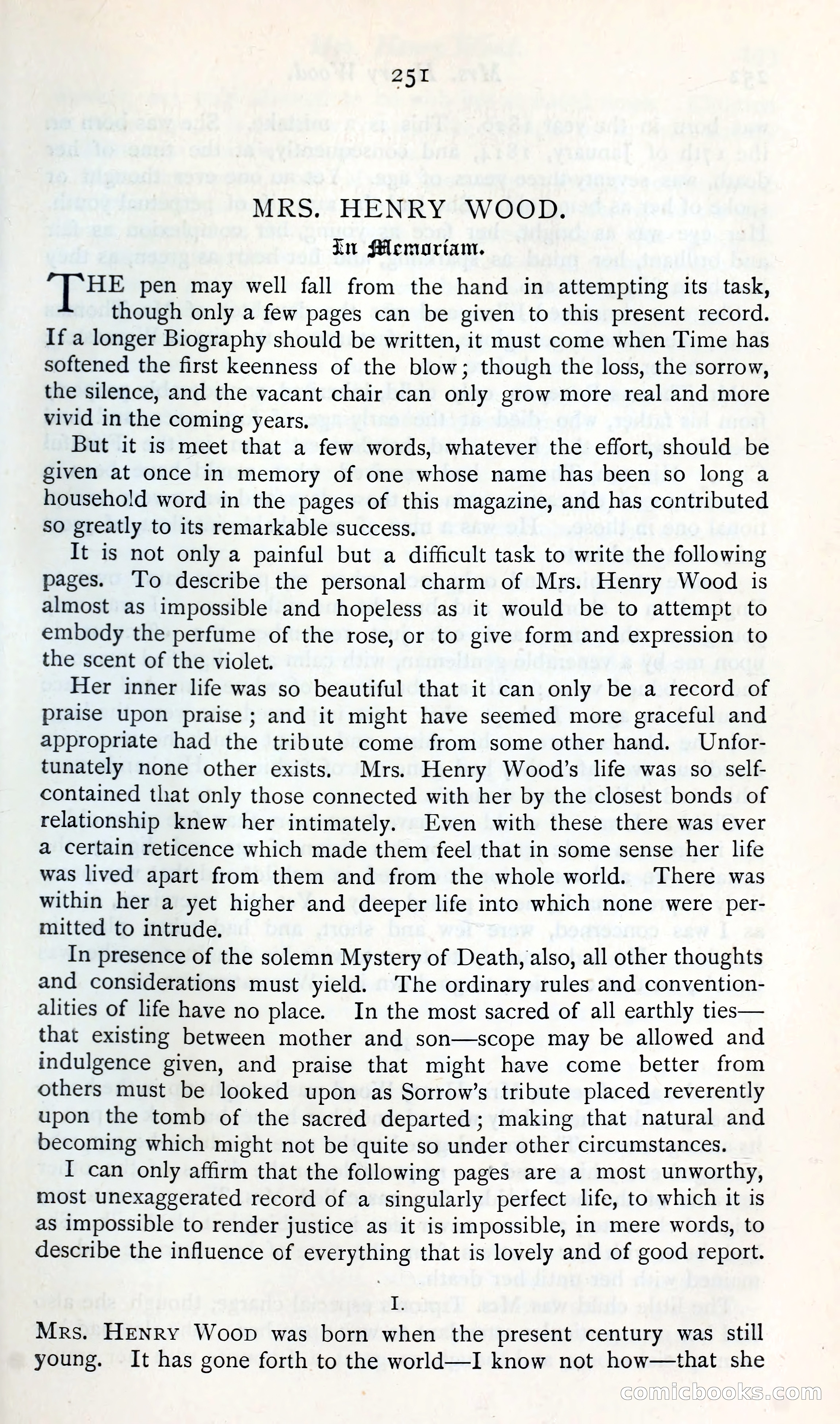
A restored page from Pulp Fiction, 1865. Page through the whole issue in the reader above.
📄 Transcribed text from this page (OCR, searchable)
Machine-transcribed from the original scan — historical spelling and the odd misread are preserved.
25t MRS. HENRY WOOD. ku flemortam. [HE pen may well fall from the hand in attempting its task, though only a few pages can be given to this present record. If a longer Biography should be written, it must come when Time has softened the first keenness of the blow; though the loss, the sorrow, the silence, and the vacant chair can only grow more real and more vivid in the coming years. But it is meet that a few words, whatever the effort, should be given at once in memory of one whose name has been so long a household word in the pages of this magazine, and has contributed SO greatly to its remarkable success. It is not only a painful but a difficult task to write the following pages. To describe the personal charm of Mrs. Henry Wood is almost as impossible and hopeless as it would be to attempt to embody the perfume of the rose, or to give form and expression to the scent of the violet. Her inner life was so beautiful that it can only be a record of praise upon praise; and it might have seemed more graceful and appropriate had the tribute come from some other hand. Unfor- tunately none other exists. Mrs. Henry Wood’s life was so self- contained that only those connected with her by the closest bonds of relationship knew her intimately. Even with these there was ever a certain reticence which made them feel that in some sense her life was lived apart from them and from the whole world. There was within her a yet higher and deeper life inte which none were per- mitted to intrude. In presence of the solemn Mystery of Death, also, all other thoughts and considerations must yield. The ordinary rules and convention- alities of life have no place. In the most sacred of all earthly ties— that existing between mother and son—scope may be allowed and indulgence given, and praise that might have come better from others must be looked upon as Sorrow’s tribute placed reverently upon the tomb of the sacred departed; making that natural and becoming which might not be quite so under other circumstances. I can only affirm that the following pages are a most unworthy, most unexaggerated record of a singularly perfect life, to which it is as impossible to render justice as it is impossible, in mere words, to describe the influence of everything that is lovely and of good report. ky Mrs. Henry Woop was born when the present century was still young. It has gone forth to the world—I know not how—that she conniclooolks (SO)