
Pulp Fiction, 1865 · page 226 of 400
The Argosy — page 226: what you’re looking at
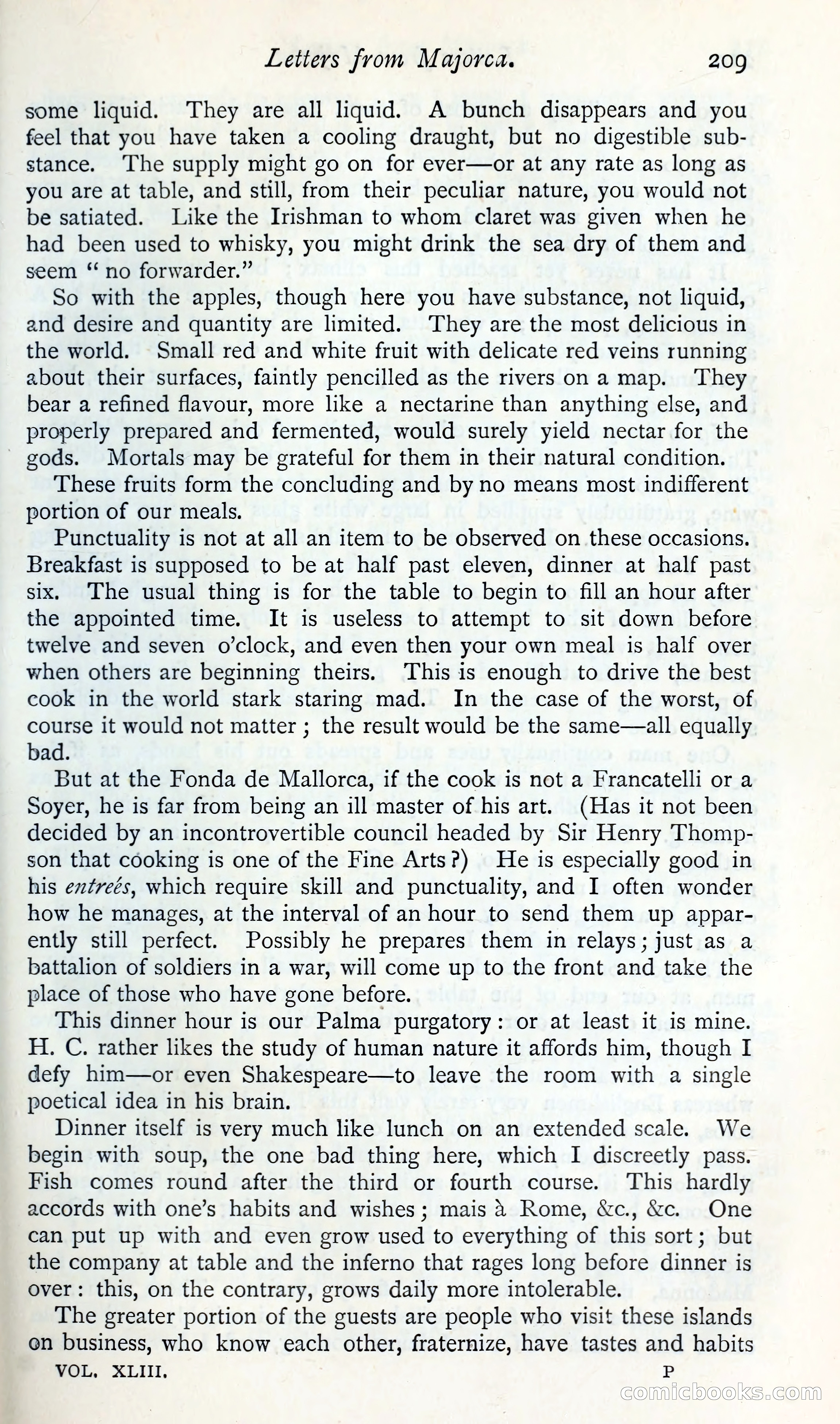
A restored page from Pulp Fiction, 1865. Page through the whole issue in the reader above.
📄 Transcribed text from this page (OCR, searchable)
Machine-transcribed from the original scan — historical spelling and the odd misread are preserved.
Letters from Majorca. 209 some liquid. ‘They are all liquid. A bunch disappears and you feel that you have taken a cooling draught, but no digestible sub- stance. ‘The supply might go on for ever—or at any rate as long as you are at table, and still, from their peculiar nature, you would not be satiated. Like the Irishman to whom claret was given when he had been used to whisky, you might drink the sea dry of them and seem “ no forwarder.” So with the apples, though here you have substance, not liquid, and desire and quantity are limited. They are the most delicious in the world. Small red and white fruit with delicate red veins running about their surfaces, faintly pencilled as the riversona map. ‘They bear a refined flavour, more like a nectarine than anything else, and properly prepared and fermented, would surely yield nectar for the gods. Mortals may be grateful for them in their natural condition. These fruits form the concluding and by no means most indifferent portion of our meals. , Punctuality is not at all an item to be observed on these occasions. Breakfast is supposed to be at half past eleven, dinner at half past six. The usual thing is for the table to begin to fill an hour after the appointed time. It is useless to attempt to sit down before twelve and seven o’clock, and even then your own meal is half over when others are beginning theirs. This is enough to drive the best cook in the world stark staring mad. In the case of the worst, of course it would not matter ; the result would be the same—all equally bad. But at the Fonda de Mallorca, if the cook is not a Francatelli or a Soyer, he is far from being an ill master of his art. (Has it not been decided by an incontrovertible council headed by Sir Henry Thomp- son that cooking is one of the Fine Arts?) He is especially good in his eztreés, which require skill and punctuality, and I often wonder how he manages, at the interval of an hour to send them up appar- ently still perfect. Possibly he prepares them in relays; just as a battalion of soldiers in a war, will come up to the front and take the place of those who have gone before. This dinner hour is our Palma purgatory: or at least it is mine. H. C. rather likes the study of human nature it affords him, though I defy him—or even Shakespeare—to leave the room with a single poetical idea in his brain. Dinner itself is very much like lunch on an extended scale. We begin with soup, the one bad thing here, which I discreetly pass. Fish comes round after the third or fourth course. ‘This hardly accords with one’s habits and wishes; mais 4 Rome, &c., &c. One can put up with and even grow used to everything of this sort; but the company at table and the inferno that rages long before dinner is over: this, on the contrary, grows daily more intolerable. The greater portion of the guests are people who visit these islands on business, who know each other, fraternize, have tastes and habits WoL, XLIII. P comnmicooolks (CO