
Pulp Fiction, 1865 · page 205 of 400
The Argosy — page 205: what you’re looking at
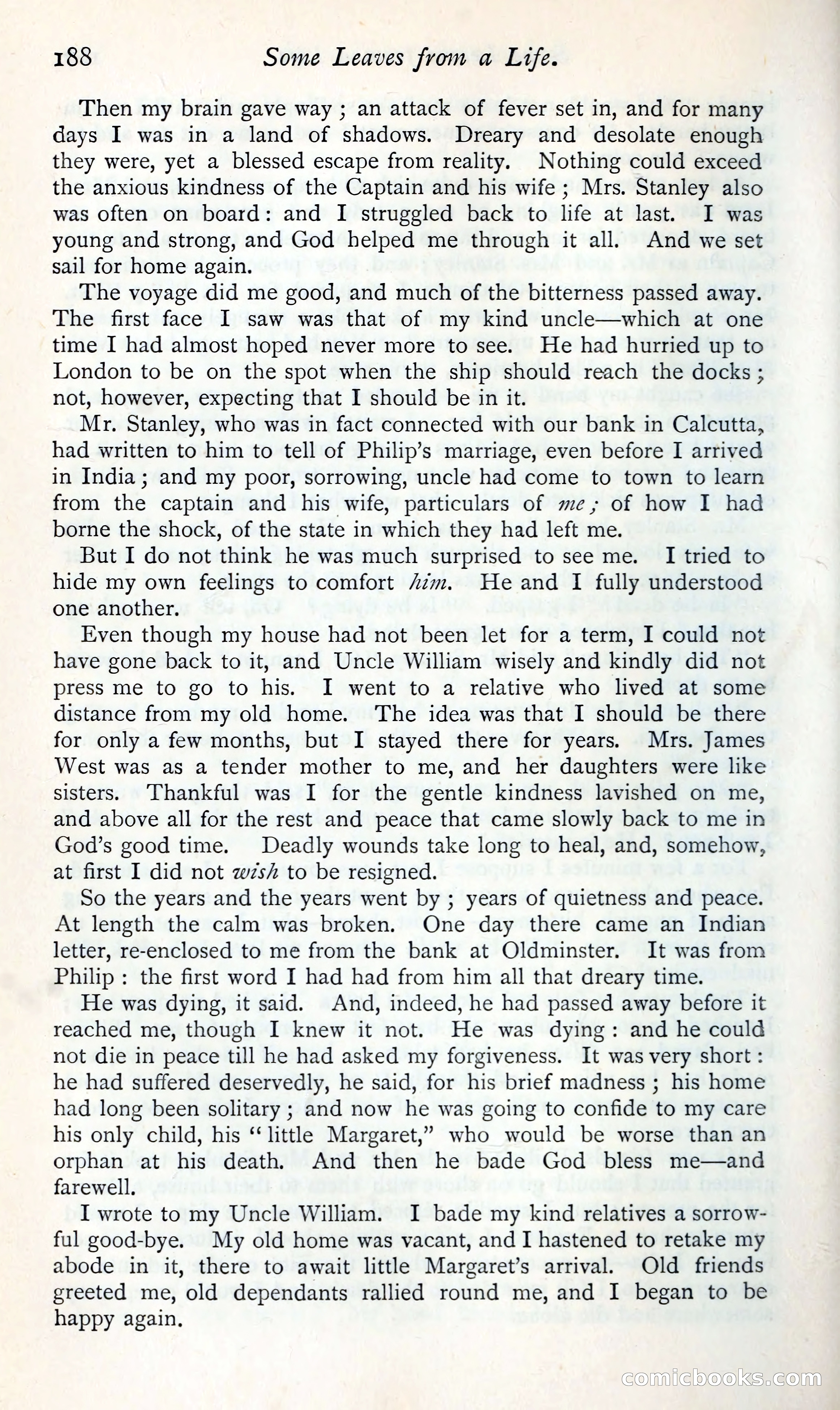
A restored page from Pulp Fiction, 1865. Page through the whole issue in the reader above.
📄 Transcribed text from this page (OCR, searchable)
Machine-transcribed from the original scan — historical spelling and the odd misread are preserved.
188 Some Leaves from a Life. Then my brain gave way ; an attack of fever set in, and for many days I was in a land of shadows. Dreary and desolate enough they were, yet a blessed escape from reality. Nothing could exceed the anxious kindness of the Captain and his wife; Mrs. Stanley also was often on board: and I struggled back to life at last. I was young and strong, and God helped me through it all. And we set sail for home again. The voyage did me good, and much of the bitterness passed away. The first face I saw was that of my kind uncle—which at one time I had almost hoped never more to see. He had hurried up to London to be on the spot when the ship should reach the docks ; not, however, expecting that I should be in it. Mr. Stanley, who was in fact connected with our bank in Calcutta, had written to him to tell of Philip’s marriage, even before I arrived in India ; and my poor, sorrowing, uncle had come to town to learn from the captain and his wife, particulars of me, of how I had borne the shock, of the state in which they had left me. But I do not think he was much surprised to see me. I tried to hide my own feelings to comfort zm. He and I fully understood one another. Even though my house had not been let for a term, I could not have gone back to it, and Uncle William wisely and kindly did not press me to go to his. I went to a relative who lived at some distance from my old home. ‘The idea was that I should be there for only a few months, but I stayed there for years. Mrs. James West was as a tender mother to me, and her daughters were like sisters. Thankful was I for the gentle kindness lavished on me, and above all for the rest and peace that came slowly back to me in God’s good time. Deadly wounds take long to heal, and, somehow, at first I did not wzsh to be resigned. So the years and the years went by ; years of quietness and peace. At length the calm was broken. One day there came an Indian letter, re-enclosed to me from the bank at Oldminster. It was from Philip: the first word I had had from him all that dreary time. He was dying, it said. And, indeed, he had passed away before it reached me, though I knew it not. He was dying: and he could not die in peace till he had asked my forgiveness. It was very short: he had suffered deservedly, he said, for his brief madness ; his home had long been solitary ; and now he was going to confide to my care his only child, his ‘‘ little Margaret,” who would be worse than an orphan at his death. And then he bade God bless me—and farewell. I wrote to my Uncle William. I bade my kind relatives a sorrow- ful good-bye. My old home was vacant, and I hastened to retake my abode in it, there to await little Margaret’s arrival. Old friends greeted me, old dependants rallied round me, and I began to be happy again. ECORNIC OOKS (E)