
Pulp Fiction, 1865 · page 25 of 400
The Argosy — page 25: what you’re looking at
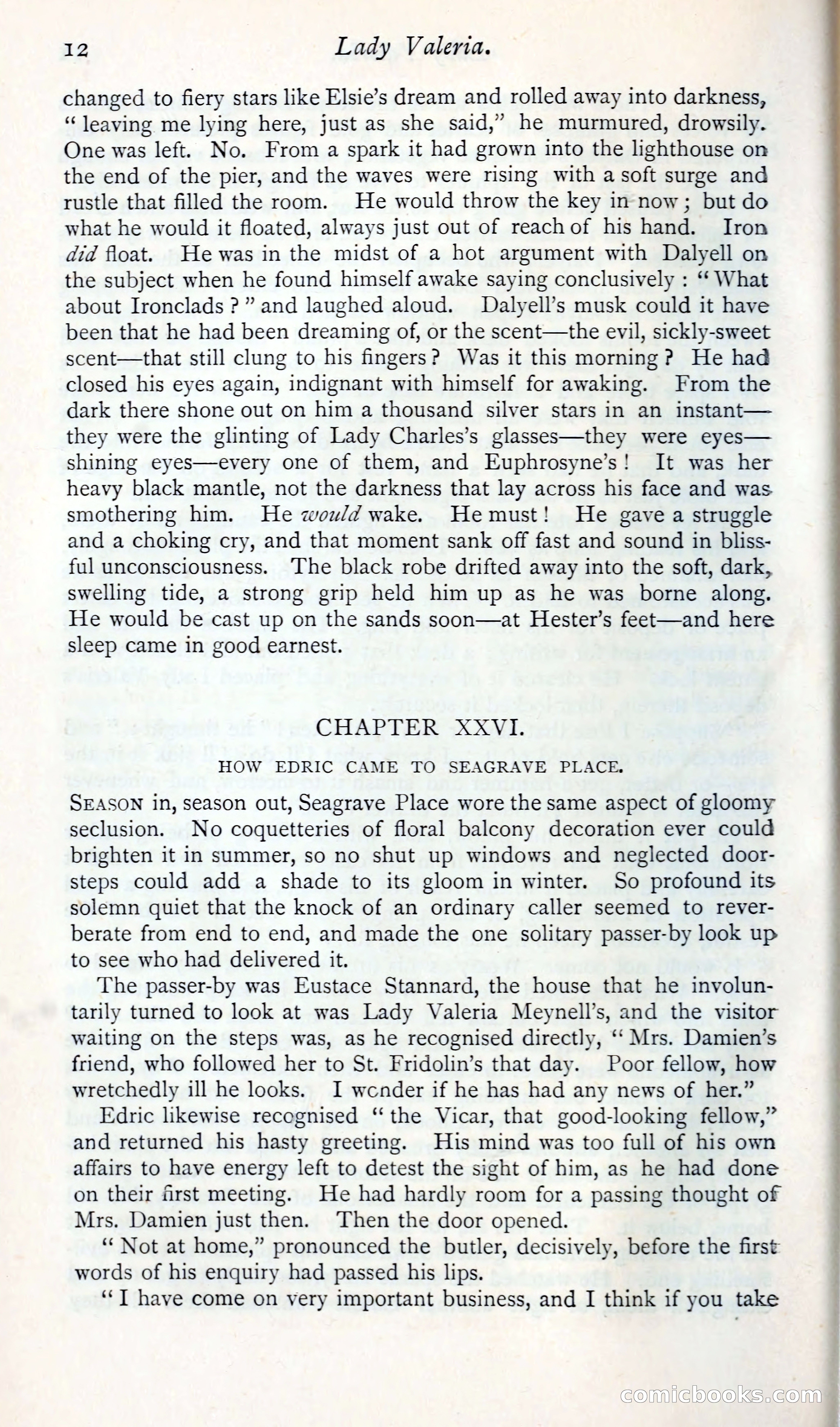
A restored page from Pulp Fiction, 1865. Page through the whole issue in the reader above.
📄 Transcribed text from this page (OCR, searchable)
Machine-transcribed from the original scan — historical spelling and the odd misread are preserved.
12 Lady Valeria. changed to fiery stars like Elsie’s dream and rolled away into darkness, “leaving me lying here, just as she said,” he murmured, drowsily. One was left. No. From a spark it had grown into the lighthouse on the end of the pier, and the waves were rising with a soft surge and rustle that filled the room. He would throw the key in now; but do what he would it floated, always just out of reachof his hand. Iron did float. Hewas in the midst of a hot argument with Dalyell on the subject when he found himself awake saying conclusively : ‘‘ What about Ironclads ?” and laughed aloud. JDalyell’s musk could it have been that he had been dreaming of, or the scent—the evil, sickly-sweet scent—that still clung to his fingers? Was it this morning? He had closed his eyes again, indignant with himself for awaking. From the dark there shone out on him a thousand silver stars in an instant— they were the glinting of Lady Charles’s glasses—they were eyes— shining eyes—every one of them, and Euphrosyne’s! It was her heavy black mantle, not the darkness that lay across his face and was smothering him. He would wake. Hemust! He gave a struggle and a choking cry, and that moment sank off fast and sound in bliss- ful unconsciousness. ‘The black robe drifted away into the soft, dark, swelling tide, a strong grip held him up as he was borne along. He would be cast up on the sands soon—at Hester’s feet—and here sleep came in good earnest. CHAPTER XXVI. HOW EDRIC CAME TO SEAGRAVE PLACE. SEASON in, season out, Seagrave Place wore the same aspect of gloomy seclusion. No coquetteries of floral balcony decoration ever could brighten it in summer, so no shut up windows and neglected door- steps could add a shade to its gloom in winter. So profound its solemn quiet that the knock of an ordinary caller seemed to rever- berate from end to end, and made the one solitary passer-by look up to see who had delivered it. The passer-by was Eustace Stannard, the house that he involun- tarily turned to look at was Lady Valeria Meynell’s, and the visitor waiting on the steps was, as he recognised directly, ‘‘ Mrs. Damien’s friend, who followed her to St. Fridolin’s that day. Poor fellow, how wretchedly ill he looks. I wender if he has had any news of her.” Edric likewise recognised ‘‘ the Vicar, that good-looking fellow,” and returned his hasty greeting. His mind was too full of his own affairs to have energy left to detest the sight of him, as he had done on their first meeting. He had hardly room for a passing thought of Mrs. Damien just then. Then the door opened. “Not at home,” pronounced the butler, decisively, before the first words of his enquiry had passed his lips. ‘“‘T have come on very important business, and I think if you take | CORNICMOOOKS COR