
Pulp Fiction, 1865 · page 229 of 400
The Argosy — page 229: what you’re looking at
A restored page from Pulp Fiction, 1865. Page through the whole issue in the reader above.
📄 Transcribed text from this page (OCR, searchable)
Machine-transcribed from the original scan — historical spelling and the odd misread are preserved.
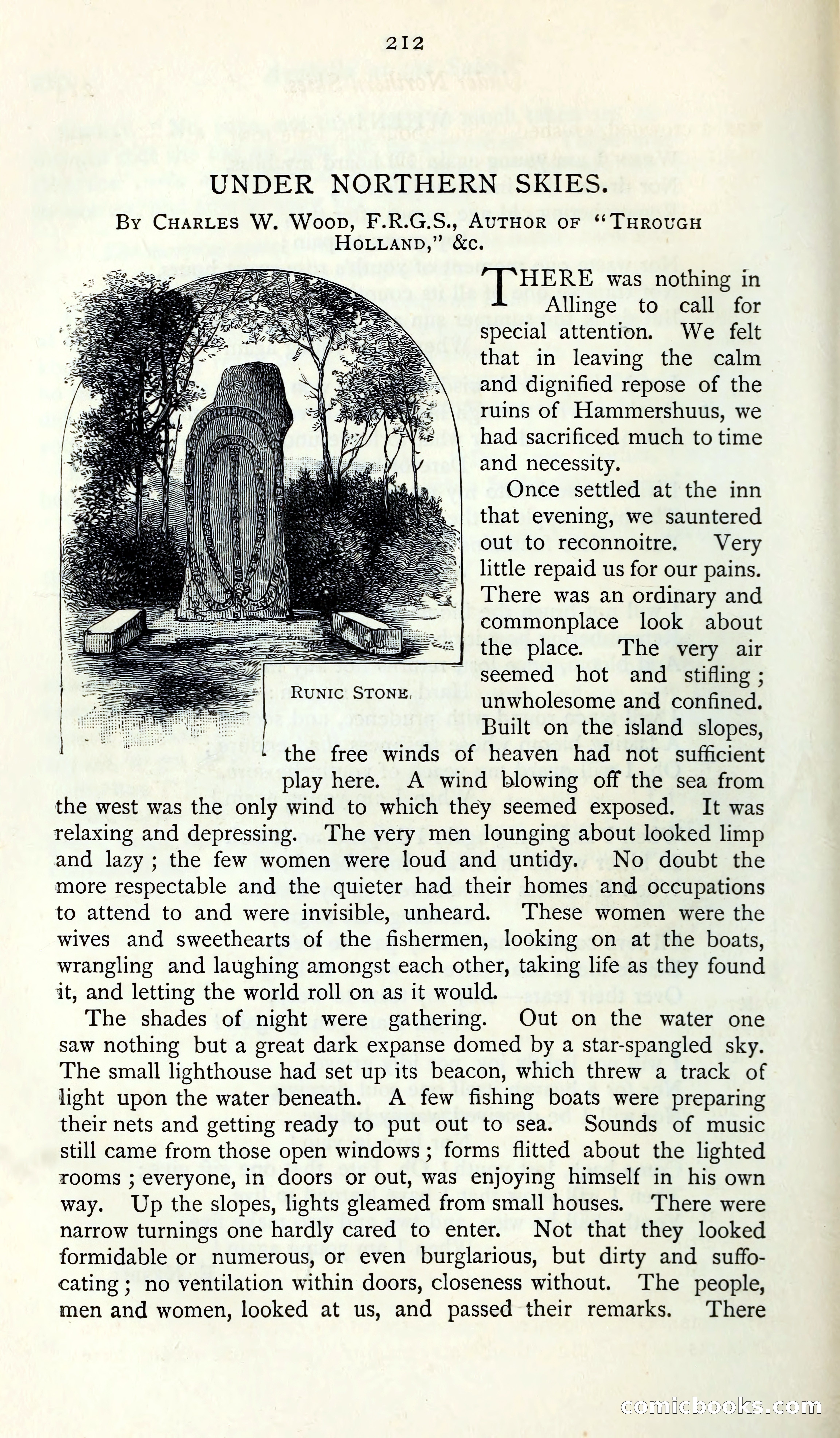
212 UNDER NORTHERN SKIES. By CHARLES W. Woop, F.R.G.S., AuTHOoR oF ‘‘* THROUGH HoLLanpD,” &c. A ett was nothing in Allinge to call for special attention. We felt that in leaving the calm and dignified repose of the ruins of _Hammershuus, we had sacrificed much to time and necessity. Once settled at the inn that evening, we sauntered out to reconnoitre. Very little repaid us for our pains. There was an ordinary and commonplace look about the place. The very air seemed hot and stifling ; unwholesome and confined. Built on the island slopes, | the free winds of heaven had not sufficient play here. A wind blowing off the sea from the west was the only wind to which they seemed exposed. It was relaxing and depressing. ‘The very men lounging about looked limp and lazy ; the few women were loud and untidy. No doubt the more respectable and the quieter had their homes and occupations to attend to and were invisible, unheard. ‘These women were the wives and sweethearts of the fishermen, looking on at the boats, wrangling and laughing amongst each other, taking life as they found it, and letting the world roll on as it would. The shades of night were gathering. Out on the water one saw nothing but a great dark expanse domed by a star-spangled sky. The small lighthouse had set up its beacon, which threw a track of light upon the water beneath. A few fishing boats were preparing their nets and getting ready to put out to sea. Sounds of music still came from those open windows; forms flitted about the lighted rooms ; everyone, in doors or out, was enjoying himself in his own way. Up the slopes, lights gleamed from small houses. ‘There were narrow turnings one hardly cared to enter. Not that they looked formidable or numerous, or even burglarious, but dirty and suffo- cating ; no ventilation within doors, closeness without. The people, men and women, looked at us, and passed their remarks. There CONNIE DOO KS (EO)