
Pulp Fiction, 1865 · page 160 of 400
The Argosy — page 160: what you’re looking at
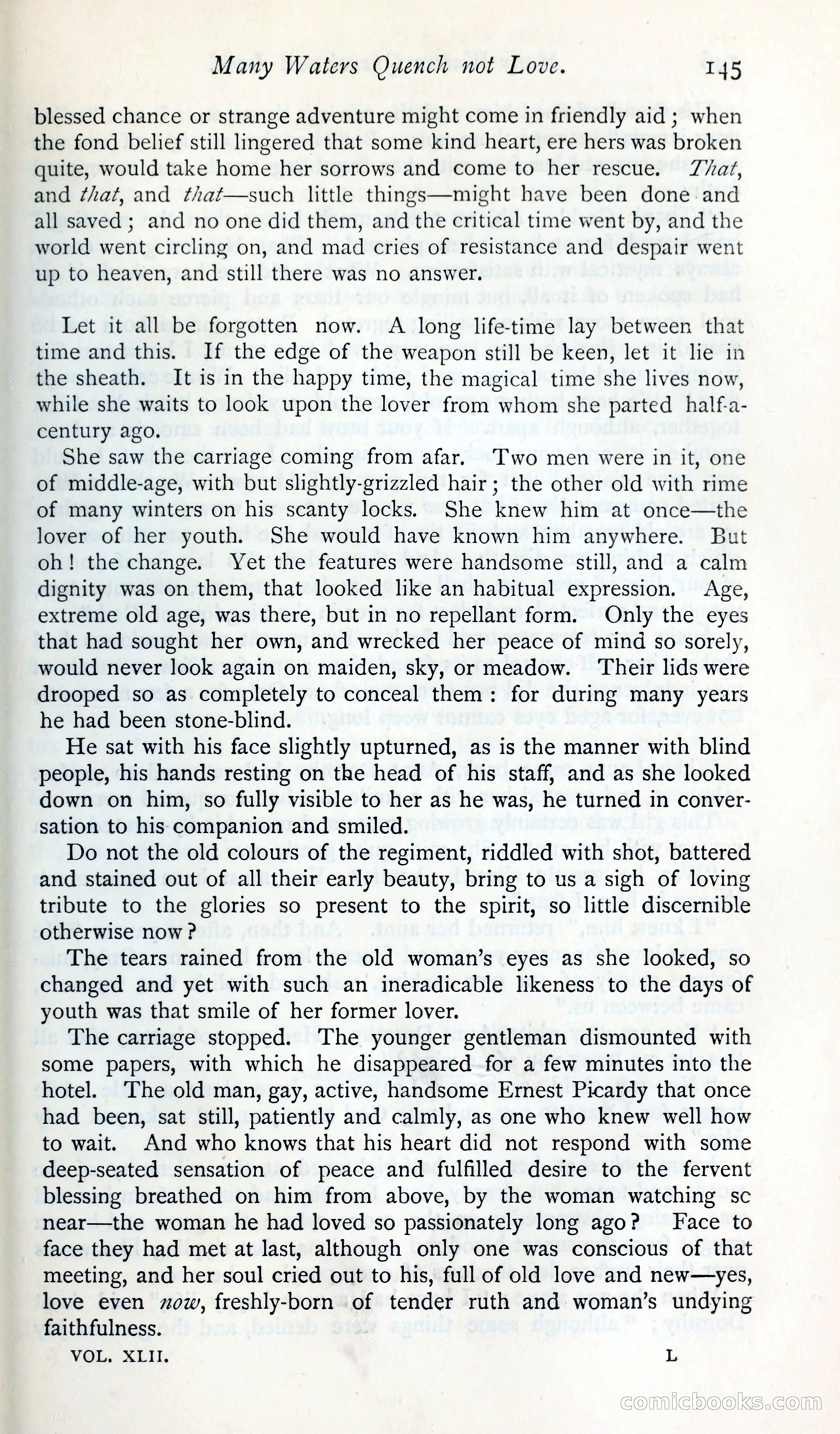
A restored page from Pulp Fiction, 1865. Page through the whole issue in the reader above.
📄 Transcribed text from this page (OCR, searchable)
Machine-transcribed from the original scan — historical spelling and the odd misread are preserved.
Many Waters Quench not Love. T45 blessed chance or strange adventure might come in friendly aid; when the fond belief still lingered that some kind heart, ere hers was broken quite, would take home her sorrows and come to her rescue. Zzaz, and ¢hat, and ¢hat—such little things—might have been done and all saved; and no one did them, and the critical time went by, and the world went circling on, and mad cries of resistance and despair went up to heaven, and still there was no answer. Let it all be forgotten now. A long life-time lay between that time and this. If the edge of the weapon still be keen, let it lie in the sheath. It is in the happy time, the magical time she lives now, while she waits to look upon the lover from whom she parted half-a- century ago. She saw the carriage coming from afar. Two men were in it, one of middle-age, with but slightly-grizzled hair; the other old with rime of many winters on his scanty locks. She knew him at once—the lover of her youth. She would have known him anywhere. But oh! the change. Yet the features were handsome still, and a calm dignity was on them, that looked like an habitual expression. Age, extreme old age, was there, but in no repellant form. Only the eyes that had sought her own, and wrecked her peace of mind so sorely, would never look again on maiden, sky, or meadow. ‘Their lids were drooped so as completely to conceal them: for during many years he had been stone-blind. He sat with his face slightly upturned, as is the manner with blind people, his hands resting on the head of his staff, and as she looked down on him, so fully visible to her as he was, he turned in conver- sation to his companion and smiled. Do not the old colours of the regiment, riddled with shot, battered and stained out of all their early beauty, bring to us a sigh of loving tribute to the glories so present to the spirit, so little discernible otherwise now? The tears rained from the old woman’s eyes as she looked, so changed and yet with such an ineradicable likeness to the days of youth was that smile of her former lover. The carriage stopped. The younger gentleman dismounted with some papers, with which he disappeared for a few minutes into the hotel. ‘The old man, gay, active, handsome Ernest Picardy that once had been, sat still, patiently and calmly, as one who knew well how to wait. And who knows that his heart did not respond with some deep-seated sensation of peace and fulfilled desire to the fervent blessing breathed on him from above, by the woman watching sc near—the woman he had loved so passionately long ago? Face to face they had met at last, although only one was conscious of that meeting, and her soul cried out to his, full of old love and new—-yes, love even zow, freshly-born of tender ruth and woman’s undying faithfulness. VOL. XLII. L COnmnicoooks (CO)