
Pulp Fiction, 1865 · page 157 of 400
The Argosy — page 157: what you’re looking at
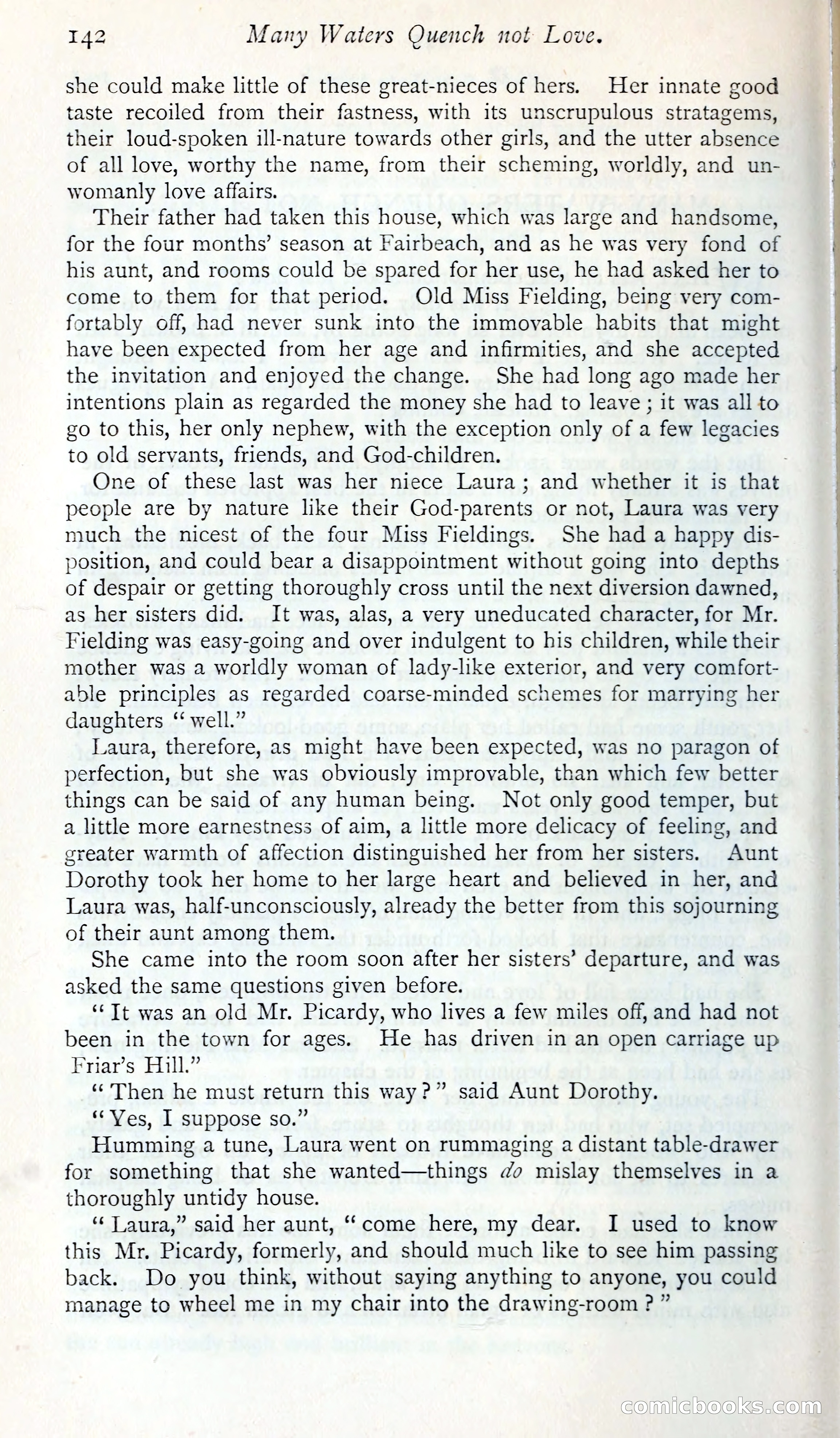
A restored page from Pulp Fiction, 1865. Page through the whole issue in the reader above.
📄 Transcribed text from this page (OCR, searchable)
Machine-transcribed from the original scan — historical spelling and the odd misread are preserved.
142 Many Waters Quench not Love. she could make little of these great-nieces of hers. Her innate good taste recoiled from their fastness, with its unscrupulous stratagems, their loud-spoken ill-nature towards other girls, and the utter absence of all love, worthy the name, from their scheming, worldly, and un- womanly love affairs. Their father had taken this house, which was large and handsome, for the four months’ season at Fairbeach, and as he was very fond of his aunt, and rooms could be spared for her use, he had asked her to come to them for that period. Old Miss Fielding, being very com- fortably off, had never sunk into the immovable habits that might have been expected from her age and infirmities, and she accepted the invitation and enjoyed the change. She had long ago made her intentions plain as regarded the money she had to leave; it was all to go to this, her only nephew, with the exception only of a few legacies to old servants, friends, and God-children. , One of these last was her niece Laura; and whether it is that people are by nature like their God-parents or not, Laura was very much the nicest of the four Miss Fieldings. She had a happy dis- position, and could bear a disappointment without going into depths of despair or getting thoroughly cross until the next diversion dawned, as her sisters did. It was, alas, a very uneducated character, for Mr. Fielding was easy-going and over indulgent to his children, while their mother was a worldly woman of lady-like exterior, and very comfort- able principles as regarded coarse-minded schemes for marrying her daughters ‘“‘ well.” Laura, therefore, as might have been expected, was no paragon of perfection, but she was obviously improvable, than which few better things can be said of any human being. Not only good temper, but a little more earnestness of aim, a little more delicacy of feeling, and greater warmth of affection distinguished her from her sisters. Aunt Dorothy took her home to her large heart and believed in her, and Laura was, half-unconsciously, already the better from this sojourning of their aunt among them. She came into the room soon after her sisters’ departure, and was asked the same questions given before. “Tt was an old Mr. Picardy, who lives a few miles off, and had not been in the town for ages. He has driven in an open carriage up Fniar’s Hill.” ‘Then he must return this way?” said Aunt Dorothy. ‘Yes, I suppose so.” Humming a tune, Laura went on rummaging a distant table-drawer for something that she wanted—things do mislay themselves in a thoroughly untidy house. ‘ Laura,” said her aunt, ‘come here, my dear. I used to know this Mr. Picardy, formerly, and should much like to see him passing back. Do you think, without saying anything to anyone, you could manage to wheel me in my chair into the drawing-room ? ” CONNICMOOOKS. CO