
Pulp Fiction, 1865 · page 398 of 400
The Argosy — page 398: what you’re looking at
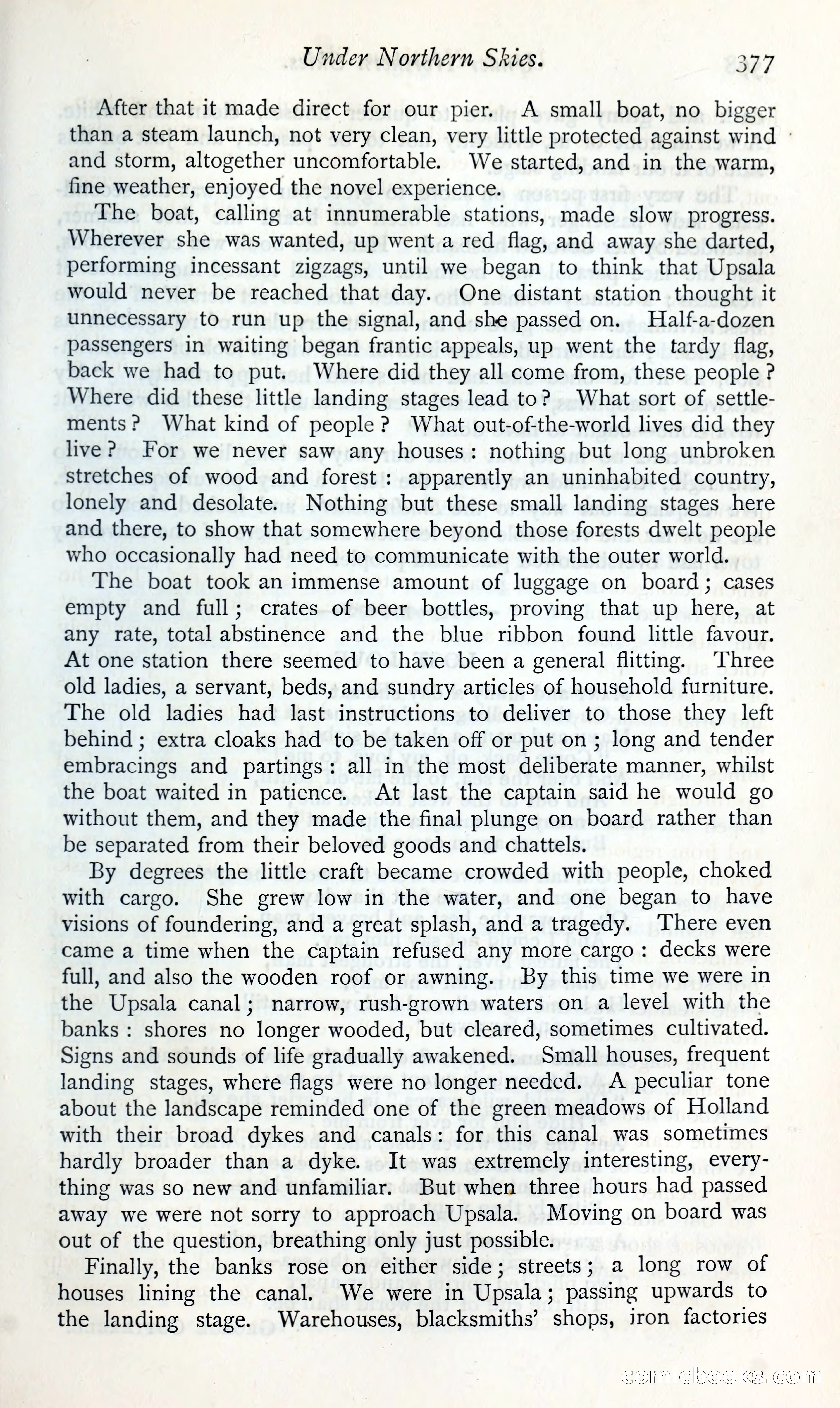
A restored page from Pulp Fiction, 1865. Page through the whole issue in the reader above.
📄 Transcribed text from this page (OCR, searchable)
Machine-transcribed from the original scan — historical spelling and the odd misread are preserved.
Under Northern Skies. 377 After that it made direct for our pier. A small boat, no bigger than a steam launch, not very clean, very little protected against wind | and storm, altogether uncomfortable. We started, and in the warm, fine weather, enjoyed the novel experience. The boat, calling at innumerable stations, made slow progress. Wherever she was wanted, up went a red flag, and away she darted, performing incessant zigzags, until we began to think that Upsala would never be reached that day. One distant station thought it unnecessary to run up the signal, and she passed on. Half-a-dozen passengers in waiting began frantic appeals, up went the tardy flag, back we had to put. Where did they all come from, these people? Where did these little landing stages lead to? What sort of settle- ments? What kind of people? What out-of-the-world lives did they live? For we never saw any houses: nothing but long unbroken stretches of wood and forest: apparently an uninhabited country, lonely and desolate. Nothing but these small landing stages here and there, to show that somewhere beyond those forests dwelt people who occasionally had need to communicate with the outer world. The boat took an immense amount of luggage on board; cases empty and full; crates of beer bottles, proving that up here, at any rate, total abstinence and the blue ribbon found little favour. At one station there seemed to have been a general flitting. Three old ladies, a servant, beds, and sundry articles of household furniture. The old ladies had last instructions to deliver to those they left behind ; extra cloaks had to be taken off or put on; long and tender embracings and partings: all in the most deliberate manner, whilst the boat waited in patience. At last the captain said he would go without them, and they made the final plunge on board rather than be separated from their beloved goods and chattels. By degrees the little craft became crowded with people, choked with cargo. She grew low in the water, and one began to have visions of foundering, and a great splash, and a tragedy. ‘There even came a time when the captain refused any more cargo: decks were full, and also the wooden roof or awning. By this time we were in the Upsala canal; narrow, rush-grown waters on a level with the banks: shores no longer wooded, but cleared, sometimes cultivated. Signs and sounds of life gradually awakened. Small houses, frequent landing stages, where flags were no longer needed. A peculiar tone about the landscape reminded one of the green meadows of Holland with their broad dykes and canals: for this canal was sometimes hardly broader than a dyke. It was extremely interesting, every- thing was so new and unfamiliar. But when three hours had passed away we were not sorry to approach Upsala. Moving on board was out of the question, breathing only just possible. Finally, the banks rose on either side; streets; a long row of houses lining the canal. We were in Upsala; passing upwards to the landing stage. Warehouses, blacksmiths’ shops, iron factories COnniclbooks (SO) im