
Pulp Fiction, 1865 · page 387 of 400
The Argosy — page 387: what you’re looking at
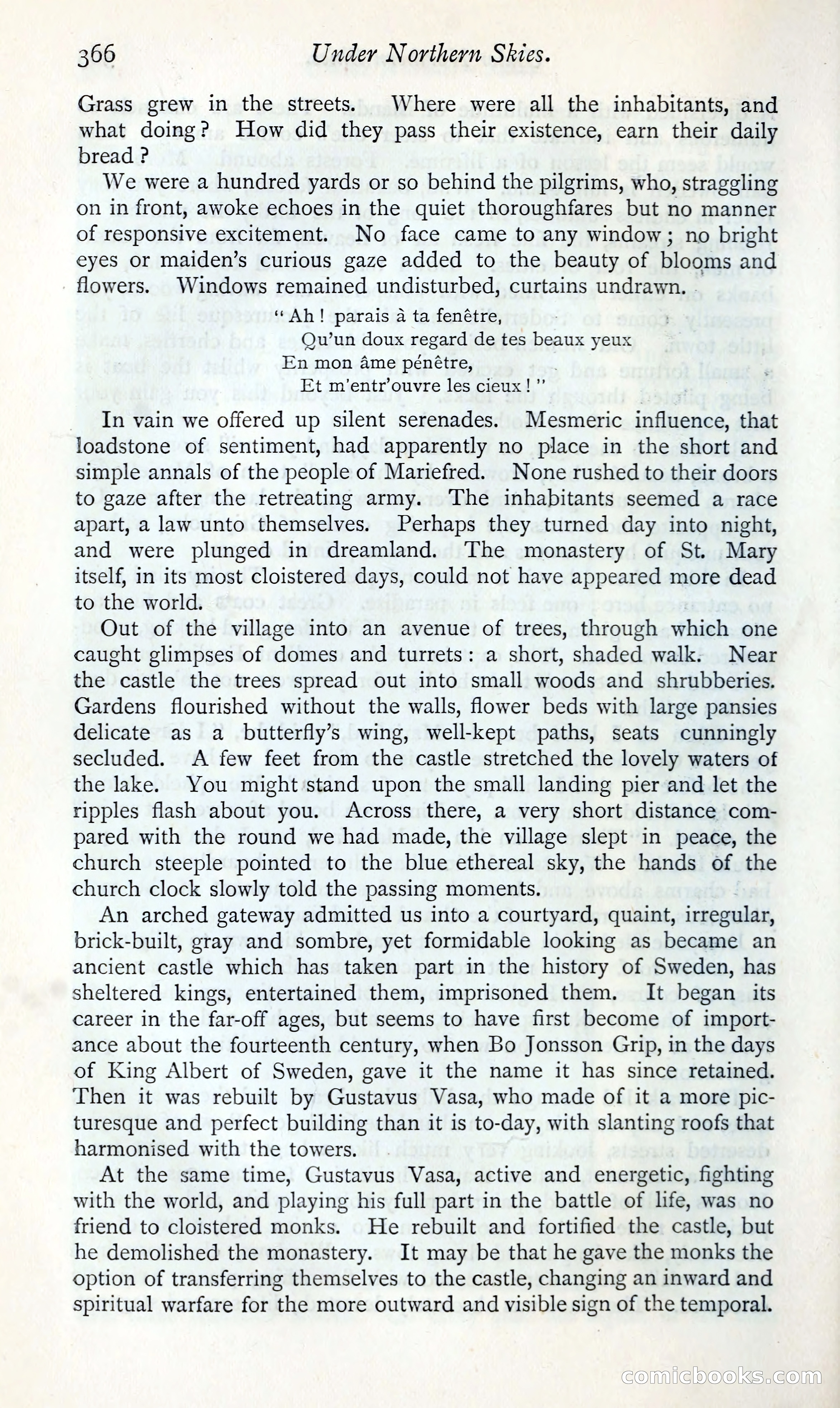
A restored page from Pulp Fiction, 1865. Page through the whole issue in the reader above.
📄 Transcribed text from this page (OCR, searchable)
Machine-transcribed from the original scan — historical spelling and the odd misread are preserved.
366 Under Northern Skies. Grass grew in the streets. Where were all the inhabitants, and what doing? How did they pass their existence, earn their daily bread P We were a hundred yards or so behind the pilgrims, who, straggling on in front, awoke echoes in the quiet thoroughfares but no manner of responsive excitement. No face came to any window; no bright eyes or maiden’s curious gaze added to the beauty of blooms and flowers. Windows remained undisturbed, curtains undrawn. . “Ah! parais a ta fenétre, Ouw’un doux regard de tes beaux yeux En mon ame pénétre, | Et m’entr’ouvre les cieux! ”’ In vain we offered up silent serenades. Mesmeric influence, that loadstone of sentiment, had apparently no place in the short and simple annals of the people of Mariefred. None rushed to their doors to gaze after the retreating army. ‘The inhabitants seemed a race apart, a law unto themselves. Perhaps they turned day into night, and were plunged in dreamland. ‘The monastery of St. Mary itself, in its most cloistered days, could not have appeared more dead to the world. Out of the village into an avenue of trees, through which one caught glimpses of domes and turrets: a short, shaded walk. Near the castle the trees spread out into small woods and shrubberies. Gardens flourished without the walls, flower beds with large pansies delicate as a _ butterfly’s wing, well-kept paths, seats cunningly secluded. A few feet from the castle stretched the lovely waters of the lake. You might stand upon the small landing pier and let the ripples flash about you. Across there, a very short distance com- pared with the round we had made, the village slept in peace, the church steeple pointed to the blue ethereal sky, the hands of the church clock slowly told the passing moments. An arched gateway admitted us into a courtyard, quaint, irregular, brick-built, gray and sombre, yet formidable looking as became an ancient castle which has taken part in the history of Sweden, has sheltered kings, entertained them, imprisoned them. It began its career in the far-off ages, but seems to have first become of import- ance about the fourteenth century, when Bo Jonsson Grip, in the days of King Albert of Sweden, gave it the name it has since retained. Then it was rebuilt by Gustavus Vasa, who made of it a more pic- turesque and perfect building than it is to-day, with slanting roofs that harmonised with the towers. At the same time, Gustavus Vasa, active and energetic, fighting with the world, and playing his full part in the battle of life, was no friend to cloistered monks. He rebuilt and fortified the castle, but he demolished the monastery. It may be that he gave the monks the option of transferring themselves to the castle, changing an inward and spiritual warfare for the more outward and visible sign of the temporal. COMMICOOOKS.E@ im