
Pulp Fiction, 1865 · page 370 of 400
The Argosy — page 370: what you’re looking at
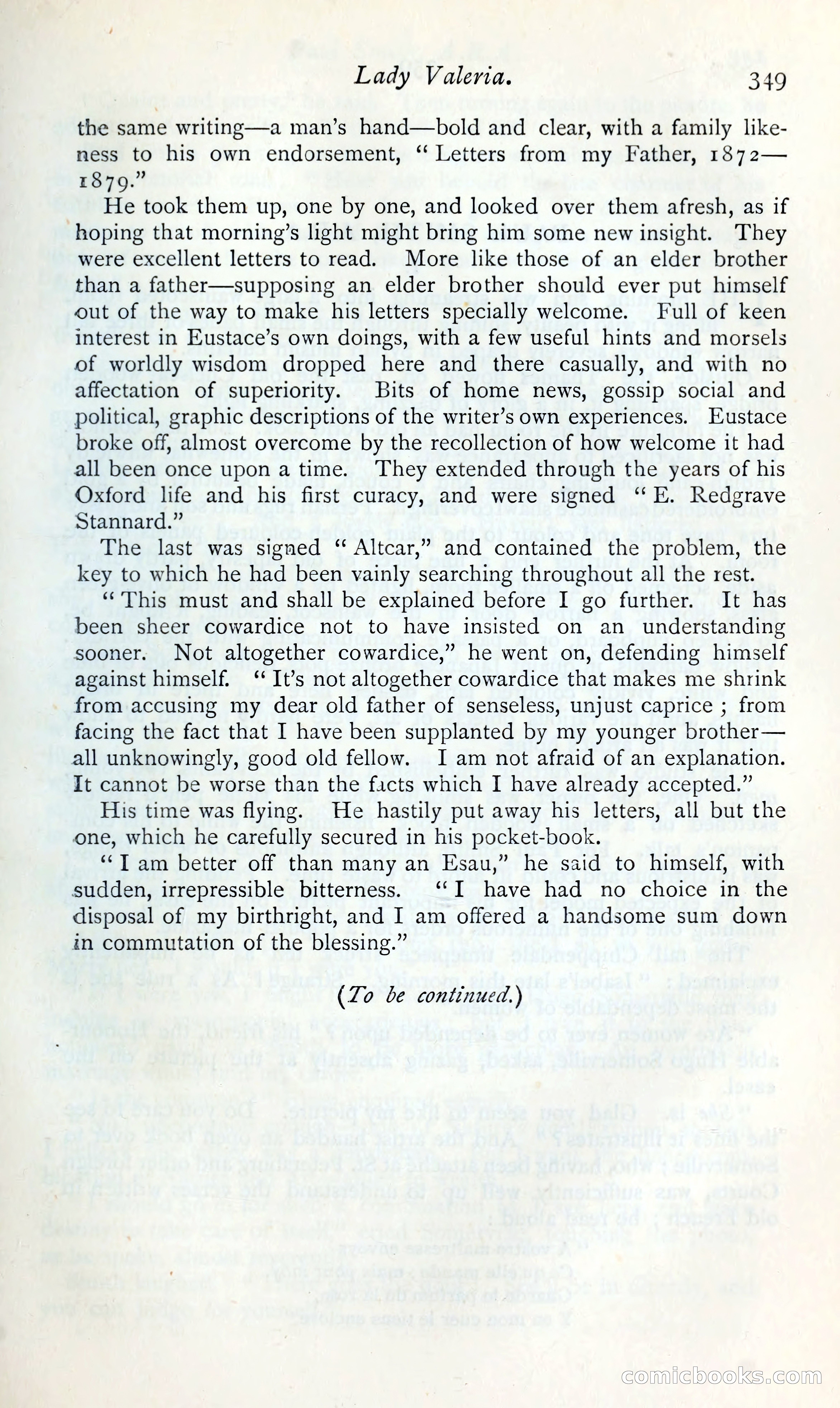
A restored page from Pulp Fiction, 1865. Page through the whole issue in the reader above.
📄 Transcribed text from this page (OCR, searchable)
Machine-transcribed from the original scan — historical spelling and the odd misread are preserved.
Lady Valena. 349 the same writing—a man’s hand—bold and clear, with a family like- ness to his own endorsement, ‘“‘ Letters from my Father, 1872— 1879.” He took them up, one by one, and looked over them afresh, as if hoping that morning’s light might bring him some new insight. They were excellent letters to read. More like those of an elder brother than a father—supposing an elder brother should ever put himself out of the way to make his letters specially welcome. Full of keen interest in Eustace’s own doings, with a few useful hints and morsels of worldly wisdom dropped here and there casually, and with no affectation of superiority. Bits of home news, gossip social and political, graphic descriptions of the writer’s own experiences. Eustace broke off, almost overcome by the recollection of how welcome it had all been once upon atime. ‘They extended through the years of his Oxford life and his first curacy, and were signed ‘‘ E. Redgrave Stannard.” The last was signed ‘ Altcar,” and contained the problem, the key to which he had been vainly searching throughout all the rest. “This must and shall be explained before I go further. It has been sheer cowardice not to have insisted on an understanding sooner. Not altogether cowardice,” he went on, defending himself against himself. ‘‘ It’s not altogether cowardice that makes me shrink from accusing my dear old father of senseless, unjust caprice ; from facing the fact that I have been supplanted by my younger brother— all unknowingly, good old fellow. I am not afraid of an explanation. It cannot be worse than the facts which I have already accepted.” His time was flying. He hastily put away his letters, all but the one, which he carefully secured in his pocket-book. “TI am better off than many an Esau,” he said to himself, with sudden, irrepressible bitterness. ‘‘I have had no choice in the disposal of my birthright, and I am offered a handsome sum down in commutation of the blessing.” (Zo be continued.) COMICHOOKS. EO im