
Pulp Fiction, 1865 · page 364 of 400
The Argosy — page 364: what you’re looking at
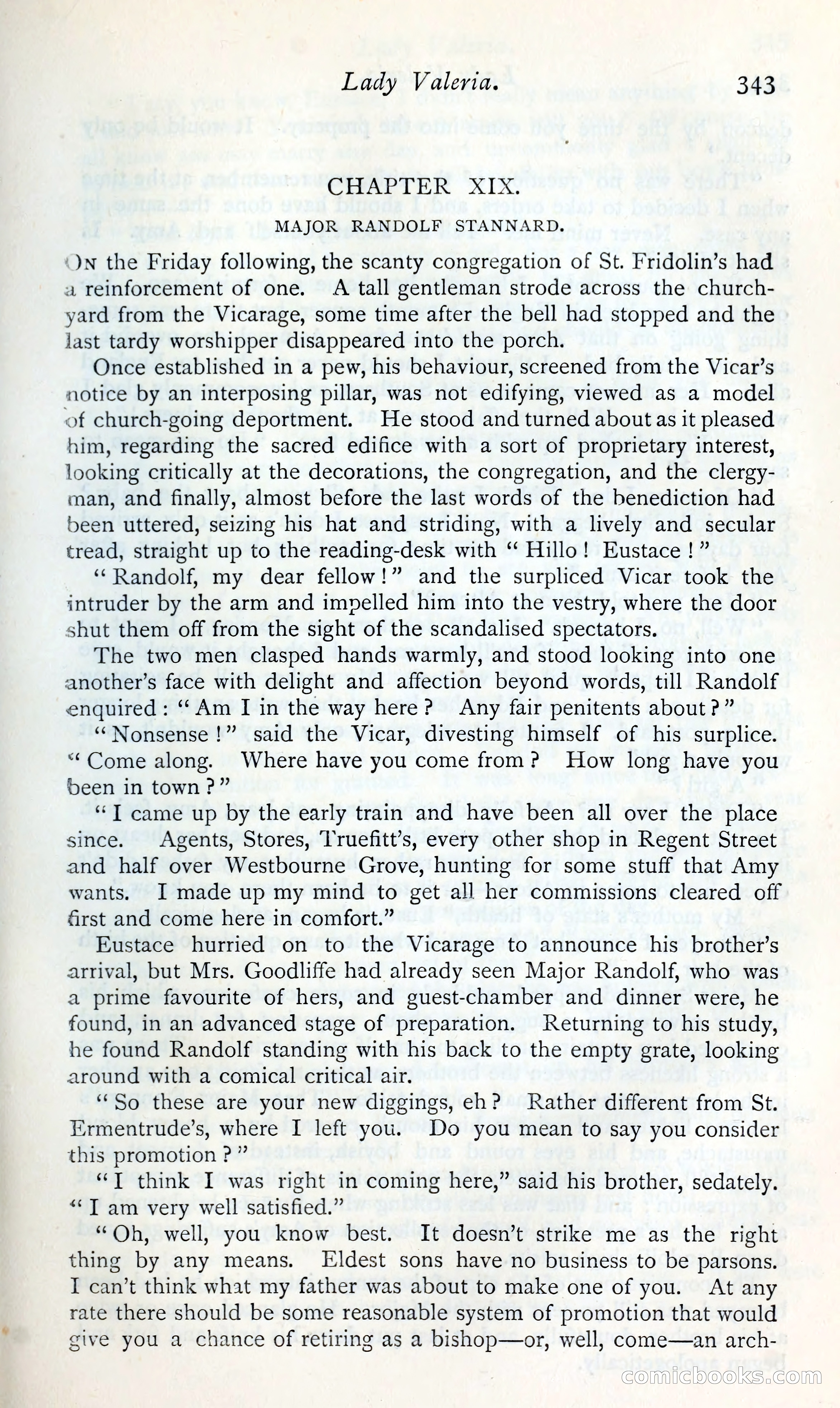
A restored page from Pulp Fiction, 1865. Page through the whole issue in the reader above.
📄 Transcribed text from this page (OCR, searchable)
Machine-transcribed from the original scan — historical spelling and the odd misread are preserved.
Lady Valeria. 343 CHAPTER XIX. MAJOR RANDOLF STANNARD. On the Friday following, the scanty congregation of St. Fridolin’s had a reinforcement of one. A tall gentleman strode across the church- yard from the Vicarage, some time after the bell had stopped and the last tardy worshipper disappeared into the porch. Once established in a pew, his behaviour, screened from the Vicar’s notice by an interposing pillar, was not edifying, viewed as a model of church-going deportment. He stood and turned about as it pleased him, regarding the sacred edifice with a sort of proprietary interest, looking critically at the decorations, the congregation, and the clergy- man, and finally, almost before the last words of the benediction had been uttered, seizing his hat and striding, with a lively and secular tread, straight up to the reading-desk with ‘‘ Hillo! Eustace!” ‘“ Randolf, my dear fellow!” and the surpliced Vicar took the intruder by the arm and impelled him into the vestry, where the door shut them off from the sight of the scandalised spectators. The two men clasped hands warmly, and stood looking into one another’s face with delight and affection beyond words, till Randolf enquired : “Am I in the way here? Any fair penitents about ?” ‘““Nonsense!” said the Vicar, divesting himself of his surplice. “Come along. Where have you come frome How long have you been in town ?” ‘T came up by the early train and have been all over the place since. Agents, Stores, ‘Truefitt’s, every other shop in Regent Street and half over Westbourne Grove, hunting for some stuff that Amy wants. I made up my mind to get all her commissions cleared off first and come here in comfort.” Eustace hurried on to the Vicarage to announce his brother’s arrival, but Mrs. Goodliffe had already seen Major Randolf, who was a prime favourite of hers, and guest-chamber and dinner were, he found, in an advanced stage of preparation. Returning to his study, he found Randolf standing with his back to the empty grate, looking around with a comical critical air. ‘“So these are your new diggings, eh? Rather different from St. Ermentrude’s, where I left you. Do you mean to say you consider this promotion ?” “T think I was right in coming here,” said his brother, sedately. “‘T am very well satisfied.” “Oh, well, you know best. It doesn’t strike me as the right thing by any means. Eldest sons have no business to be parsons. I can’t think what my father was about to make one of you. At any rate there should be some reasonable system of promotion that would give you a chance of retiring as a bishop—or, well, come—an arch- GOMIGIOOKSHGO im