
Pulp Fiction, 1865 · page 346 of 400
The Argosy — page 346: what you’re looking at
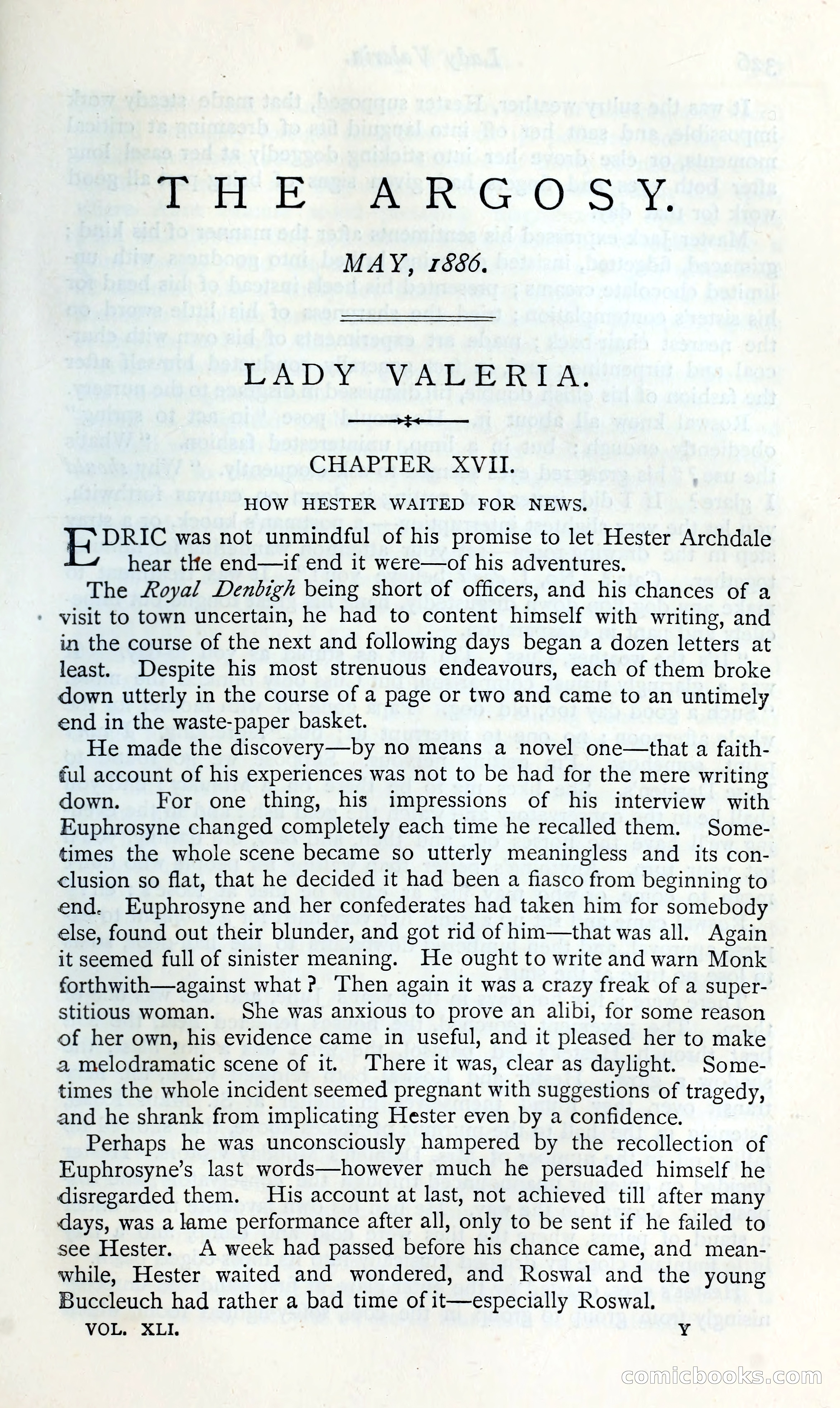
A restored page from Pulp Fiction, 1865. Page through the whole issue in the reader above.
📄 Transcribed text from this page (OCR, searchable)
Machine-transcribed from the original scan — historical spelling and the odd misread are preserved.
ar eee CG O’S YY. MAY, 1&8. yo LY eA ee oe ee CHAPTER XVII. HOW HESTER WAITED FOR NEWS. ei aane was not unmindful of his promise to let Hester Archdale hear the end—if end it were—of his adventures. The Royal Denbigh being short of officers, and his chances of a - visit to town uncertain, he had to content himself with writing, and in the course of the next and following days began a dozen letters at least. Despite his most strenuous endeavours, each of them broke down utterly in the course of a page or two and came to an untimely end in the waste-paper basket. He made the discovery—by no means a novel one—that a faith- ful account of his experiences was not to be had for the mere writing down. For one thing, his impressions of his interview with Euphrosyne changed completely each time he recalled them. Some- times the whole scene became so utterly meaningless and its con- clusion so flat, that he decided it had been a fiasco from beginning to end. Euphrosyne and her confederates had taken him for somebody else, found out their blunder, and got rid of him—that was all. Again it seemed full of sinister meaning. He ought to write and warn Monk forthwith—against what ? ‘Then again it was a crazy freak of a super- stitious woman. She was anxious to prove an alibi, for some reason of her own, his evidence came in useful, and it pleased her to make a melodramatic scene of it. There it was, clear as daylight. Some- times the whole incident seemed pregnant with suggestions of tragedy, and he shrank from implicating Hester even by a confidence. Perhaps he was unconsciously hampered by the recollection of Euphrosyne’s last words—however much he persuaded himself he disregarded them. His account at last, not achieved till after many days, was a lame performance after all, only to be sent if he failed to see Hester. A week had passed before his chance came, and mean- while, Hester waited and wondered, and Roswal and the young Buccleuch had rather a bad time of it—especially Roswal. VOL. XLI. Y COnniclboooks (CO)