
Pulp Fiction, 1865 · page 342 of 400
The Argosy — page 342: what you’re looking at
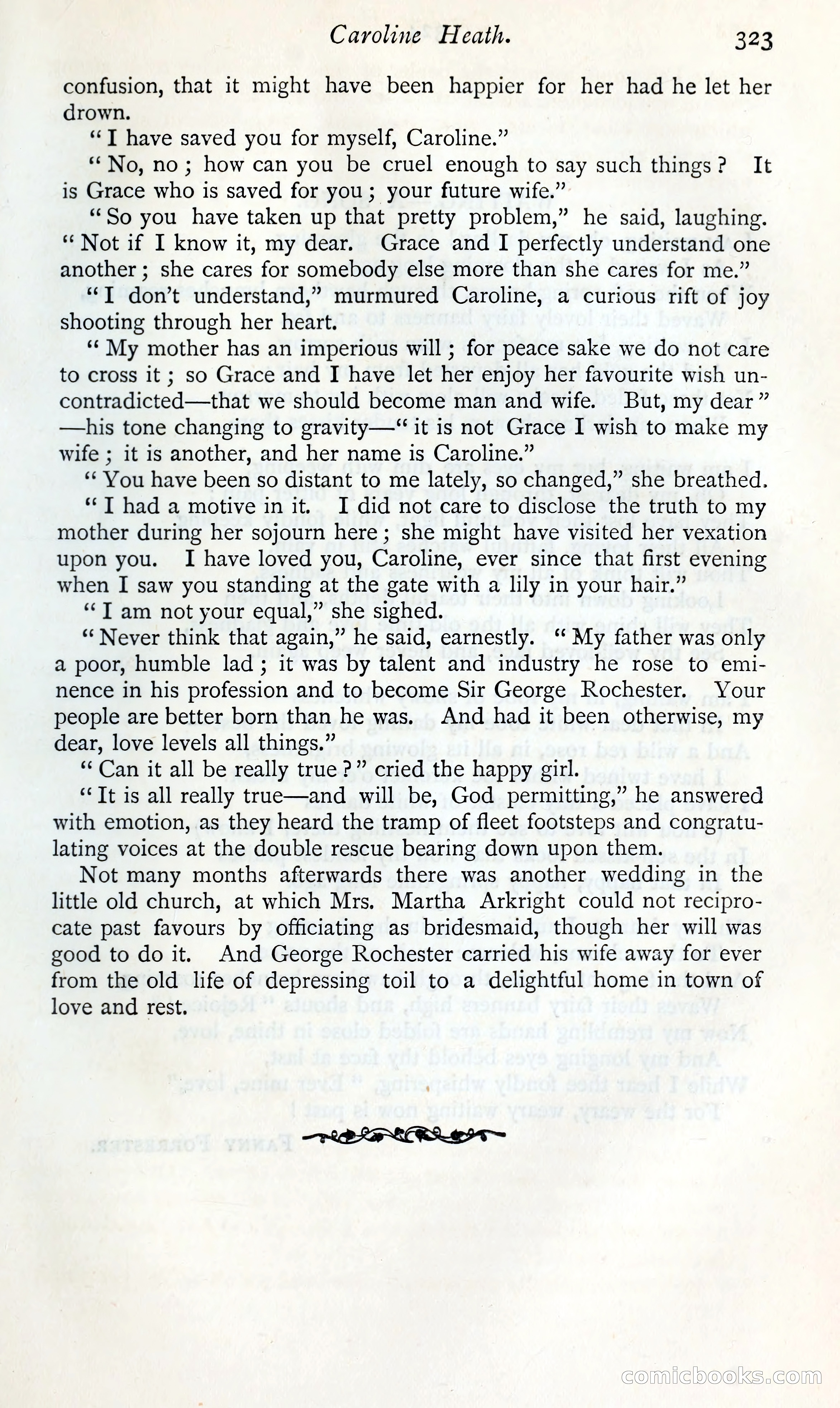
A restored page from Pulp Fiction, 1865. Page through the whole issue in the reader above.
📄 Transcribed text from this page (OCR, searchable)
Machine-transcribed from the original scan — historical spelling and the odd misread are preserved.
Caroline Heath. 323 confusion, that it might have been happier for her had he let her drown. “T have saved you for myself, Caroline.” “No, no; how can you be cruel enough to say such things? It is Grace who is saved for you; your future wife.” “So you have taken up that pretty problem,” he said, laughing. ‘Not if I know it, my dear. Grace and I perfectly understand one another ; she cares for somebody else more than she cares for me.” ‘““T don’t understand,” murmured Caroline, a curious rift of joy shooting through her heart. ‘* My mother has an imperious will ; for peace sake we do not care to cross it ; so Grace and I have let her enjoy her favourite wish un- contradicted—that we should become man and wife. But, my dear” —his tone changing to gravity—‘“ it is not Grace I wish to make my wife ; it is another, and her name is Caroline.” ‘You have been so distant to me lately, so changed,” she breathed. “T had a motive init. I did not care to disclose the truth to my mother during her sojourn here; she might have visited her vexation upon you. I have loved you, Caroline, ever since that first evening when I saw you standing at the gate with a lily in your hair.” ‘*T am not your equal,” she sighed. “Never think that again,” he said, earnestly. ‘“ My father was only a poor, humble lad; it was by talent and industry he rose to emi- nence in his profession and to become Sir George Rochester. Your people are better born than he was. And had it been otherwise, my dear, love levels all things.” ‘Can it all be really true?” cried the happy girl. “Tt is all really true—and will be, God permitting,” he answered with emotion, as they heard the tramp of fleet footsteps and congratu- lating voices at the double rescue bearing down upon them. Not many months afterwards there was another wedding in the little old church, at which Mrs, Martha Arkright could not recipro- cate past favours by officiating as bridesmaid, though her will was good to do it. And George Rochester carried his wife away for ever from the old life of depressing toil to a delightful home in town of love and rest. COnnicoooks (CO)