
Pulp Fiction, 1865 · page 338 of 400
The Argosy — page 338: what you’re looking at
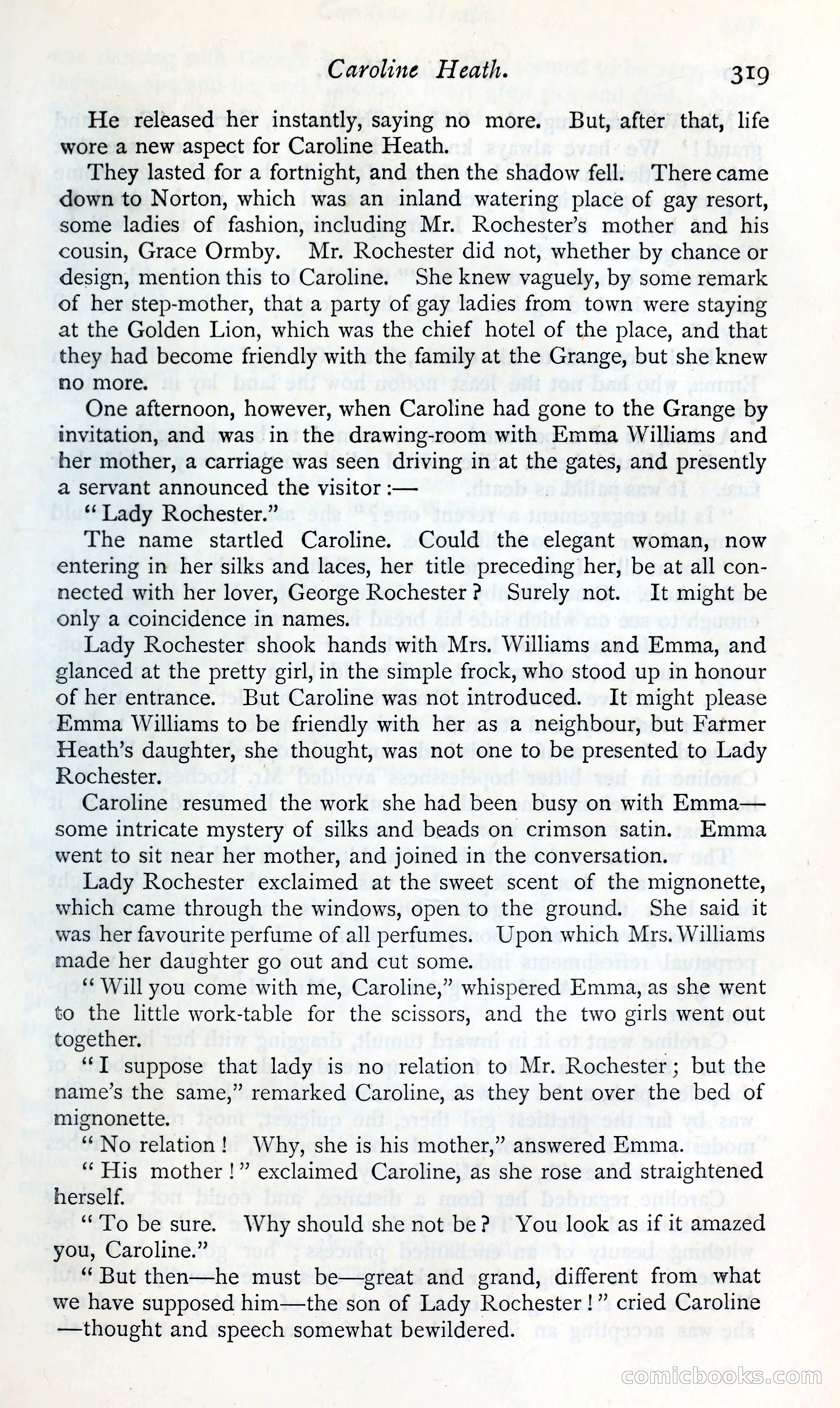
A restored page from Pulp Fiction, 1865. Page through the whole issue in the reader above.
📄 Transcribed text from this page (OCR, searchable)
Machine-transcribed from the original scan — historical spelling and the odd misread are preserved.
Caroline Heath. 319 He released her instantly, saying no more. But, after that, life wore a new aspect for Caroline Heath. They lasted for a fortnight, and then the shadow fell. There came down to Norton, which was an inland watering place of gay resort, some ladies of fashion, including Mr. Rochester’s mother and his cousin, Grace Ormby. Mr. Rochester did not, whether by chance or design, mention this to Caroline. She knew vaguely, by some remark of her step-mother, that a party of gay ladies from town were staying at the Golden Lion, which was the chief hotel of the place, and that they had become friendly with the family at the Grange, but she knew no more. One afternoon, however, when Caroline had gone to the Grange by invitation, and was in the drawing-room with Emma Williams and her mother, a carriage was seen driving in at the gates, and presently a servant announced the visitor :— ** Lady Rochester.” The name startled Caroline. Could the elegant woman, now entering in her silks and laces, her title preceding her, be at all con- nected with her lover, George Rochester? Surely not. It might be only a coincidence in names. Lady Rochester shook hands with Mrs. Wilhams and Emma, and glanced at the pretty girl, in the simple frock, who stood up in honour of her entrance. But Caroline was not introduced. It might please Emma Williams to be friendly with her as a neighbour, but Farmer Heath’s daughter, she thought, was not one to be presented to Lady Rochester. Caroline resumed the work she had been busy on with Emma— some intricate mystery of silks and beads on crimson satin. Emma went to sit near her mother, and joined in the conversation. Lady Rochester exclaimed at the sweet scent of the mignonette, which came through the windows, open to the ground. She said it was her favourite perfume of all perfumes. Upon which Mrs. Williams made her daughter go out and cut some. “Will you come with me, Caroline,” whispered Emma, as she went to the little work-table for the scissors, and the two girls went out together. “I suppose that lady is no relation to Mr. Rochester; but the name’s the same,” remarked Caroline, as they bent over the bed of mignonette. ‘No relation! Why, she is his mother,” answered Emma. ‘His mother!” exclaimed Caroline, as she rose and straightened herself. ‘To be sure. Why should she not be? You look as if it amazed you, Caroline.” “But then—he must be—great and grand, different from what we have supposed him—the son of Lady Rochester!” cried Caroline —thought and speech somewhat bewildered. Connicboooks (CO