
Pulp Fiction, 1865 · page 336 of 400
The Argosy — page 336: what you’re looking at
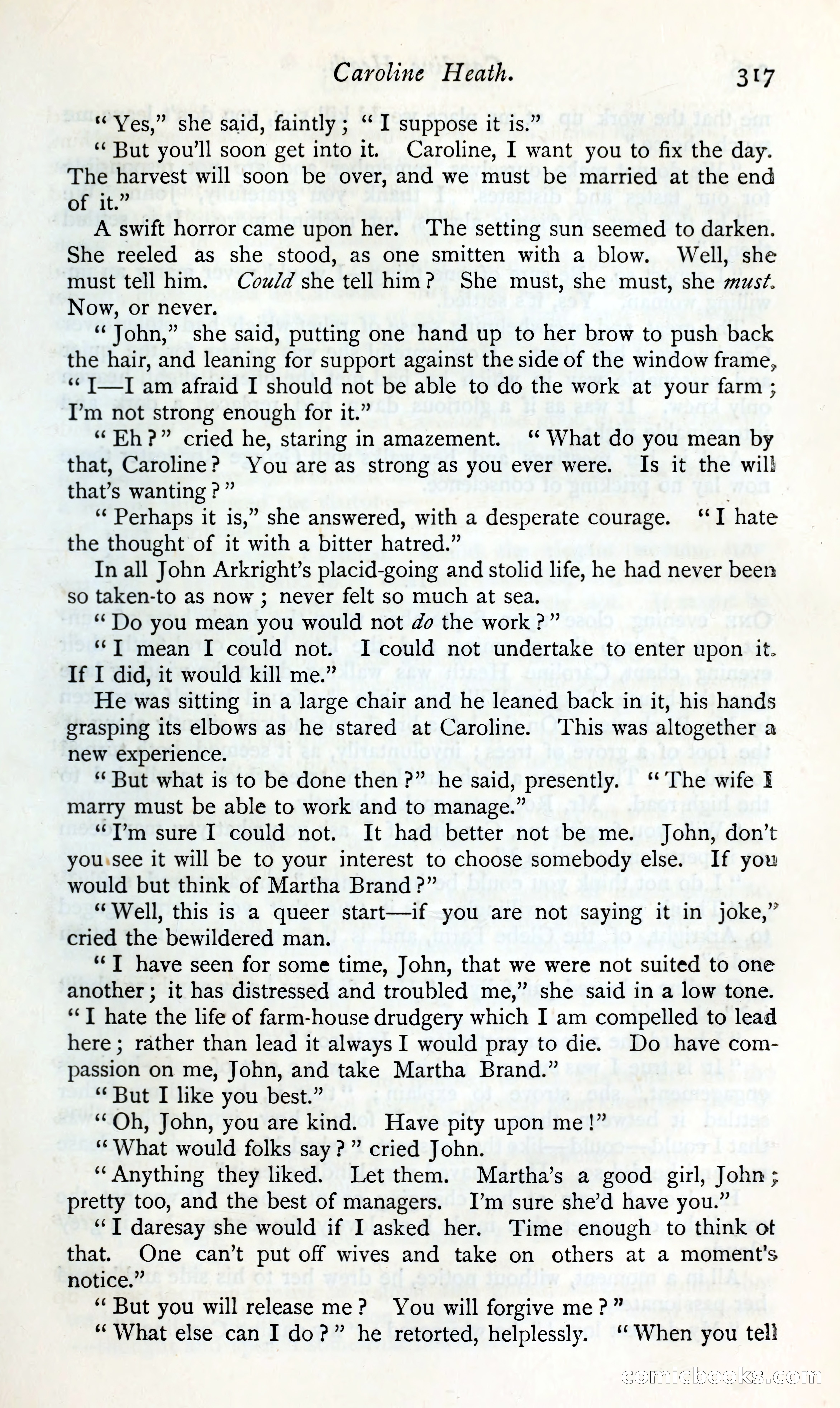
A restored page from Pulp Fiction, 1865. Page through the whole issue in the reader above.
📄 Transcribed text from this page (OCR, searchable)
Machine-transcribed from the original scan — historical spelling and the odd misread are preserved.
Caroline Heath. 317 « Ves,” she said, faintly ; ‘“‘ I suppose it is.” ‘But you'll soon get into it. Caroline, I want you to fix the day. The harvest will soon be over, and we must be married at the end or a.” A swift horror came upon her. ‘The setting sun seemed to darken. She reeled as she stood, as one smitten with a blow. Well, she must tell him. Could she tell him? She must, she must, she must. Now, or never. “John,” she said, putting one hand up to her brow to push back the hair, and leaning for support against the side of the window frame, ‘¢ [—I am afraid I should not be able to do the work at your farm ; I’m not strong enough for it.” “Eh?” cried he, staring in amazement. ‘‘ What do you mean by that, Caroline? You are as strong as you ever were. Is it the will that’s wanting ?”’ ‘“‘ Perhaps it is,” she answered, with a desperate courage. ‘‘I hate the thought of it with a bitter hatred.” In all John Arkright’s placid-going and stolid life, he had never been so taken-to as now ; never felt so much at sea. “Do you mean you would not do the work ?” “Tf mean I could not. I could not undertake to enter upon it. If I did, it would kill me.” He was sitting in a large chair and he leaned back in it, his hands grasping its elbows as he stared at Caroline. ‘This was altogether a new experience. ‘But what is to be done then ?” he said, presently. ‘‘ The wife 1 marry must be able to work and to manage.” “I’m sure I could not. It had better not be me. John, don’t you:see it will be to your interest to choose somebody else. If you would but think of Martha Brand ?” “Well, this is a queer start—if you are not saying it in joke,” cried the bewildered man. “IT have seen for some time, John, that we were not suited to one another; it has distressed and troubled me,” she said in a low tone. ‘I hate the life of farm-house drudgery which I am compelled to lead here; rather than lead it always I would pray to die. Do have com- passion on me, John, and take Martha Brand.” “But I like you best.” “Oh, John, you are kind. Have pity upon me!” “What would folks say?” cried John. “Anything they liked. Let them. Martha’s a good girl, John; pretty too, and the best of managers. I’m sure she’d have you.” ‘““T daresay she would if I asked her. ‘Time enough to think ot that. One can’t put off wives and take on others at a moment's notice.” ‘““ But you will release me? You will forgive me?” “What else can I do?” he retorted, helplessly. “ When you tell GOMIGIOOKSHEO