
Pulp Fiction, 1865 · page 332 of 400
The Argosy — page 332: what you’re looking at
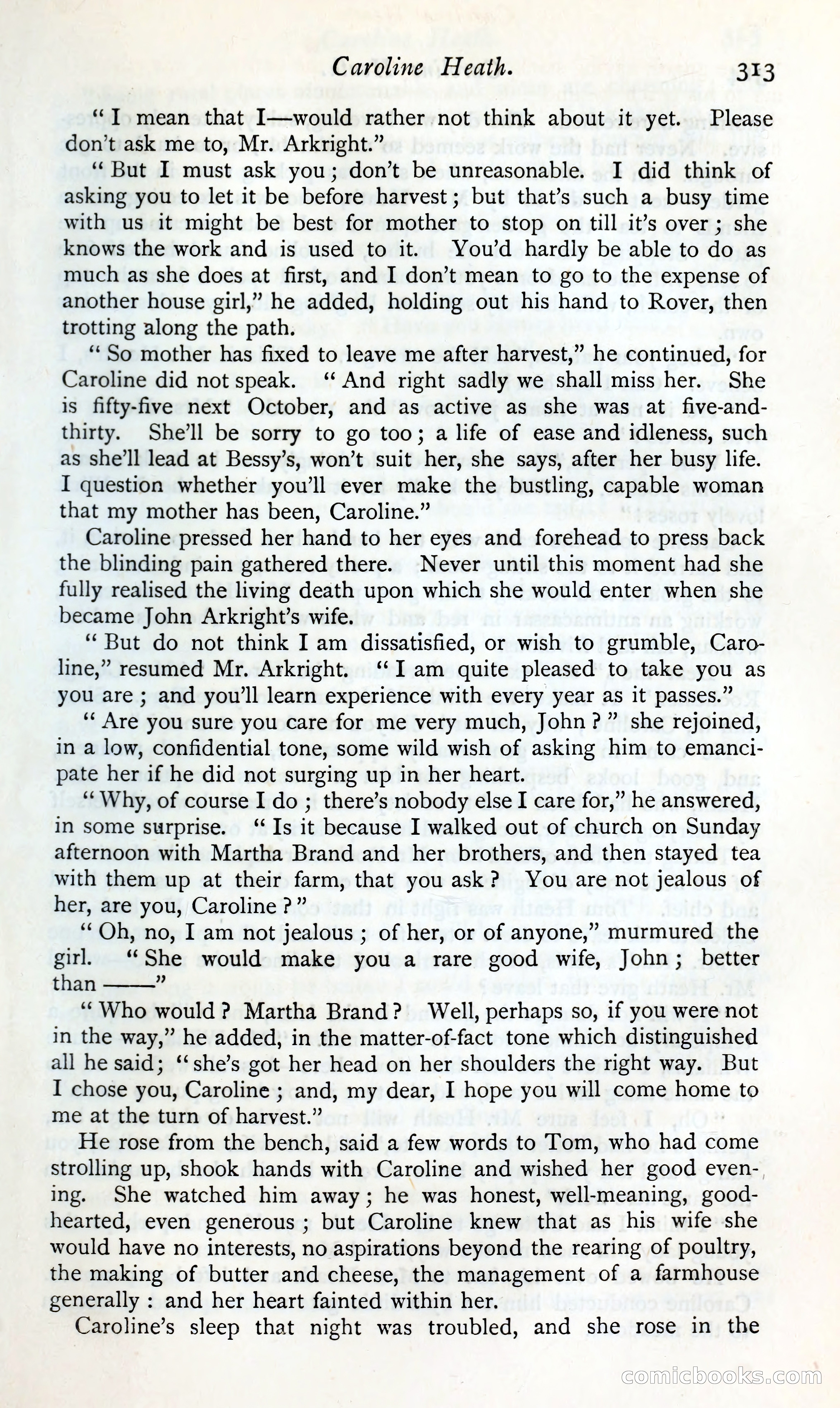
A restored page from Pulp Fiction, 1865. Page through the whole issue in the reader above.
📄 Transcribed text from this page (OCR, searchable)
Machine-transcribed from the original scan — historical spelling and the odd misread are preserved.
Caroline Heath. 313 “JT mean that I—would rather not think about it yet. Please don’t ask me to, Mr. Arkright.” “But I must ask you; don’t be unreasonable. I did think of asking you to let it be before harvest; but that’s such a busy time with us it might be best for mother to stop on till it’s over; she knows the work and is used to it. You'd hardly be able to do as much as she does at first, and I don’t mean to go to the expense of another house girl,” he added, holding out his hand to Rover, then trotting along the path. ‘‘ So mother has fixed to leave me after harvest,” he continued, for Caroline did not speak. ‘‘ And right sadly we shall miss her. She is fifty-five next October, and as active as she was at five-and- thirty. She’ll be sorry to go too; a life of ease and idleness, such as she'll lead at Bessy’s, won’t suit her, she says, after her busy life. I question whether you’ll ever make the bustling, capable woman that my mother has been, Caroline.” Caroline pressed her hand to her eyes and forehead to press back the blinding pain gathered there. Never until this moment had she fully realised the living death upon which she would enter when she became John Arkright’s wife. “ But do not think I am dissatisfied, or wish to grumble, Caro- line,” resumed Mr. Arkright. ‘‘I am quite pleased to take you as you are ; and you'll learn experience with every year as it passes.” ‘* Are you sure you care for me very much, John?” she rejoined, in a low, confidential tone, some wild wish of asking him to emanci- pate her if he did not surging up in her heart. “Why, of course I do ; there’s nobody else I care for,” he answered, in some surprise. ‘Is it because I walked out of church on Sunday afternoon with Martha Brand and her brothers, and then stayed tea with them up at their farm, that you ask? You are not jealous of her, are you, Caroline ?” ‘“Oh, no, I am not jealous ; of her, or of anyone,” murmured the girl, “She would make you a rare good wife, John; better than - “Who would ? Martha Brand? Well, perhaps so, if you were not in the way,” he added, in the matter-of-fact tone which distinguished all he said; ‘‘she’s got her head on her shoulders the right way. But I chose you, Caroline ; and, my dear, I hope you will come home to me at the turn of harvest.” He rose from the bench, said a few words to Tom, who had come strolling up, shook hands with Caroline and wished her good even- ing. She watched him away; he was honest, well-meaning, good- hearted, even generous ; but Caroline knew that as his wife she would have no interests, no aspirations beyond the rearing of poultry, the making of butter and cheese, the management of a farmhouse generally : and her heart fainted within her. Caroline’s sleep that night was troubled, and she rose in the Conniclboooks (CO