
Pulp Fiction, 1865 · page 327 of 400
The Argosy — page 327: what you’re looking at
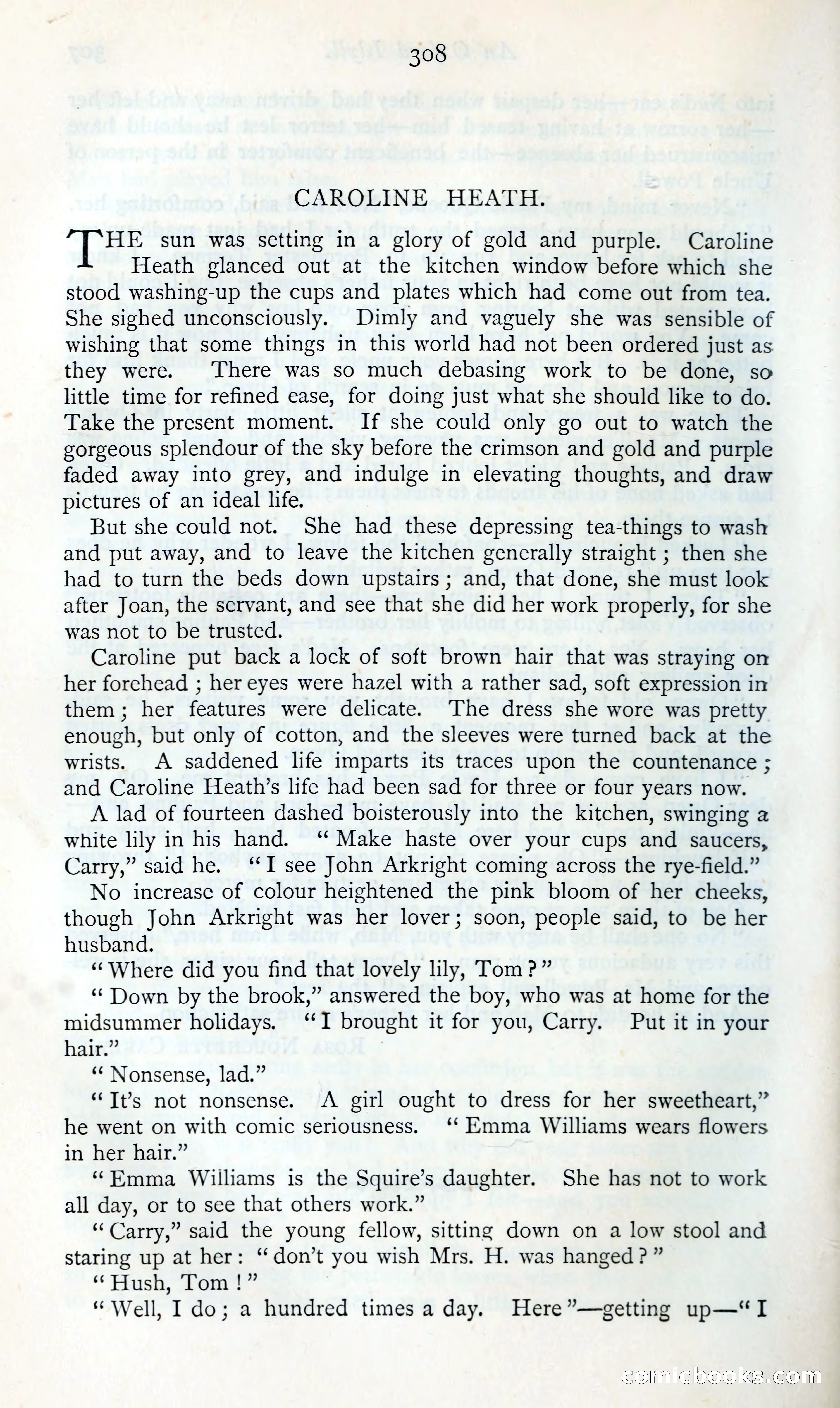
A restored page from Pulp Fiction, 1865. Page through the whole issue in the reader above.
📄 Transcribed text from this page (OCR, searchable)
Machine-transcribed from the original scan — historical spelling and the odd misread are preserved.
308 CAROLINE HEATH. HE sun was setting in a glory of gold and purple. Caroline Heath glanced out at the kitchen window before which she stood washing-up the cups and plates which had come out from tea. She sighed unconsciously. Dimly and vaguely she was sensible of wishing that some things in this world had not been ordered just as they were. There was so much debasing work to be done, so little time for refined ease, for doing just what she should like to do. Take the present moment. If she could only go out to watch the gorgeous splendour of the sky before the crimson and gold and purple faded away into grey, and indulge in elevating thoughts, and draw pictures of an ideal life. But she could not. She had these depressing tea-things to wash and put away, and to leave the kitchen generally straight ; then she had to turn the beds down upstairs; and, that done, she must look after Joan, the servant, and see that she did her work properly, for she was not to be trusted. Caroline put back a lock of soft brown hair that was straying on her forehead ; her eyes were hazel with a rather sad, soft expression in them; her features were delicate. ‘The dress she wore was pretty enough, but only of cotton, and the sleeves were turned back at the wrists. A saddened life imparts its traces upon the countenance ; and Caroline Heath’s life had been sad for three or four years now. A lad of fourteen dashed boisterously into the kitchen, swinging a white lily in his hand. ‘‘ Make haste over your cups and saucers, Carry,” said he. ‘I see John Arkright coming across the rye-field.” No increase of colour heightened the pink bloom of her cheeks, though John Arkright was her lover; soon, people said, to be her husband. ‘Where did you find that lovely lily, Tom ?” ‘Down by the brook,” answered the boy, who was at home for the midsummer holidays. ‘‘I brought it for you, Carry. Put it in your hair.” ‘¢ Nonsense, lad.” ‘“Tt’s not nonsense. <A girl ought to dress for her sweetheart,” he went on with comic seriousness. ‘‘ Emma Williams wears flowers in her hair.” ‘Emma Williams is the Squire’s daughter. She has not to work all day, or to see that others work.” “Carry,” said the young fellow, sitting down on a low stool and staring up at her: “don’t you wish Mrs. H. was hanged ?” ‘Hush, 1 Omi?” “Well, I do; a hundred times a day. Here”—getting up—‘“I CORNICLOOKS (E() im