
Pulp Fiction, 1865 · page 207 of 400
The Argosy — page 207: what you’re looking at
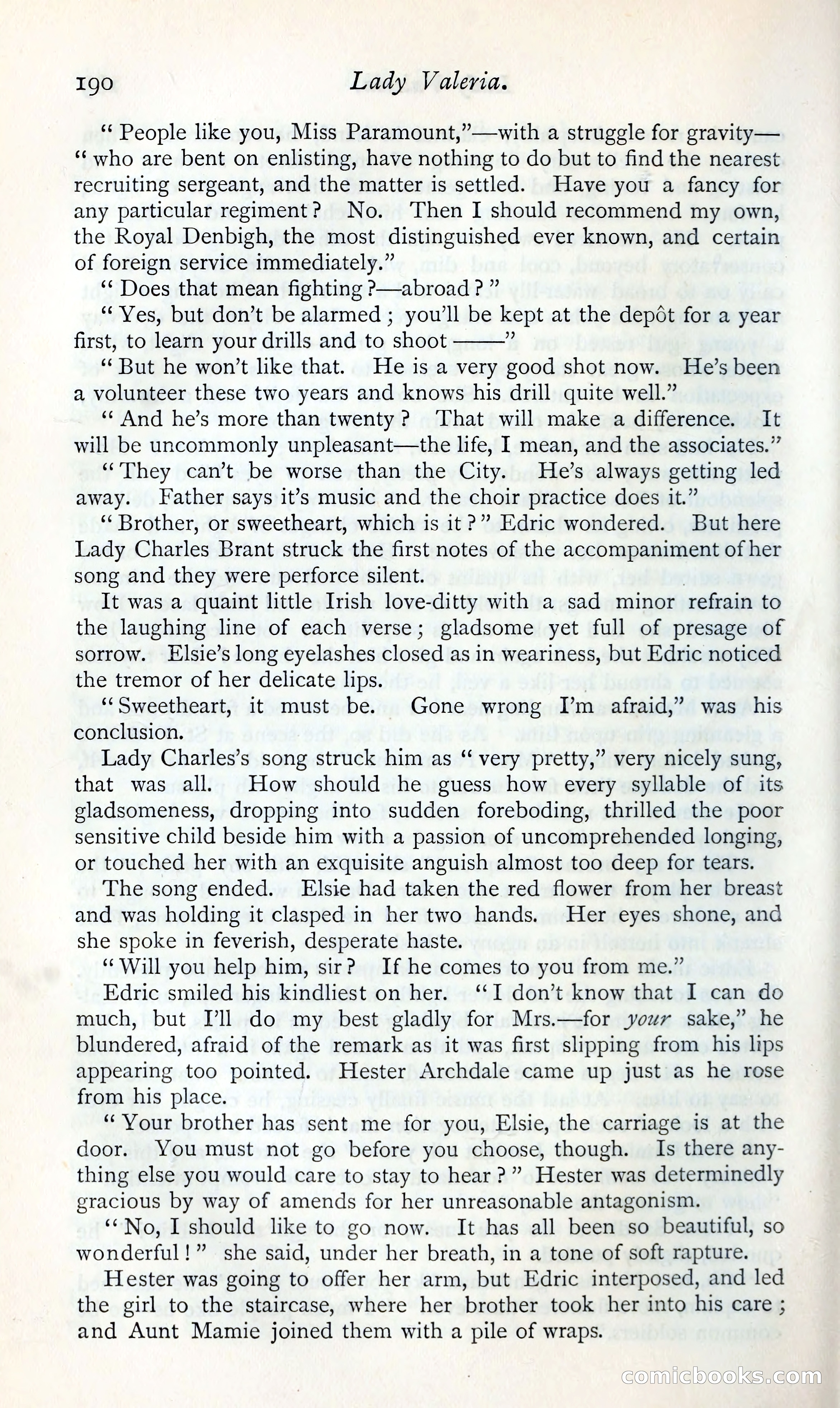
A restored page from Pulp Fiction, 1865. Page through the whole issue in the reader above.
📄 Transcribed text from this page (OCR, searchable)
Machine-transcribed from the original scan — historical spelling and the odd misread are preserved.
IgO Lady Valeria. ‘* People like you, Miss Paramount,”—with a struggle for gravity — ‘‘ who are bent on enlisting, have nothing to do but to find the nearest recruiting sergeant, and the matter is settled. Have you a fancy for any particular regiment? No. ‘Then I should recommend my own, the Royal Denbigh, the most distinguished ever known, and certain of foreign service immediately.” ‘Does that mean fighting P—abroad P ” “Yes, but don’t be alarmed ; you'll be kept at the depot for a year first, to learn your drills and to shoot ———” “But he won’t like that. He is a very good shot now. He’s been a volunteer these two years and knows his drill quite well.” ‘And he’s more than twenty ? ‘That will make a difference. It will be uncommonly unpleasant—the life, I mean, and the associates.” “They can’t be worse than the City. He’s always getting led away. Father says it’s music and the choir practice does it.” ‘Brother, or sweetheart, which is it ?” Edric wondered. But here Lady Charles Brant struck the first notes of the accompaniment of her song and they were perforce silent. It was a quaint little Irish love-ditty with a sad minor refrain to the laughing line of each verse; gladsome yet full of presage of sorrow. Elsie’s long eyelashes closed as in weariness, but Edric noticed the tremor of her delicate lips. “Sweetheart, it must be. Gone wrong I’m afraid,” was his conclusion. Lady Charles’s song struck him as “ very pretty,” very nicely sung, that was all. How should he guess how every syllable of its gladsomeness, dropping into sudden foreboding, thrilled the poor sensitive child beside him with a passion of uncomprehended longing, or touched her with an exquisite anguish almost too deep for tears. The song ended. Elsie had taken the red flower from her breast and was holding it clasped in her two hands. Her eyes shone, and she spoke in feverish, desperate haste. ‘Will you help him, sir? If he comes to you from me.” Edric smiled his kindliest on her. ‘‘I don’t know that I can do much, but T’ll do my best gladly for Mrs.—for your sake,” he blundered, afraid of the remark as it was first slipping from his lips appearing too pointed. Hester Archdale came up just as he rose from his place. “Your brother has sent me for you, Elsie, the carriage is at the door. You must not go before you choose, though. Is there any- thing else you would care to stay to hear?” Hester was determinedly gracious by way of amends for her unreasonable antagonism. ‘“No, I should like to go now. It has all been so beautiful, so wonderful!” she said, under her breath, in a tone of soft rapture. Hester was going to offer her arm, but Edric interposed, and led the girl to the staircase, where her brother took her into his care ; and Aunt Mamie joined them with a pile of wraps. ECORMMICLOOOKS EO) m