
Pulp Fiction, 1865 · page 205 of 400
The Argosy — page 205: what you’re looking at
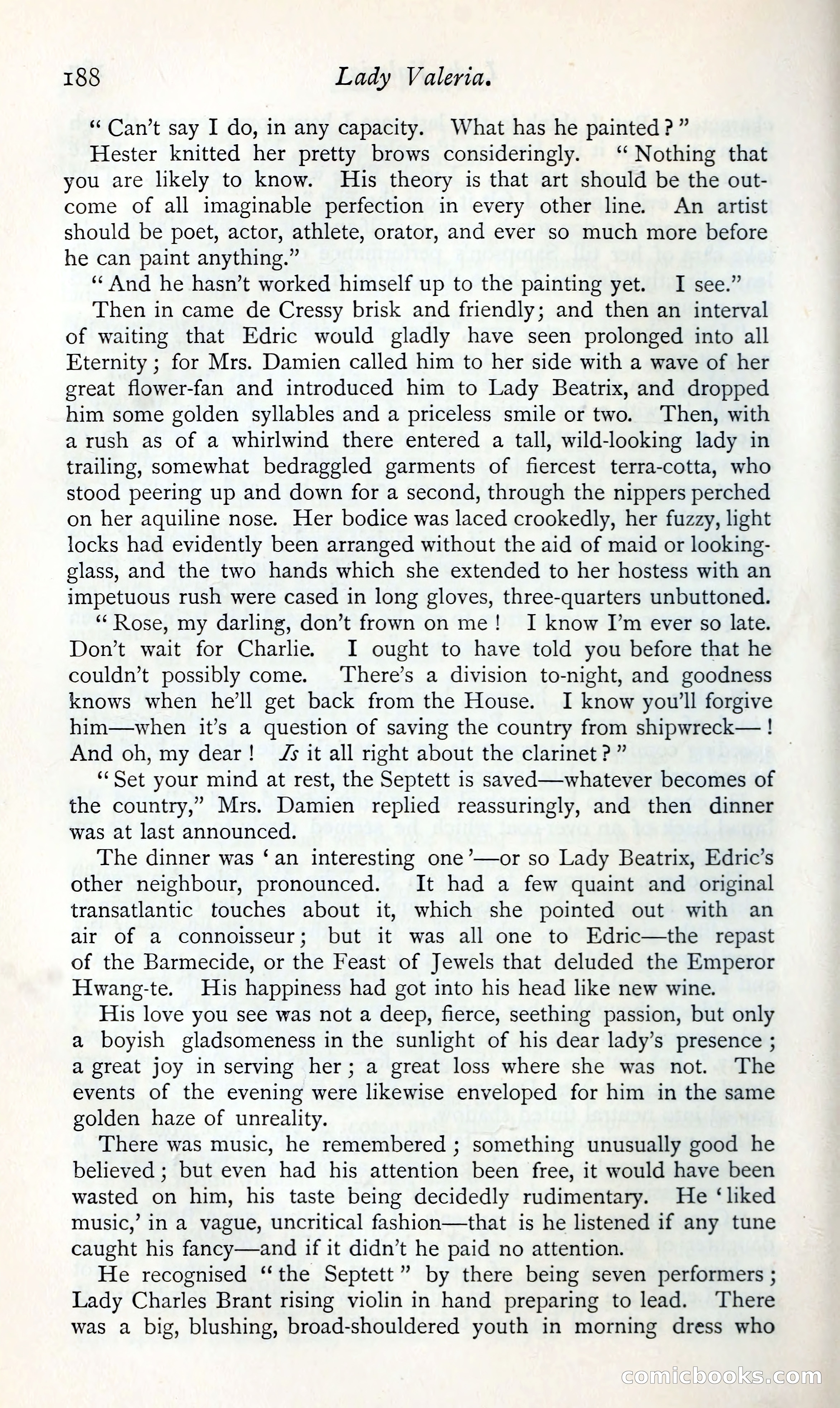
A restored page from Pulp Fiction, 1865. Page through the whole issue in the reader above.
📄 Transcribed text from this page (OCR, searchable)
Machine-transcribed from the original scan — historical spelling and the odd misread are preserved.
188 Lady Valeria. “ Can’t say I do, in any capacity. What has he painted?” Hester knitted her pretty brows consideringly. ‘‘ Nothing that you are likely to know. His theory is that art should be the out- come of all imaginable perfection in every other line. An artist should be poet, actor, athlete, orator, and ever so much more before he can paint anything.” ‘And he hasn’t worked himself up to the painting yet. I see.” Then in came de Cressy brisk and friendly; and then an interval of waiting that Edric would gladly have seen prolonged into all Eternity ; for Mrs. Damien called him to her side with a wave of her great flower-fan and introduced him to Lady Beatrix, and dropped him some golden syllables and a priceless smile or two. ‘Then, with a rush as of a whirlwind there entered a tall, wild-looking lady in trailing, somewhat bedraggled garments of fiercest terra-cotta, who stood peering up and down for a second, through the nippers perched on her aquiline nose. Her bodice was laced crookedly, her fuzzy, light locks had evidently been arranged without the aid of maid or looking- glass, and the two hands which she extended to her hostess with an impetuous rush were cased in long gloves, three-quarters unbuttoned. “Rose, my darling, don’t frown on me! I know I’m ever so late. Don’t wait for Charlie. I ought to have told you before that he couldn’t possibly come. ‘There’s a division to-night, and goodness knows when he'll get back from the House. I know you'll forgive him—when it’s a question of saving the country from shipwreck—! And oh, my dear! Js it all right about the clarinet P ” ‘Set your mind at rest, the Septett is saved—whatever becomes of the country,” Mrs. Damien replied reassuringly, and then dinner was at last announced. The dinner was ‘an interesting one’—or so Lady Beatrix, Edric’s other neighbour, pronounced. It had a few quaint and original transatlantic touches about it, which she pointed out with an air of a connoisseur; but it was all one to Edric—the repast of the Barmecide, or the Feast of Jewels that deluded the Emperor Hwang-te. His happiness had got into his head like new wine. His love you see was not a deep, fierce, seething passion, but only a boyish gladsomeness in the sunlight of his dear lady’s presence ; a great joy in serving her; a great loss where she was not. ‘The events of the evening were likewise enveloped for him in the same golden haze of unreality. There was music, he remembered ; something unusually good he believed ; but even had his attention been free, it would have been wasted on him, his taste being decidedly rudimentary. He ‘liked music,’ in a vague, uncritical fashion—that is he listened if any tune caught his fancy—and if it didn’t he paid no attention. He recognised “the Septett” by there being seven performers ; Lady Charles Brant rising violin in hand preparing to lead. ‘There was a big, blushing, broad-shouldered youth in morning dress who ECORMICMOOOKS EO) im