
Pulp Fiction, 1865 · page 193 of 400
The Argosy — page 193: what you’re looking at
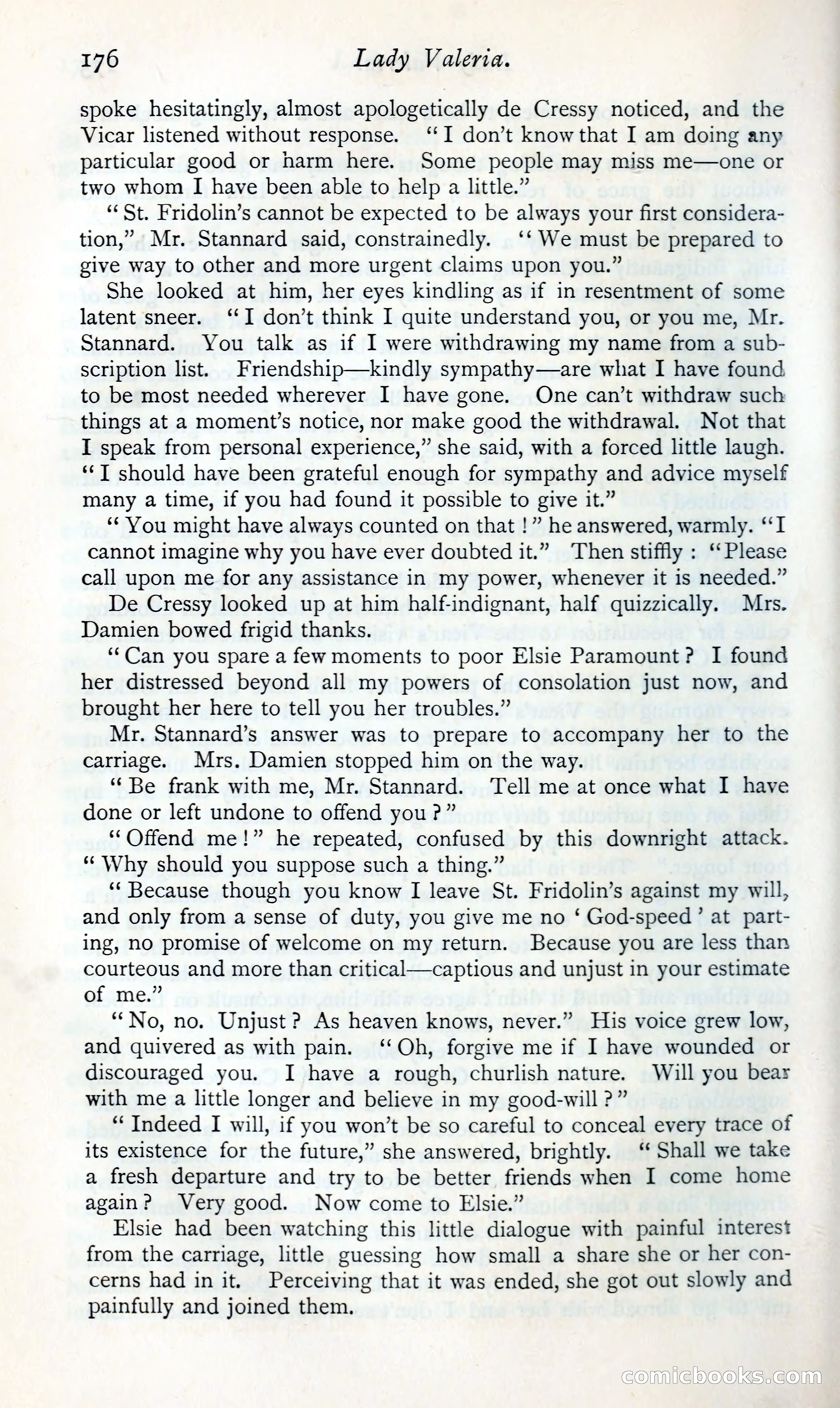
A restored page from Pulp Fiction, 1865. Page through the whole issue in the reader above.
📄 Transcribed text from this page (OCR, searchable)
Machine-transcribed from the original scan — historical spelling and the odd misread are preserved.
176 Lady Valerva. spoke hesitatingly, almost apologetically de Cressy noticed, and the Vicar listened without response. ‘‘I don’t knowthat I am doing any particular good or harm here. Some people may miss me—one or two whom I have been able to help a little.” ‘St. Fridolin’s cannot be expected to be always your first considera- tion,’ Mr. Stannard said, constrainedly. ‘‘ We must be prepared to give way to other and more urgent claims upon you.” She looked at him, her eyes kindling as if in resentment of some latent sneer. ‘‘I don’t think I quite understand you, or you me, Mr. Stannard. You talk as if I were withdrawing my name from a sub- scription list. Friendship—kindly sympathy—are what I have found to be most needed wherever I have gone. One can’t withdraw such things at a moment’s notice, nor make good the withdrawal. Not that I speak from personal experience,” she said, with a forced little laugh. ‘T should have been grateful enough for sympathy and advice myself many a time, if you had found it possible to give it.” ‘¢'You might have always counted on that !” he answered, warmly. ‘‘I cannot imagine why you have ever doubted it.” ‘Then stiffly : ‘‘ Please call upon me for any assistance in my power, whenever it is needed.” De Cressy looked up at him half-indignant, half quizzically. Mrs. Damien bowed frigid thanks. ‘“‘Can you spare a few moments to poor Elsie Paramount? I found her distressed beyond all my powers of consolation just now, and brought her here to tell you her troubles.” Mr. Stannard’s answer was to prepare to accompany her to the carriage. Mrs. Damien stopped him on the way. ‘Be frank with me, Mr. Stannard. ‘Tell me at once what I have done or left undone to offend you ?” “Offend me!” he repeated, confused by this downright attack. ‘Why should you suppose such a thing.” ‘Because though you know I leave St. Fridolin’s against my will, and only from a sense of duty, you give me no ‘ God-speed’ at part- ing, no promise of welcome on my return. Because you are less than courteous and more than critical—captious and unjust in your estimate of me.” ‘““No, no. Unjust ? As heaven knows, never.” His voice grew low, and quivered as with pain. ‘‘Oh, forgive me if I have wounded or discouraged you. I have a rough, churlish nature. Will you bear with me a little longer and believe in my good-will ?” ‘“‘ Indeed I will, if you won’t be so careful to conceal every trace of its existence for the future,” she answered, brightly. ‘“ Shall we take a fresh departure and try to be better friends when I come home againe Very good. Now come to Elsie.” Elsie had been watching this little dialogue with painful interest from the carriage, little guessing how small a share she or her con- cerns had in it. Perceiving that it was ended, she got out slowly and painfully and joined them. ECORMICLOOOKS. EO) im