
Pulp Fiction, 1865 · page 145 of 400
The Argosy — page 145: what you’re looking at
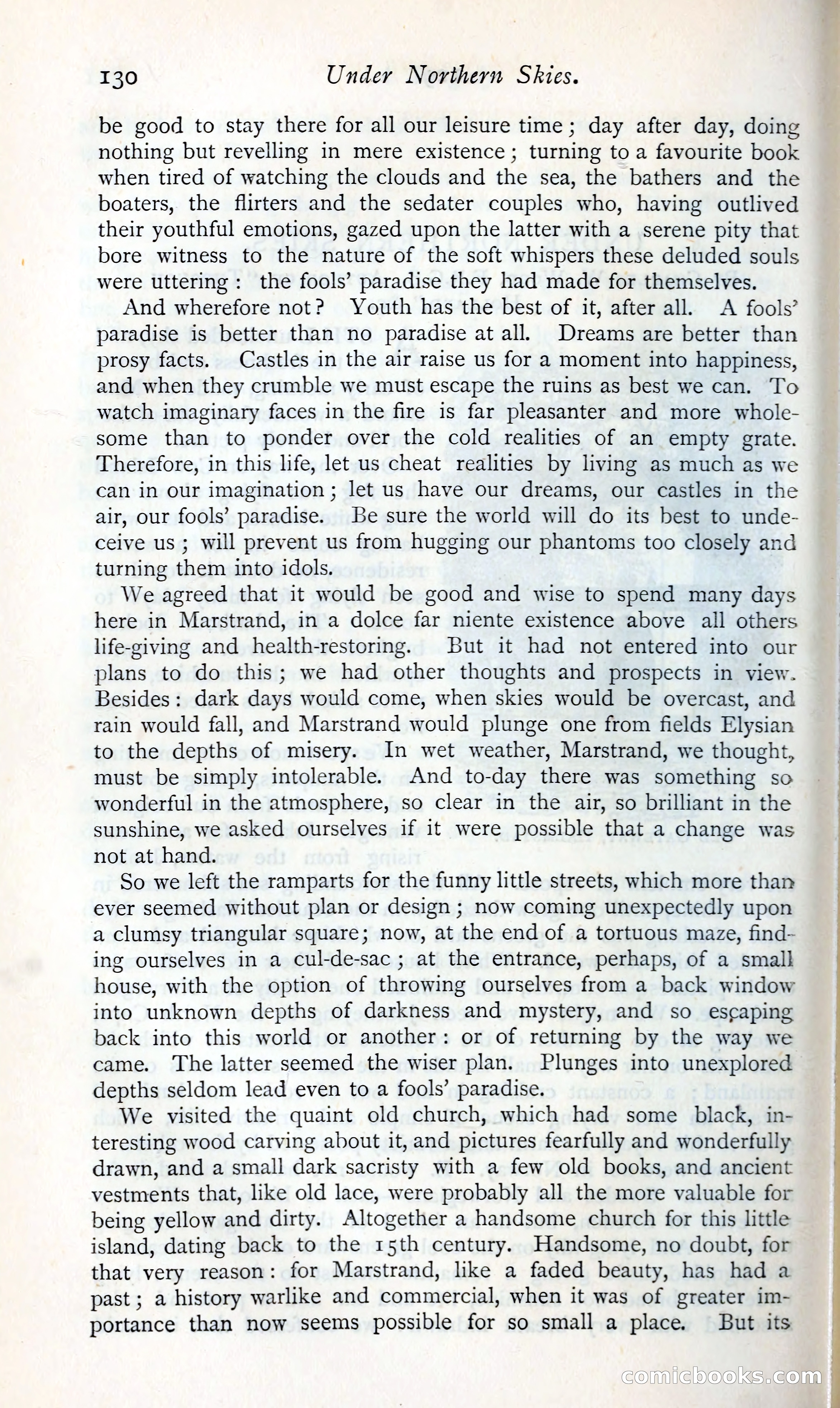
A restored page from Pulp Fiction, 1865. Page through the whole issue in the reader above.
📄 Transcribed text from this page (OCR, searchable)
Machine-transcribed from the original scan — historical spelling and the odd misread are preserved.
130 Under Northern Skies. be good to stay there for all our leisure time; day after day, doing nothing but revelling in mere existence; turning to a favourite book when tired of watching the clouds and the sea, the bathers and the boaters, the flirters and the sedater couples who, having outlived their youthful emotions, gazed upon the latter with a serene pity that bore witness to the nature of the soft whispers these deluded souls were uttering: the fools’ paradise they had made for themselves. And wherefore not? Youth has the best of it, after all. A fools’ paradise is better than no paradise at all. Dreams are better than prosy facts. Castles in the air raise us for a moment into happiness, and when they crumble we must escape the ruins as best we can. To watch imaginary faces in the fire is far pleasanter and more whole- some than to ponder over the cold realities of an empty grate. Therefore, in this life, let us cheat realities by living as much as we can in our imagination ; let us have our dreams, our castles in the air, our fools’ paradise. Be sure the world will do its best to unde- ceive us ; will prevent us from hugging our phantoms too closely and turning them into idols. We agreed that it would be good and wise to spend many days here in Marstrand, in a dolce far niente existence above all others life-giving and health-restoring. But it had not entered into our plans to do this; we had other thoughts and prospects in view. Besides: dark days would come, when skies would be overcast, and rain would fall, and Marstrand would plunge one from fields Elysian to the depths of misery. In wet weather, Marstrand, we thought, must be simply intolerable. And to-day there was something so wonderful in the atmosphere, so clear in the air, so brilliant in the sunshine, we asked ourselves if it were possible that a change was not at hand. So we left the ramparts for the funny little streets, which more than ever seemed without plan or design ; now coming unexpectedly upon a clumsy triangular square; now, at the end of a tortuous maze, find- ing ourselves in a cul-de-sac; at the entrance, perhaps, of a small house, with the option of throwing ourselves from a back window into unknown depths of darkness and mystery, and so escaping back into this world or another: or of returning by the way we came. The latter seemed the wiser plan. Plunges into unexplored depths seldom lead even to a fools’ paradise. We visited the quaint old church, which had some black, in- teresting wood carving about it, and pictures fearfully and wonderfully drawn, and a small dark sacristy with a few old books, and ancient vestments that, like old lace, were probably all the more valuable for being yellow and dirty. Altogether a handsome church for this little island, dating back to the 15th century. Handsome, no doubt, for that very reason: for Marstrand, like a faded beauty, has had a past ; a history warlike and commercial, when it was of greater im- portance than now seems possible for so small a place. JBut its ECORMICLOOOLKS: (EC)