
Pulp Fiction, 1865 · page 112 of 400
The Argosy — page 112: what you’re looking at
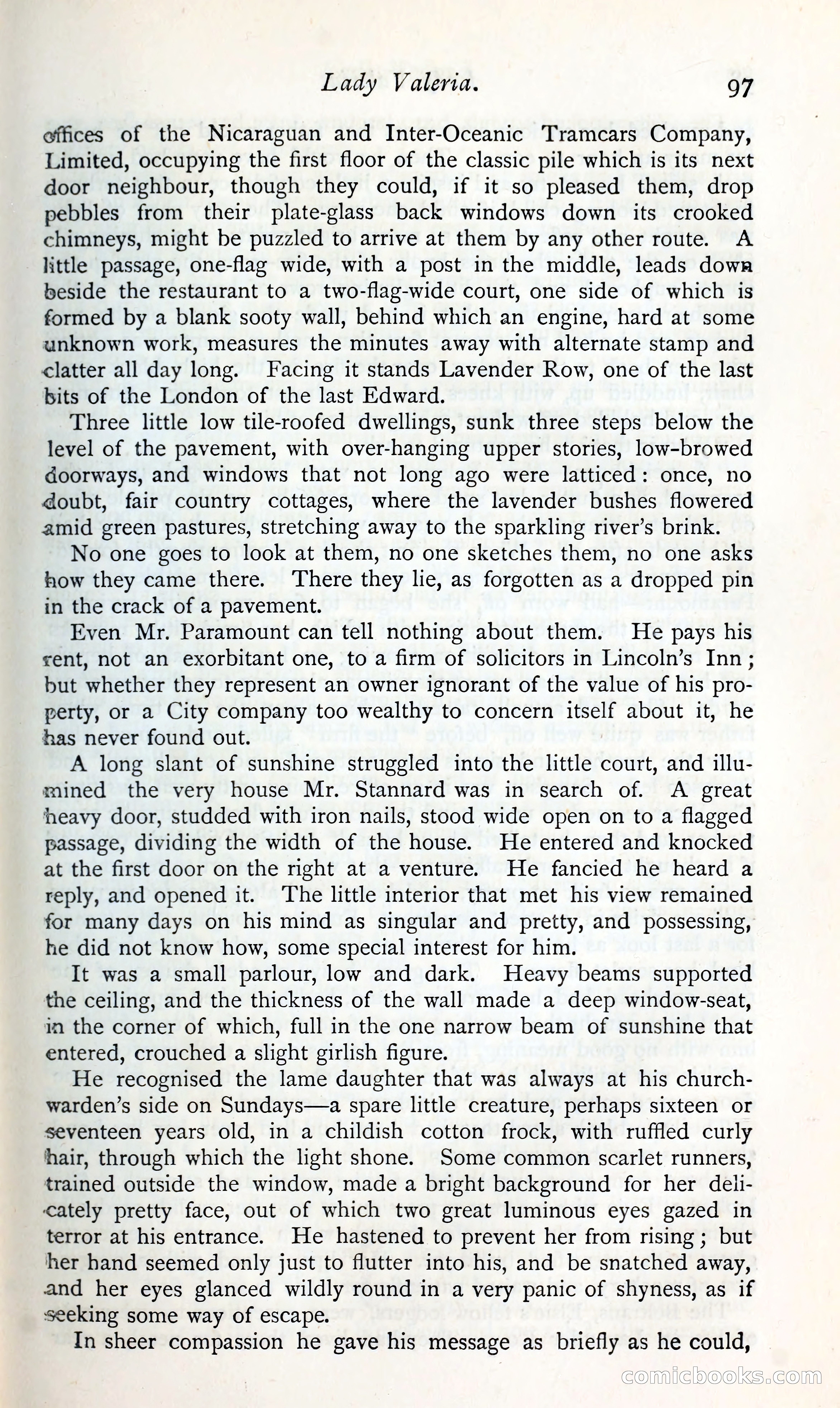
A restored page from Pulp Fiction, 1865. Page through the whole issue in the reader above.
📄 Transcribed text from this page (OCR, searchable)
Machine-transcribed from the original scan — historical spelling and the odd misread are preserved.
Lady Valera. Q7 effices of the Nicaraguan and Inter-Oceanic Tramcars Company, Limited, occupying the first floor of the classic pile which is its next door neighbour, though they could, if it so pleased them, drop pebbles from their plate-glass back windows down its crooked chimneys, might be puzzled to arrive at them by any other route. A little passage, one-flag wide, with a post in the middle, leads down beside the restaurant to a two-flag-wide court, one side of which is formed by a blank sooty wall, behind which an engine, hard at some unknown work, measures the minutes away with alternate stamp and clatter all day long. Facing it stands Lavender Row, one of the last bits of the London of the last Edward. Three little low tile-roofed dwellings, sunk three steps below the level of the pavement, with over-hanging upper stories, low-browed doorways, and windows that not long ago were latticed: once, no doubt, fair country cottages, where the lavender bushes flowered amid green pastures, stretching away to the sparkling river’s brink. No one goes to look at them, no one sketches them, no one asks how they came there. There they lie, as forgotten as a dropped pin in the crack of a pavement. Even Mr. Paramount can tell nothing about them. He pays his rent, not an exorbitant one, to a firm of solicitors in Lincoln’s Inn; but whether they represent an owner ignorant of the value of his pro- perty, or a City company too wealthy to concern itself about it, he has never found out. A long slant of sunshine struggled into the little court, and illu- mined the very house Mr. Stannard was in search of. A great heavy door, studded with iron nails, stood wide open on to a flagged passage, dividing the width of the house. He entered and knocked at the first door on the nght at a venture. He fancied he heard a reply, and opened it. ‘The little interior that met his view remained for many days on his mind as singular and pretty, and possessing, he did not know how, some special interest for him. It was a small parlour, low and dark. Heavy beams supported the ceiling, and the thickness of the wall made a deep window-seat, in the corner of which, full in the one narrow beam of sunshine that entered, crouched a slight girlish figure. He recognised the lame daughter that was always at his church- warden’s side on Sundays—a spare little creature, perhaps sixteen or seventeen years old, in a childish cotton frock, with ruffled curly hair, through which the hight shone. Some common scarlet runners, trained outside the window, made a bright background for her deli- ately pretty face, out of which two great luminous eyes gazed in terror at his entrance. He hastened to prevent her from rising; but her hand seemed only just to flutter into his, and be snatched away, and her eyes glanced wildly round in a very panic of shyness, as if seeking some way of escape. In sheer compassion he gave his message as briefly as he could, CoOnnicloooks (CO)